Todd’s Layering Tips
We’ve all been schooled in the concept of layering clothing to keep us comfortable in the mountains. Add a layer for warmth, shed a layer to cool off, and cover everything with some form of Gore-Tex.
Improvements in textile manufacturing now enable us to wear a set of layers with a broad comfort range, layers that we can leave on for most of our time during an expedition. Stretch woven fabrics, otherwise known as “soft shells,” can be put on in Talkeetna and often not removed until you get back to town (sounds gross, I know). Except for alpine skiing at our local resort, I don’t think I’ve worn Gore-Tex pants in the past 10 years because soft shell fabrics have significantly improved.
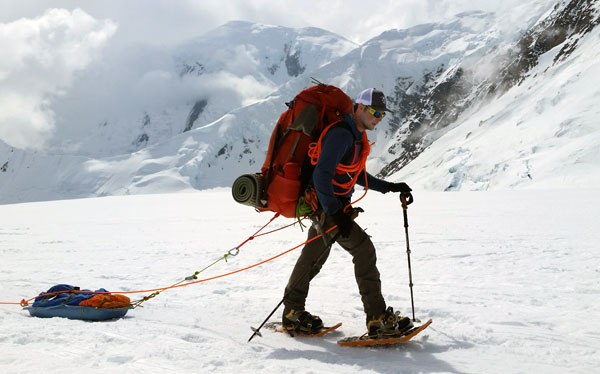
On Denali, I’ll wear my soft shell pants (Patagonia Simul Alpine Pants) alone for much of the way to Camp 2 or 3. On cold days, I’ll layer lightweight synthetic base layer bottoms under them. I prefer synthetics for my legs over Merino wool, as it seems to wick moisture somewhat better. Light fleece tights can add more warmth for very frigid mornings, and I have my puffy pants to put on top for summit day or the cold morning move up to High Camp. On late May or June trips, I will carry a set of lightweight Gore-Tex jacket and pants to Camp 2 and cache it, as the lower glacier can experience wet snow or even rain as we get later into June and early July.
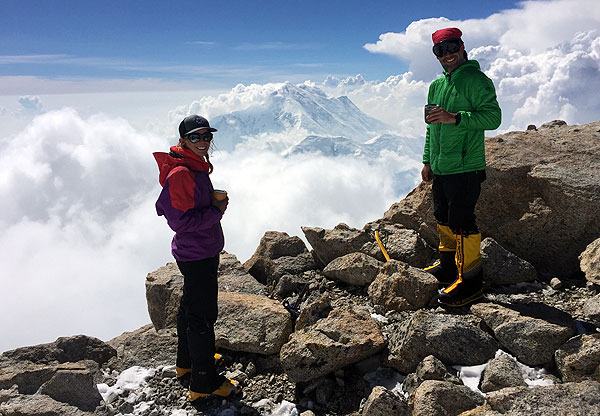
On top, I’ve become a fan of lightweight, hooded, sun shirts on the lower glacier. We list “sun hoodies” as optional on our equipment list, but you’ll undoubtedly notice that virtually all our guides wear them. As the temps drop, I wear a lightweight base layer and add a very breathable soft shell (Black Diamond Alpine Start Hooded Jacket) when moving in windier conditions. If it is colder, I’ll add a light fleece hoody (Patagonia Thermal Weight Zip Neck Hoody – the hood is a built-in hat!) under the soft shell and I always keep a puffy layer or two in the top of my pack for rests or belays. Instead of one thick puffy, which have become harder to find, I’m now a fan of two lighter puffy jackets, such as the Patagonia Nano Pullover. The “Double Nano System” is a little heavier than one thick puffy, but I appreciate how it lets me fine tune my insulation to fit the conditions and workload of the day. I wrote about this while I was transitioning from a single layer in a Mountain Trip blog post.
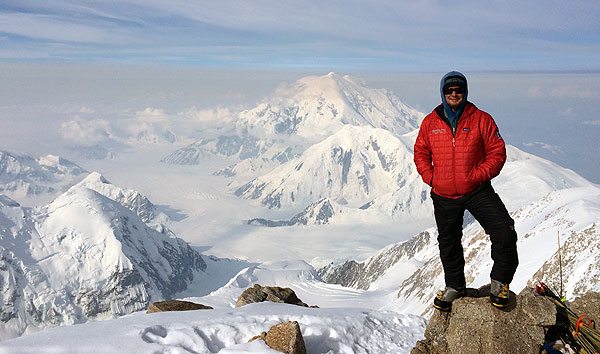
On summit day, all of that will be wrapped under my big down parka. For early season climbs, I’ll often add a synthetic vest to give me the extra warmth at minimal weight to ward off the colder temps. This is also a great layer if you “run cold.”

This system is a bit different from a traditional system, in that my shell jacket is often buried under my puffy layer. While this might sound counter intuitive, my puffy has a windproof nylon shell, so why would I layer another nylon shell over it?
I have talked to a couple of people who have used lightweight shells such as the Alpine Start shell and felt that they lost enough warmth that they did not appreciate the tip, which only drives home Dave Staeheli’s lesson below- TRY EVERYTHING OUT BEFORE YOU REACH ALASKA! Personally, I will trade the slight additional warmth of a thicker shell jacket for the significant weight savings of the lighter shell, but you might not…
Highly breathable soft shell layers allow me to keep them on even when I’m working moderately hard. The lightweight wind shirt will keep convective heat loss at a minimum while I’m moving without overheating me. I can carry it in my pocket for quick changes without taking my pack off or even breaking stride. The end result is fewer layer changes, which keeps me moving more efficiently.
With my system, there is a chance that I could find myself in windy conditions where I might need to pull my puffy pants on over my soft shell pants. I accept that by foregoing Gore-Tex, I might not have the perfect layers for that event. My personal risk/benefit analysis tells me that I’ll still leave my Gore at home for much of the season.
Don’t necessarily take this as an ad for Patagonia and Black Diamond, although I do love their clothes and social/environmental corporate initiatives. They just happen to make the kit I’m currently using these days.