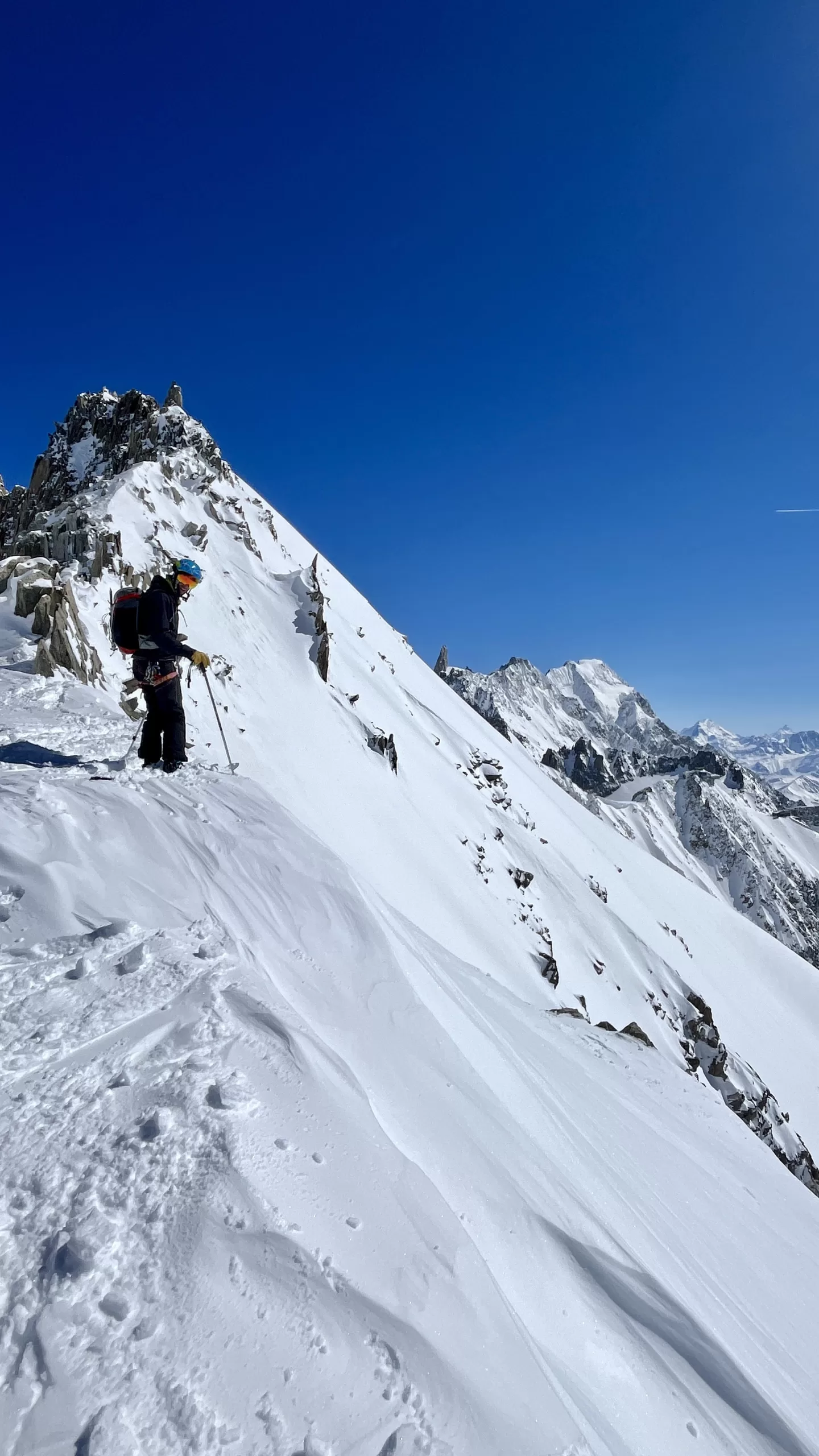
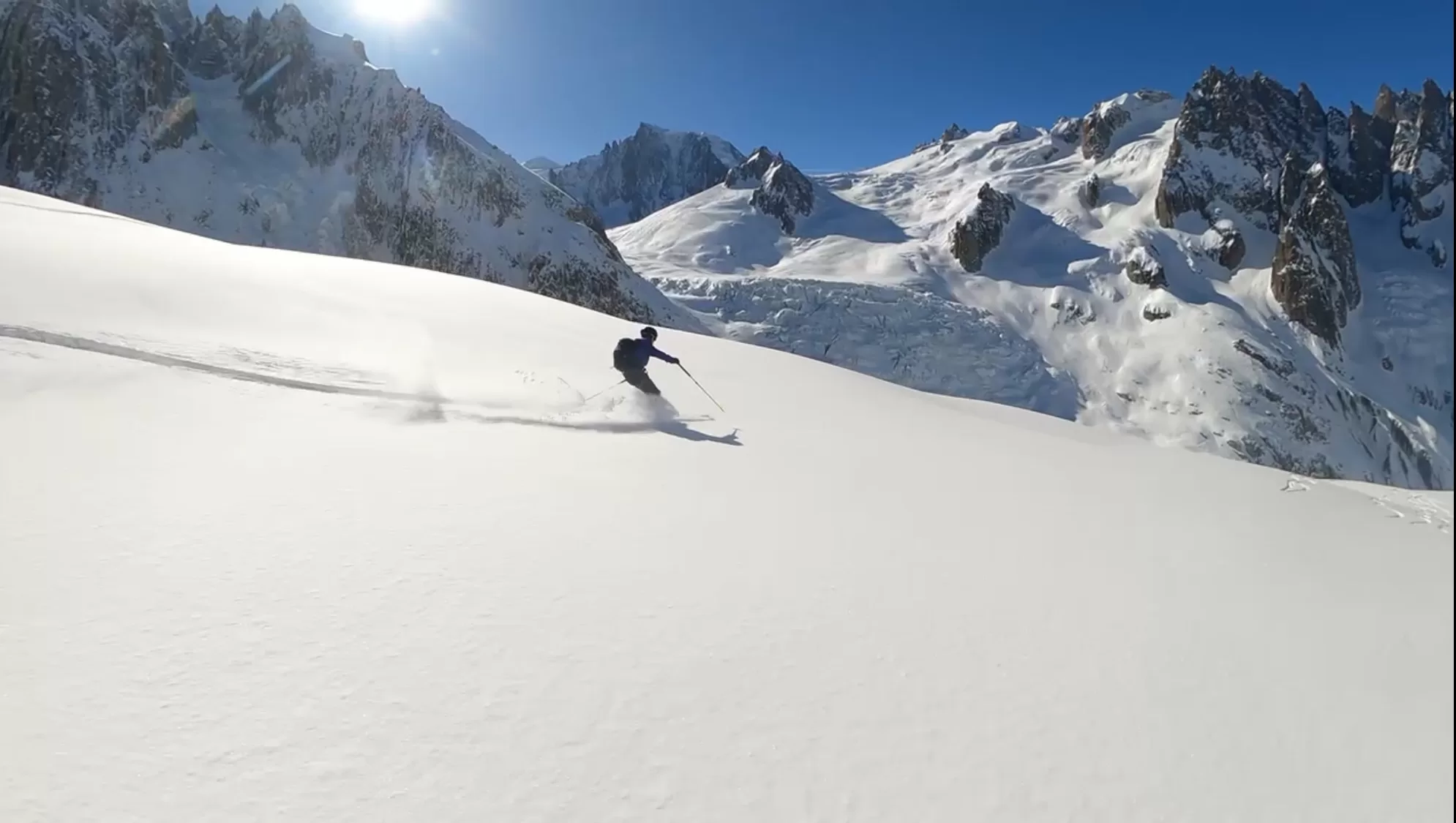
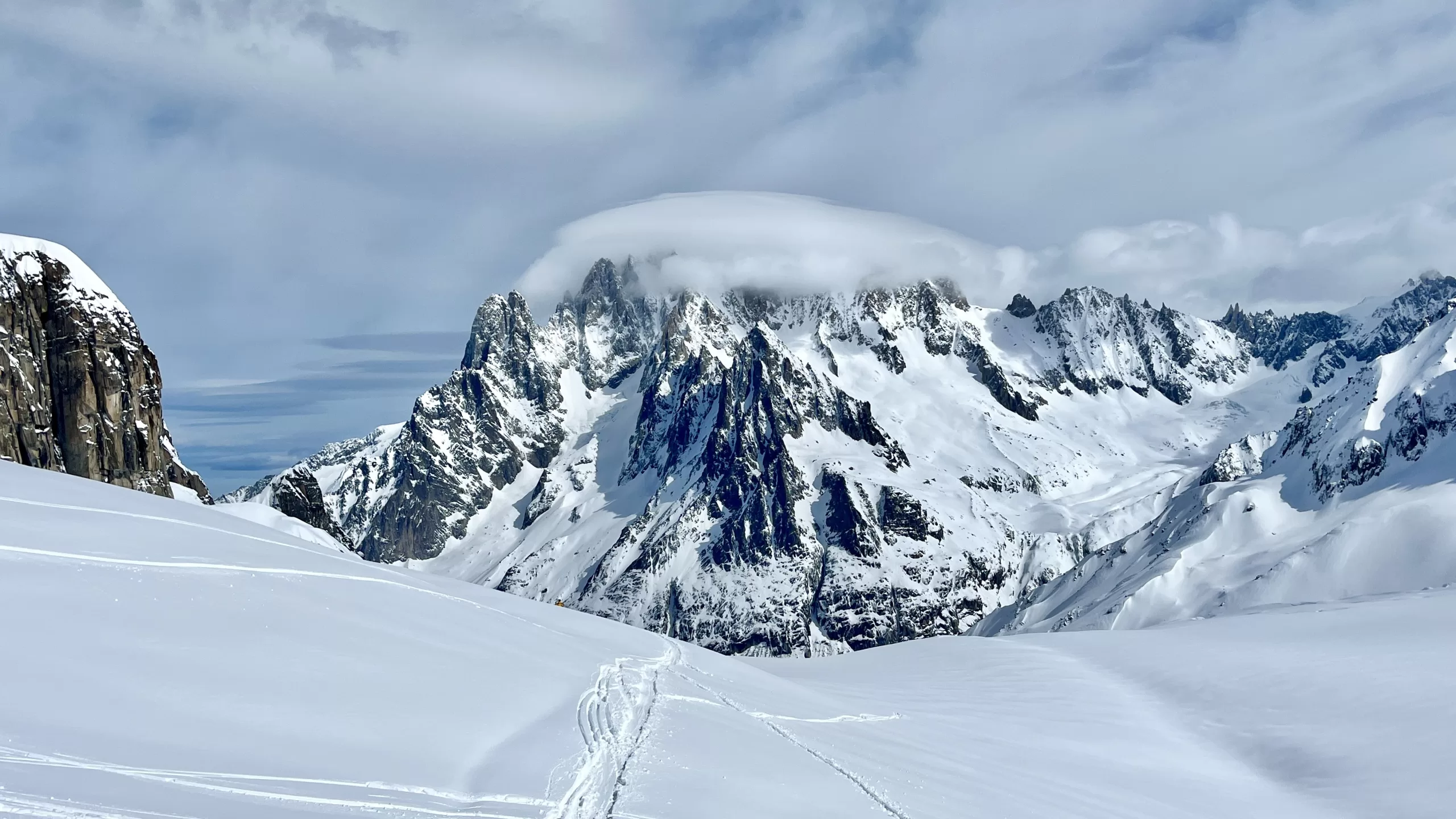
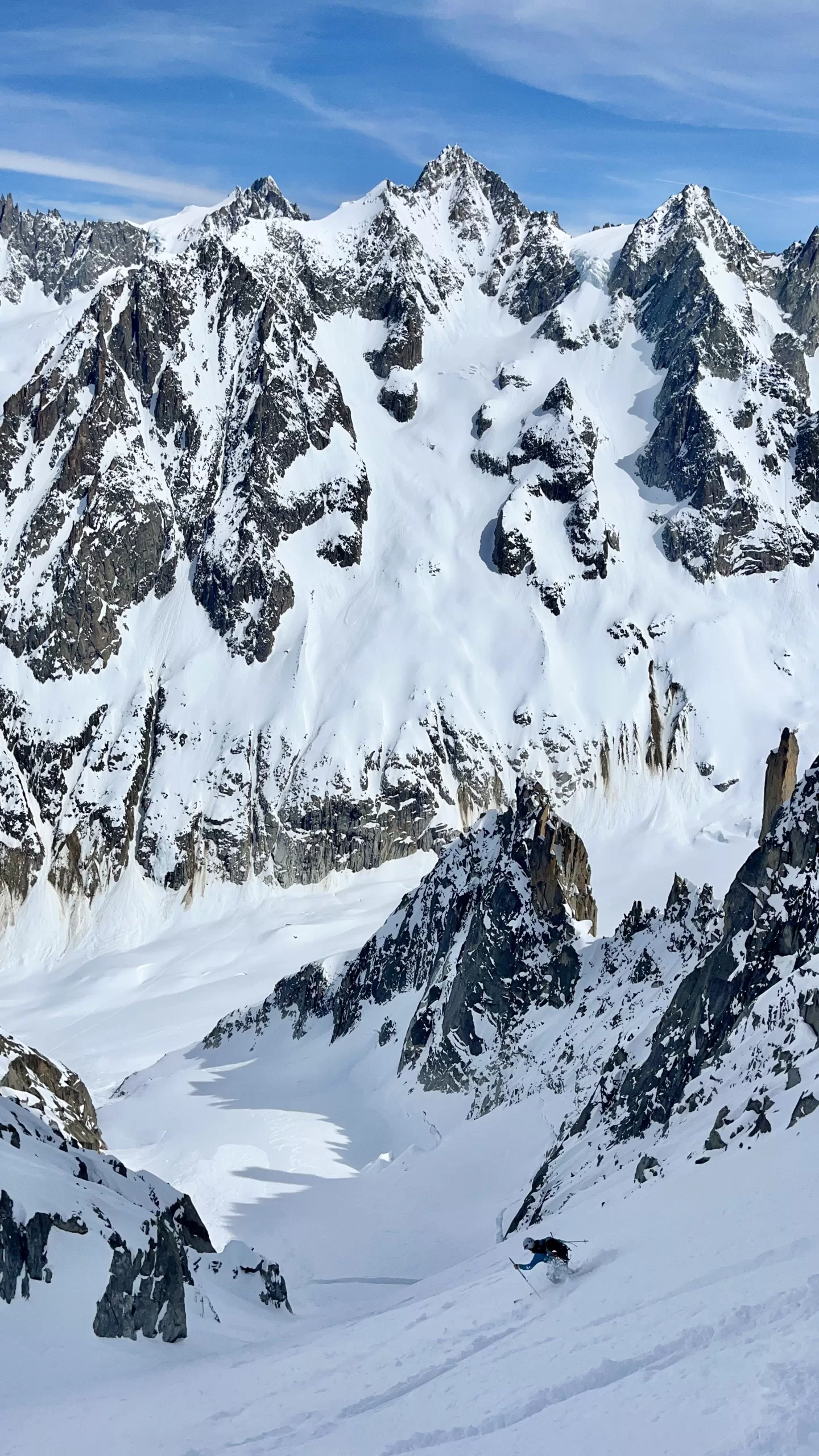
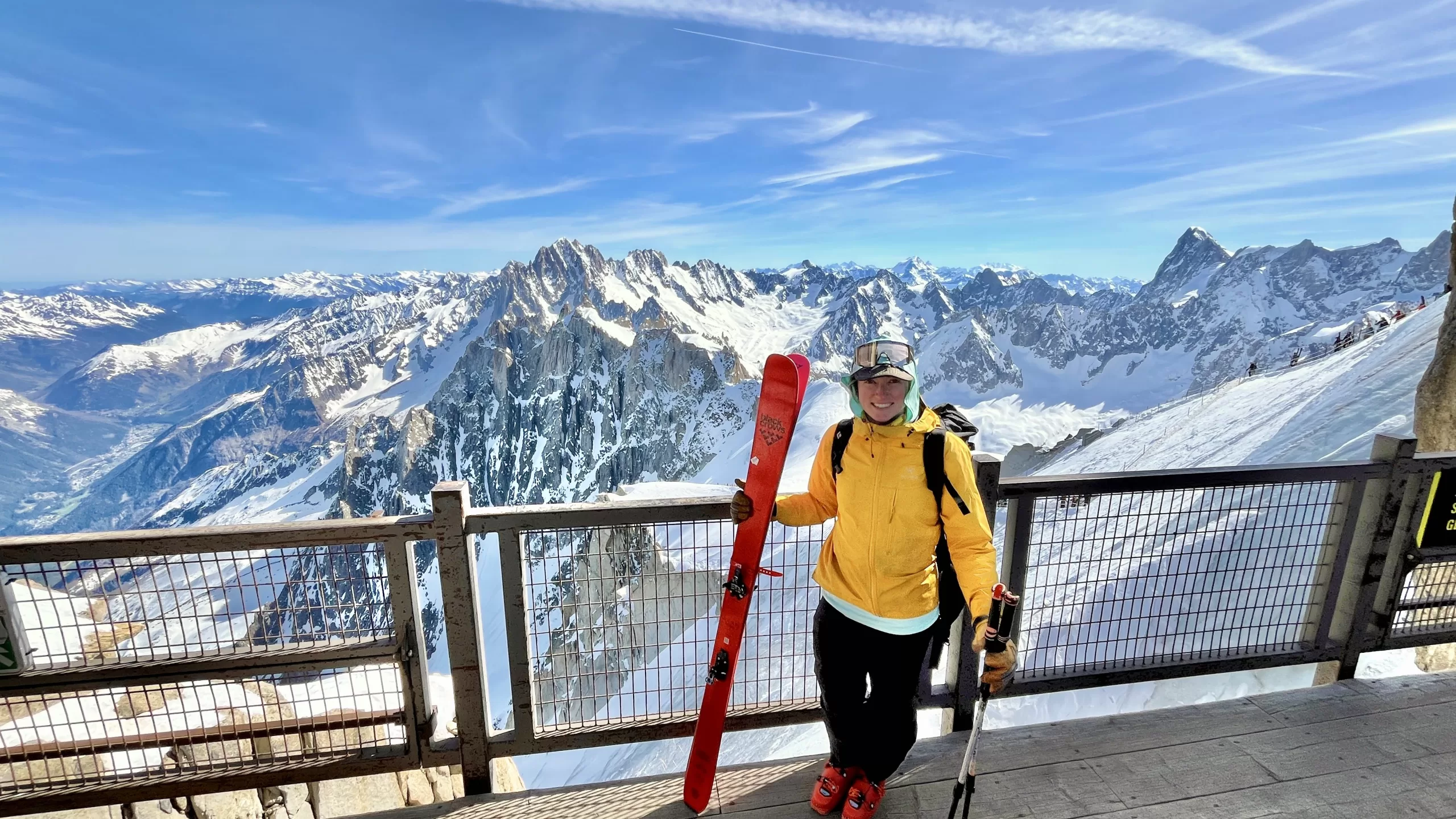
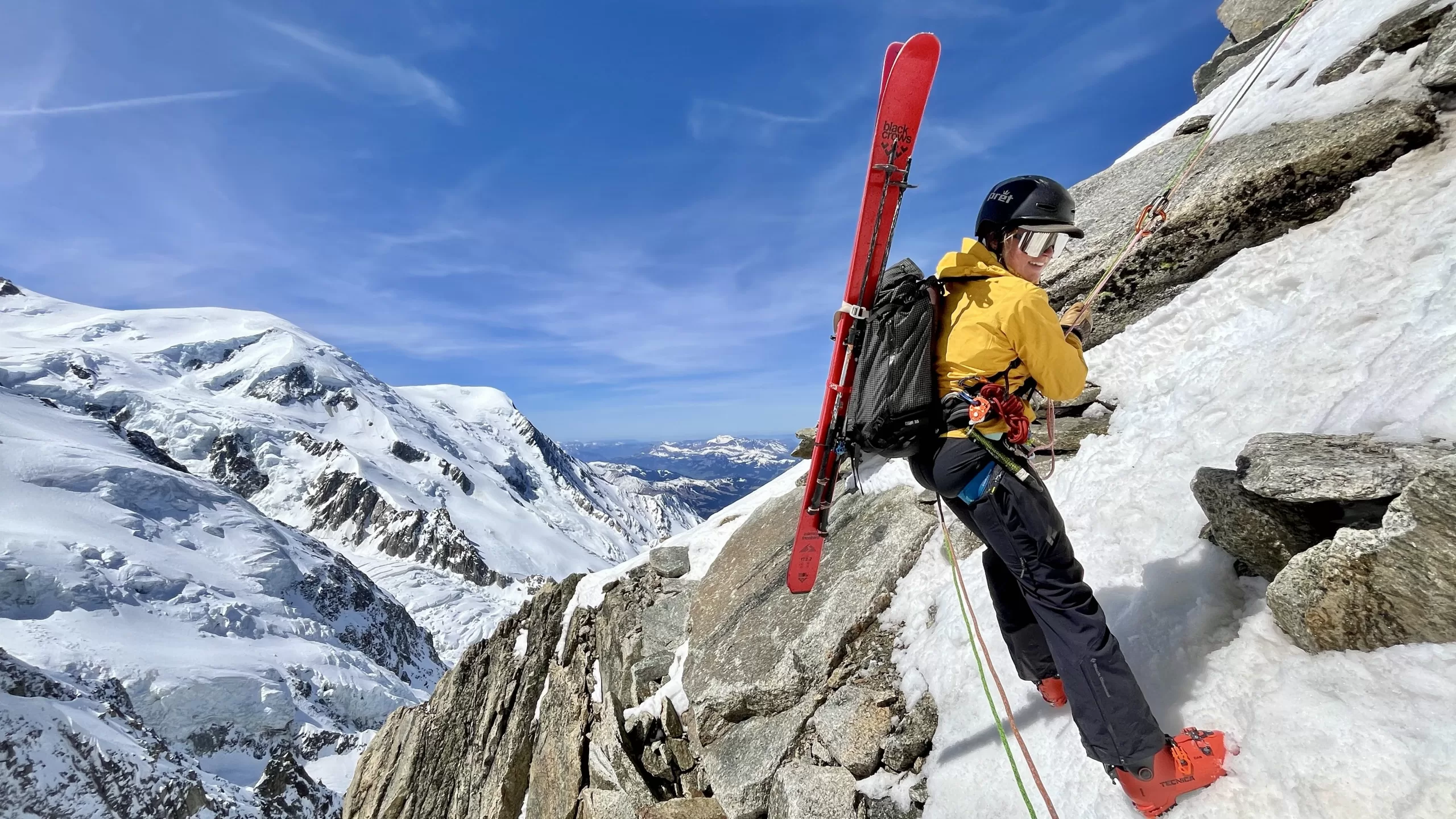
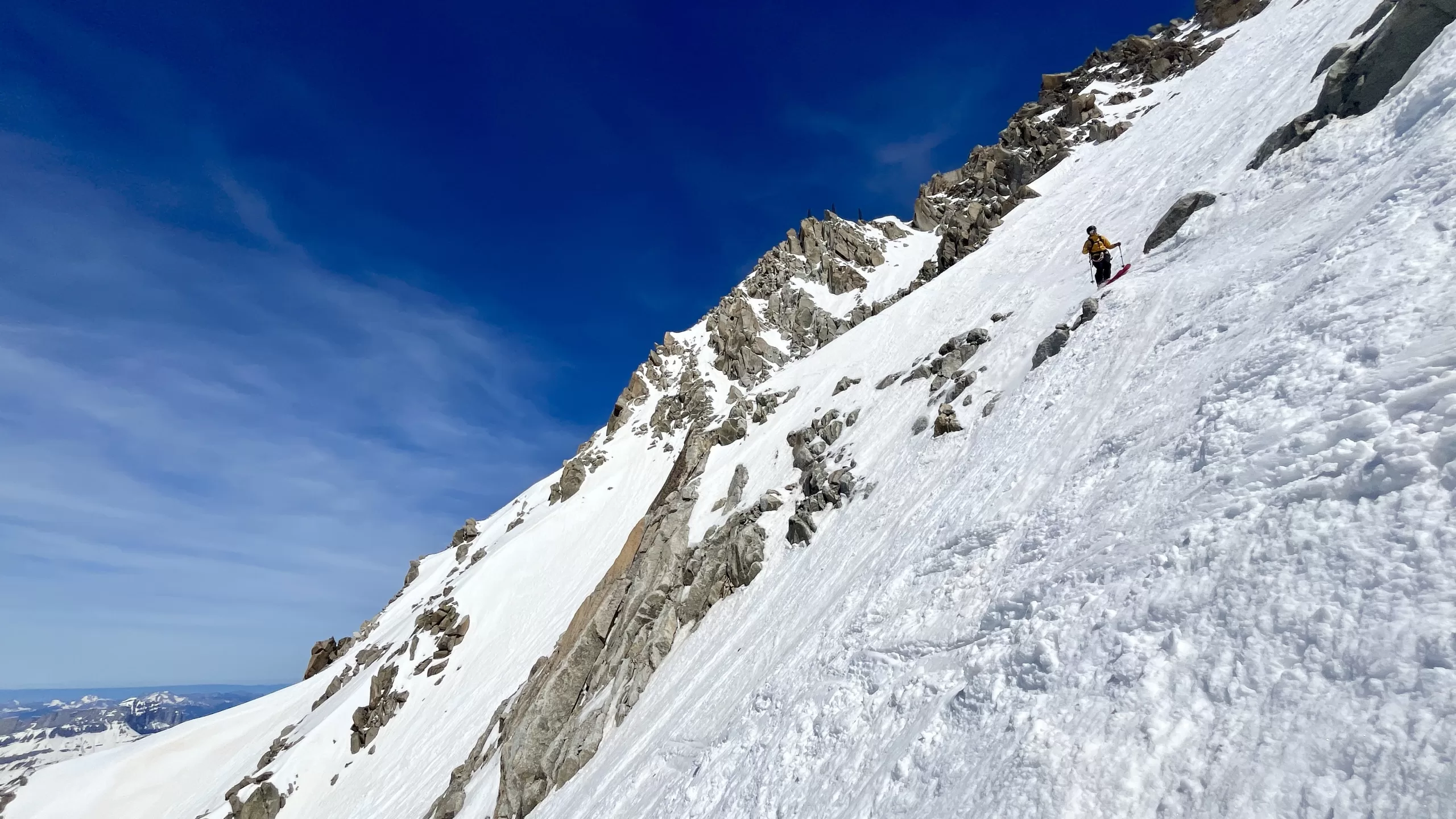
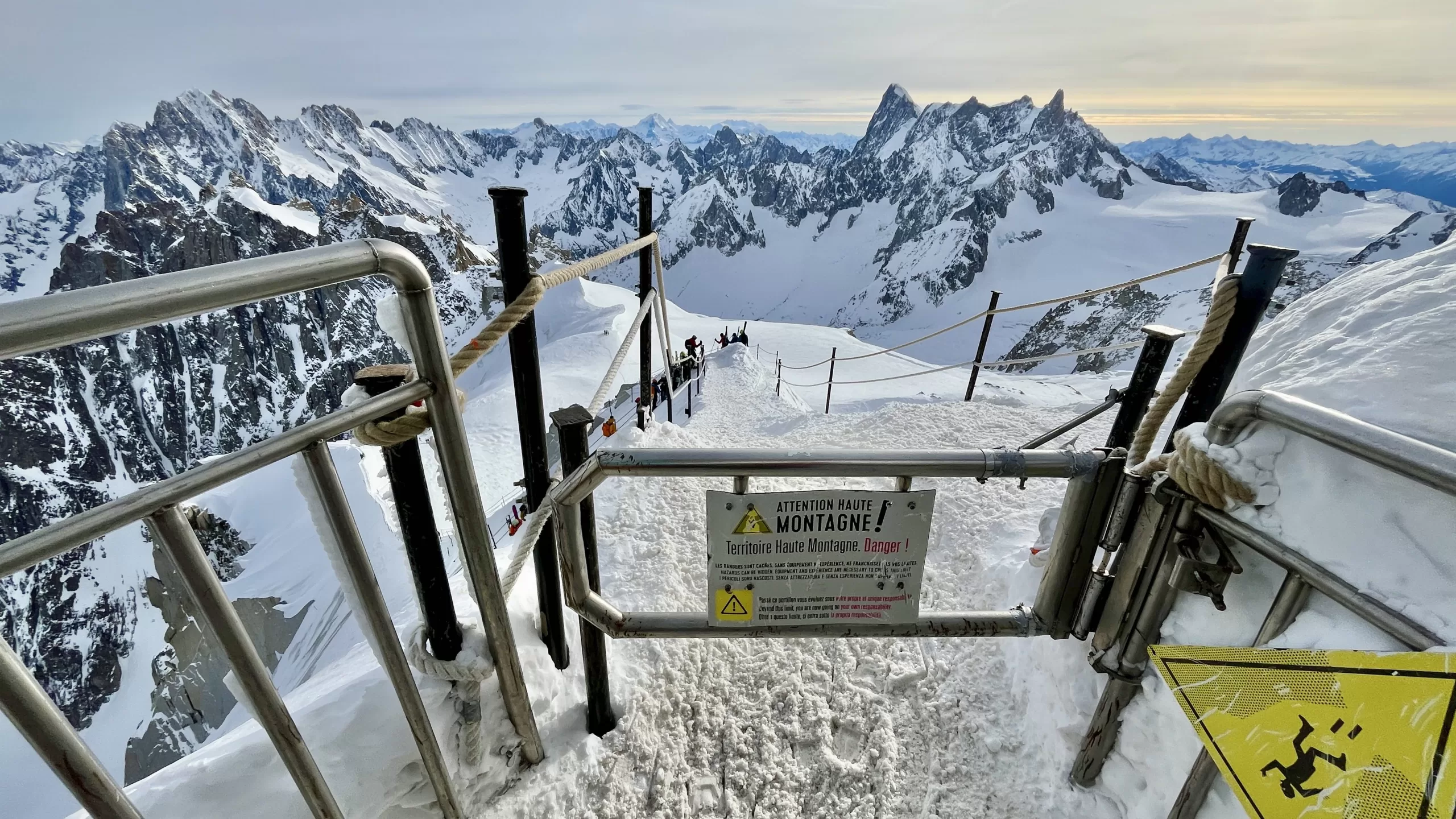
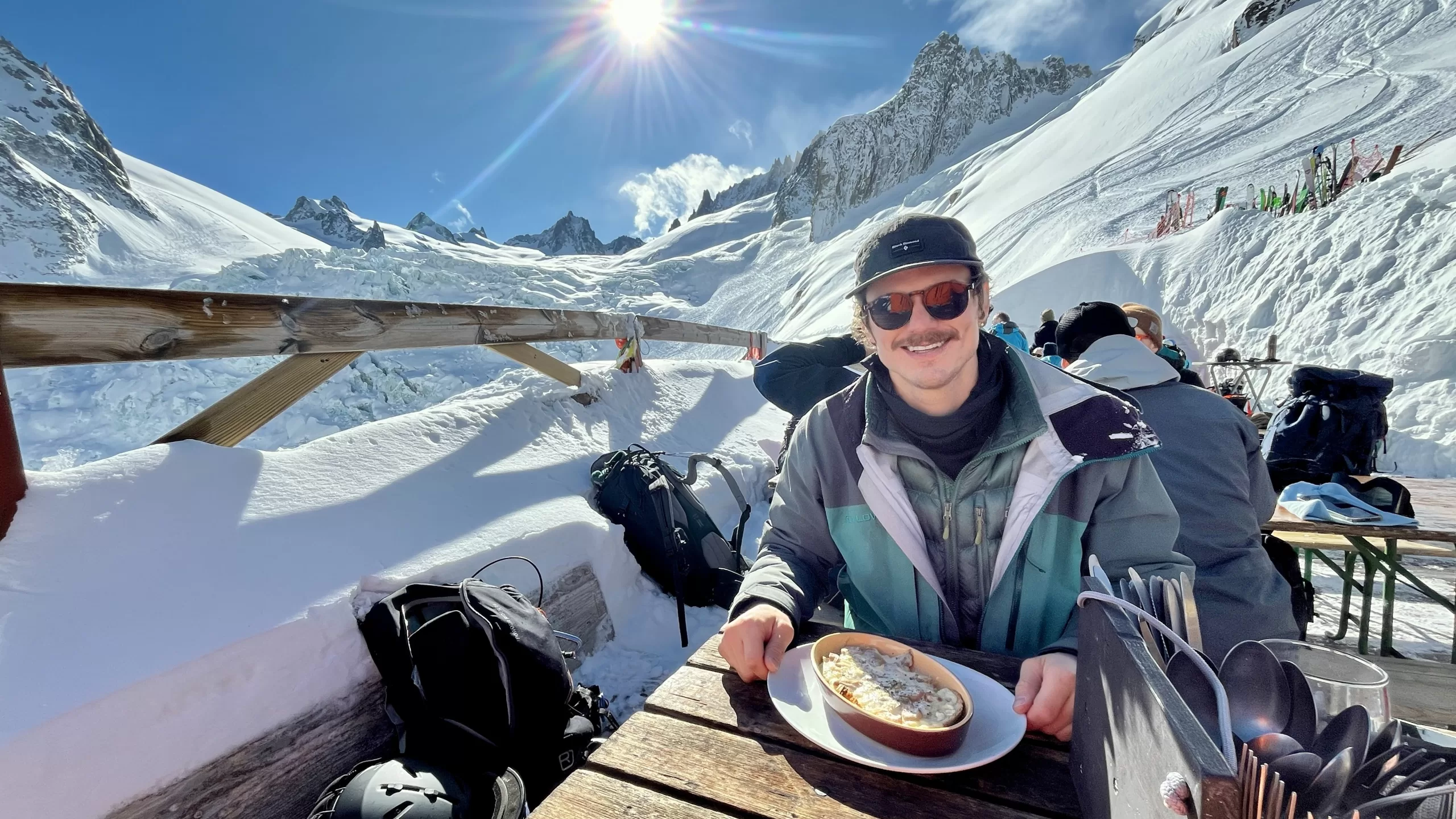
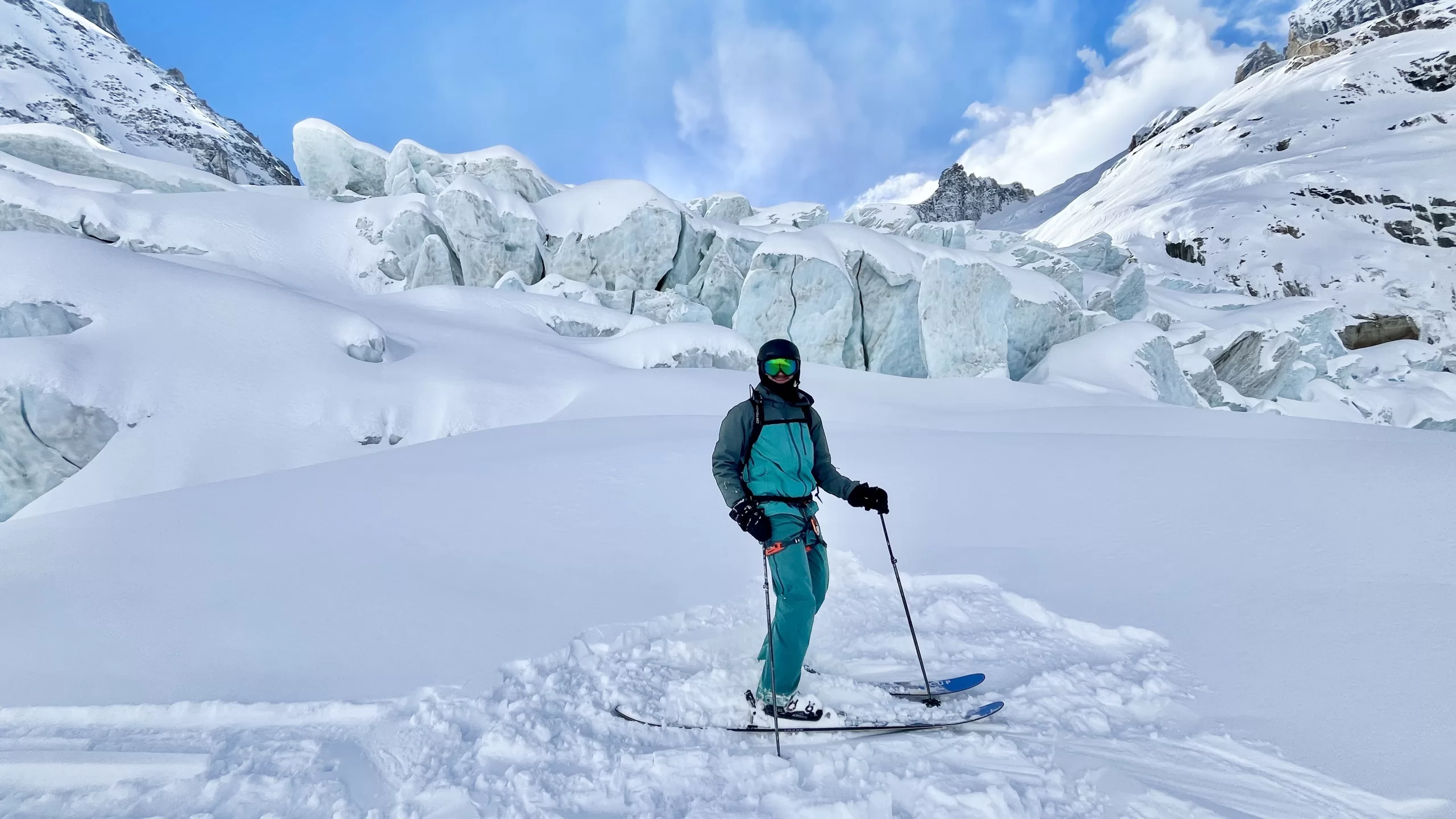
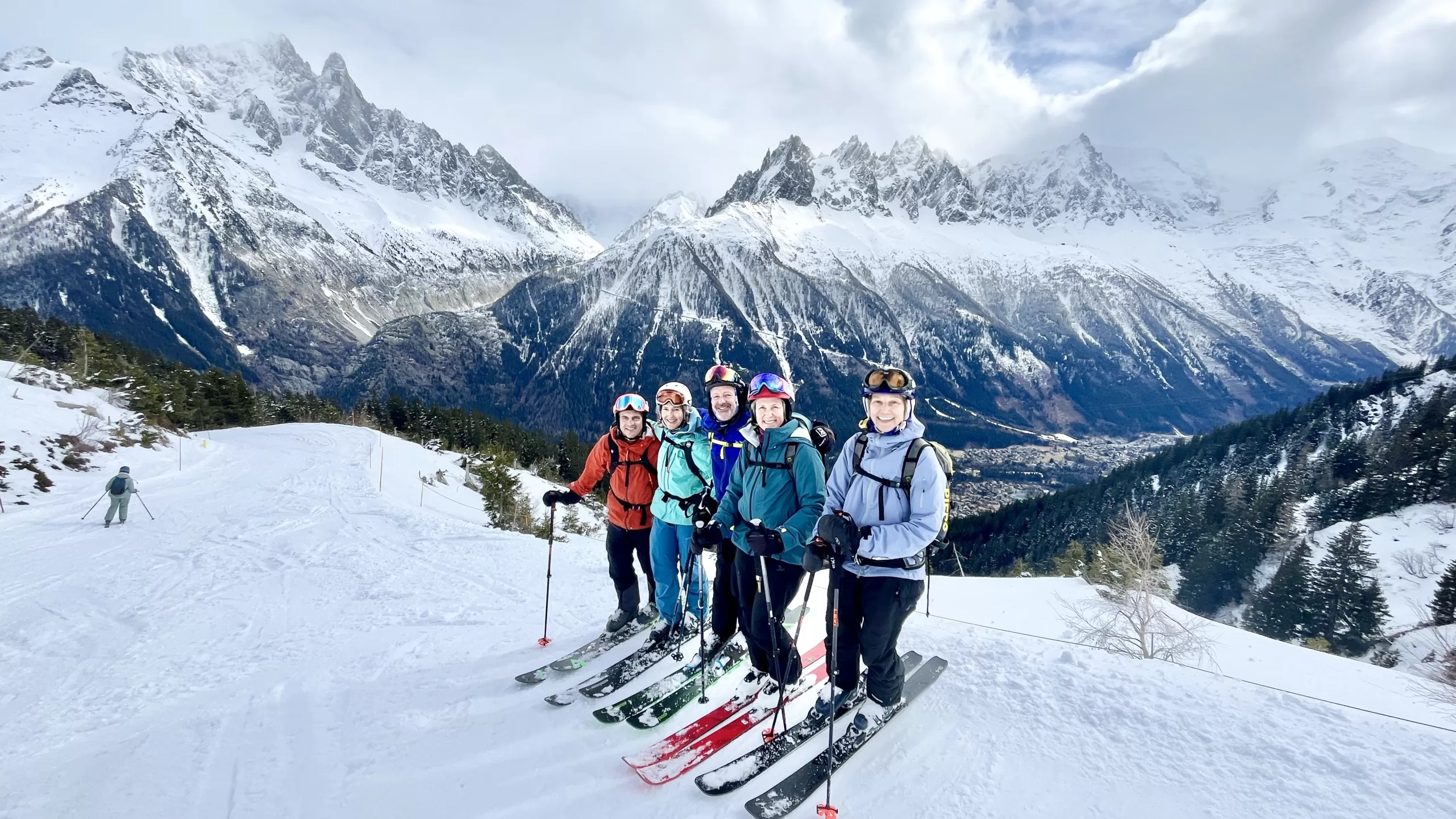
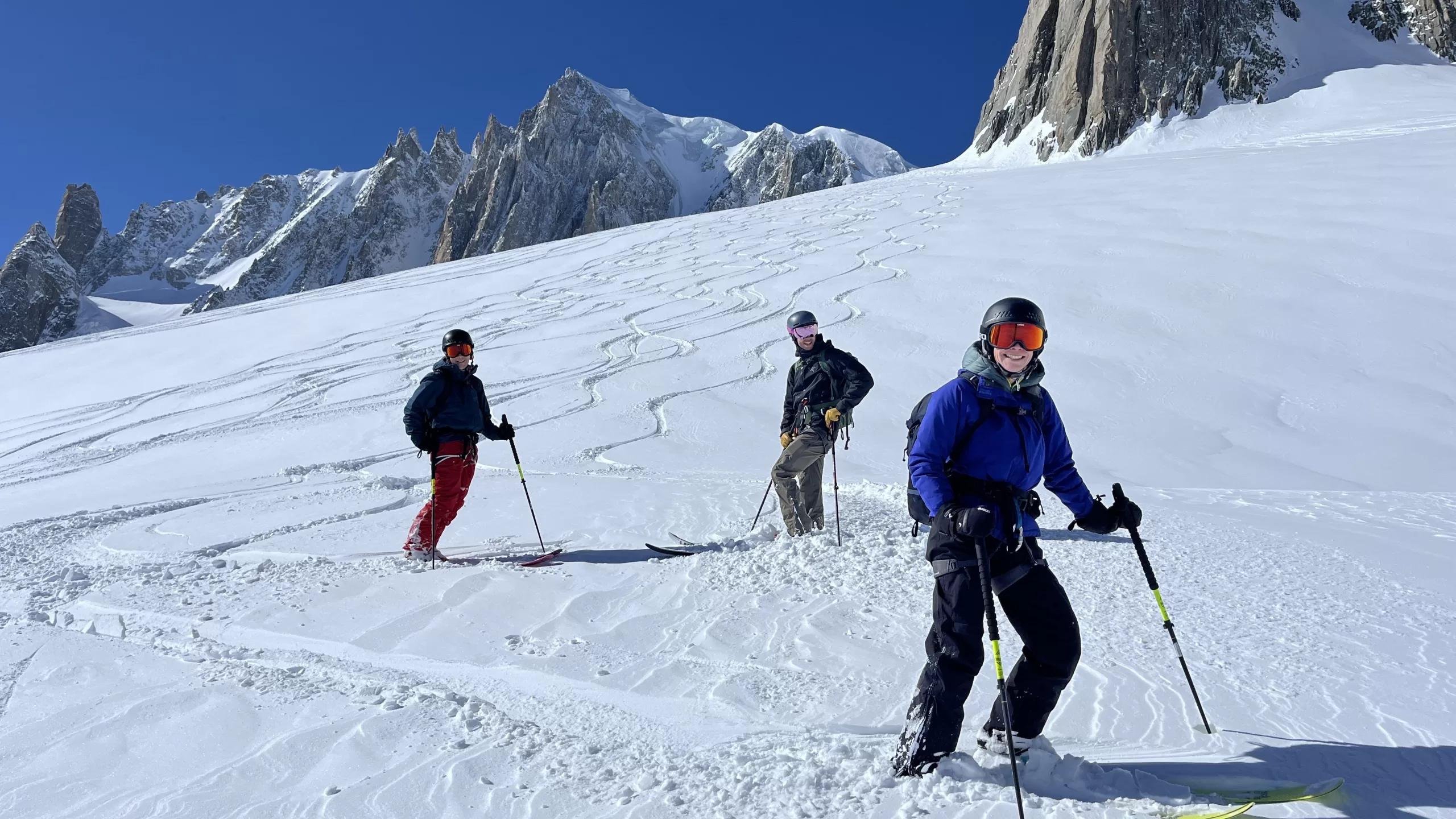
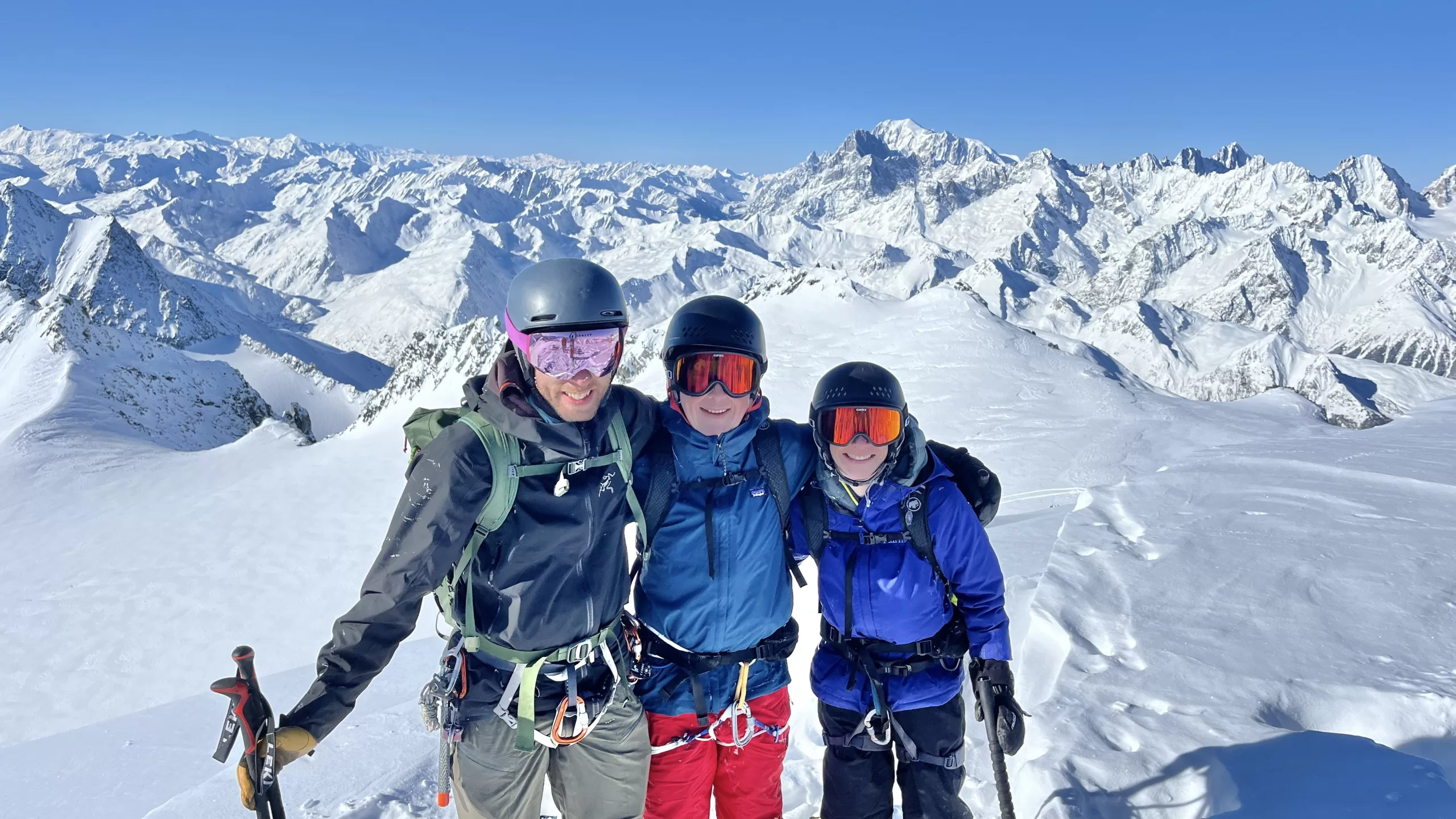
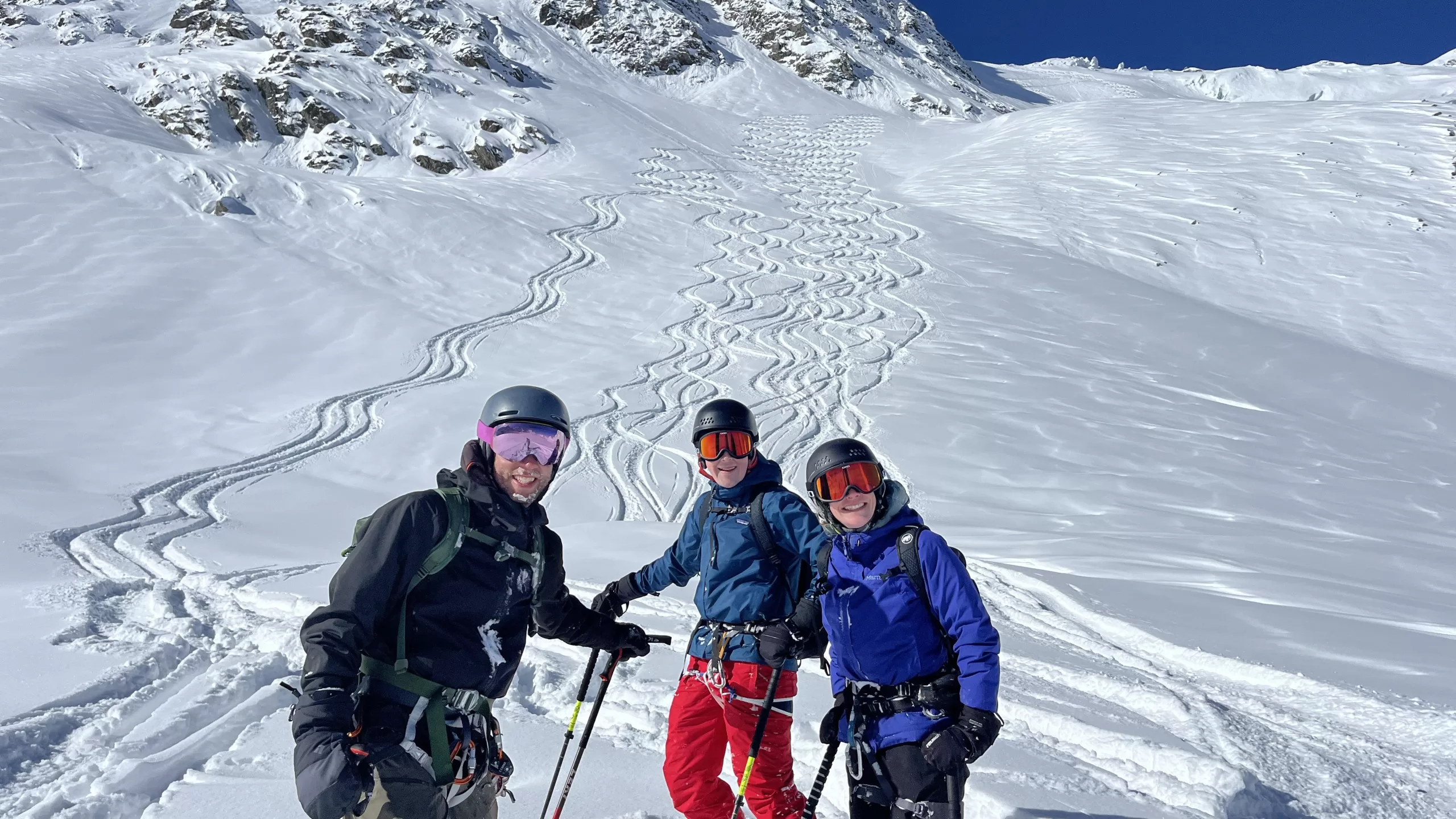
Mountain Trip welcomes you to the heart of the French Alps, where jagged peaks, glaciers, and legendary descents await! Our Best of Chamonix Ski Week is your opportunity to immerse yourself in the ultimate ski mountaineering experience in one of the most iconic alpine destinations on the planet: Chamonix, France. Over five days you’ll explore the best terrain Chamonix has to offer, guided by our expert IFMGA mountain guides, who know the region like the back of their hand. From skiing pristine glacier runs to tackling steep couloirs, this trip is tailor-made for advanced and expert skiers seeking the perfect combination of challenge and adventure.
What’s the Best of Chamonix Ski Week?
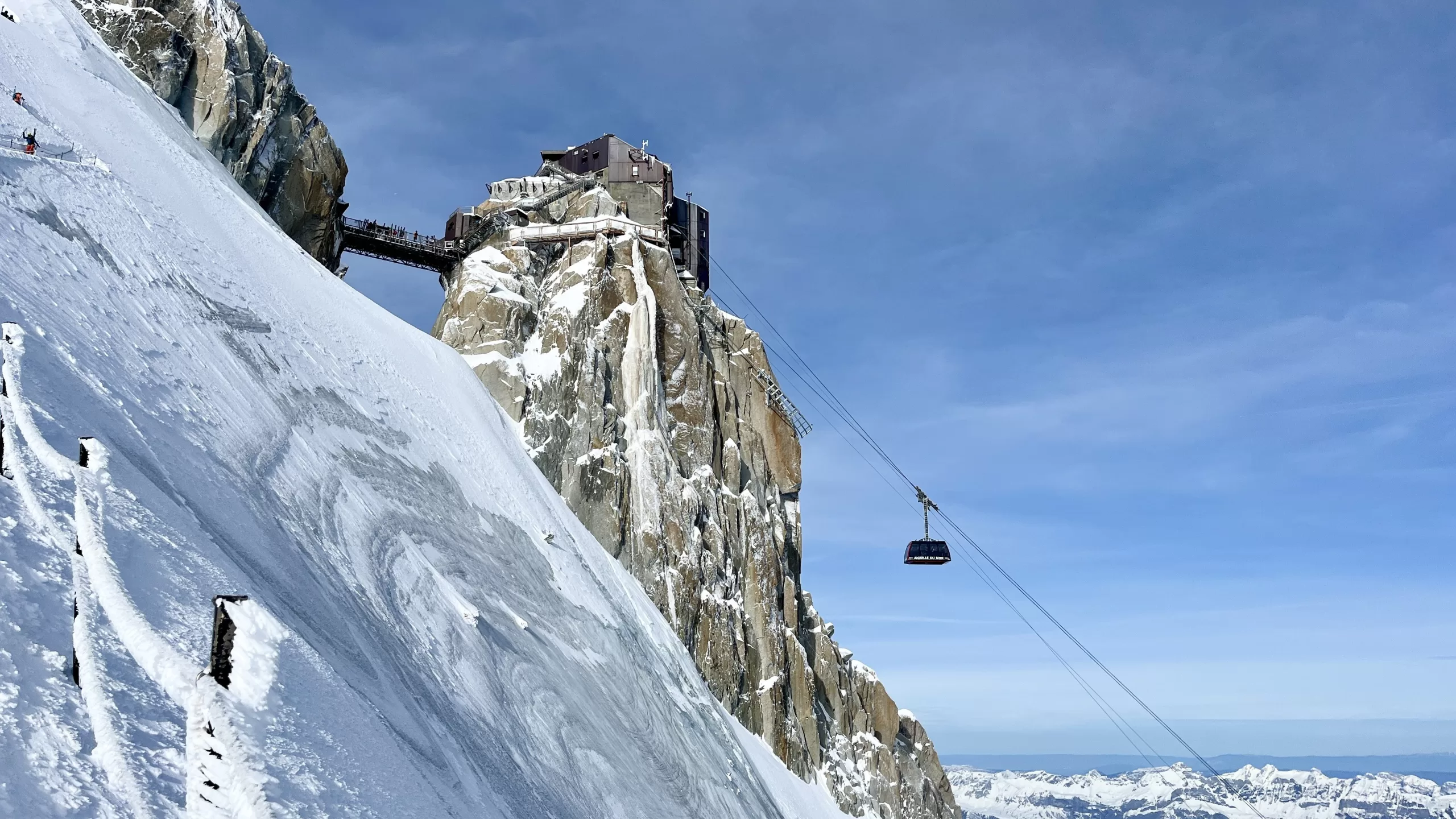
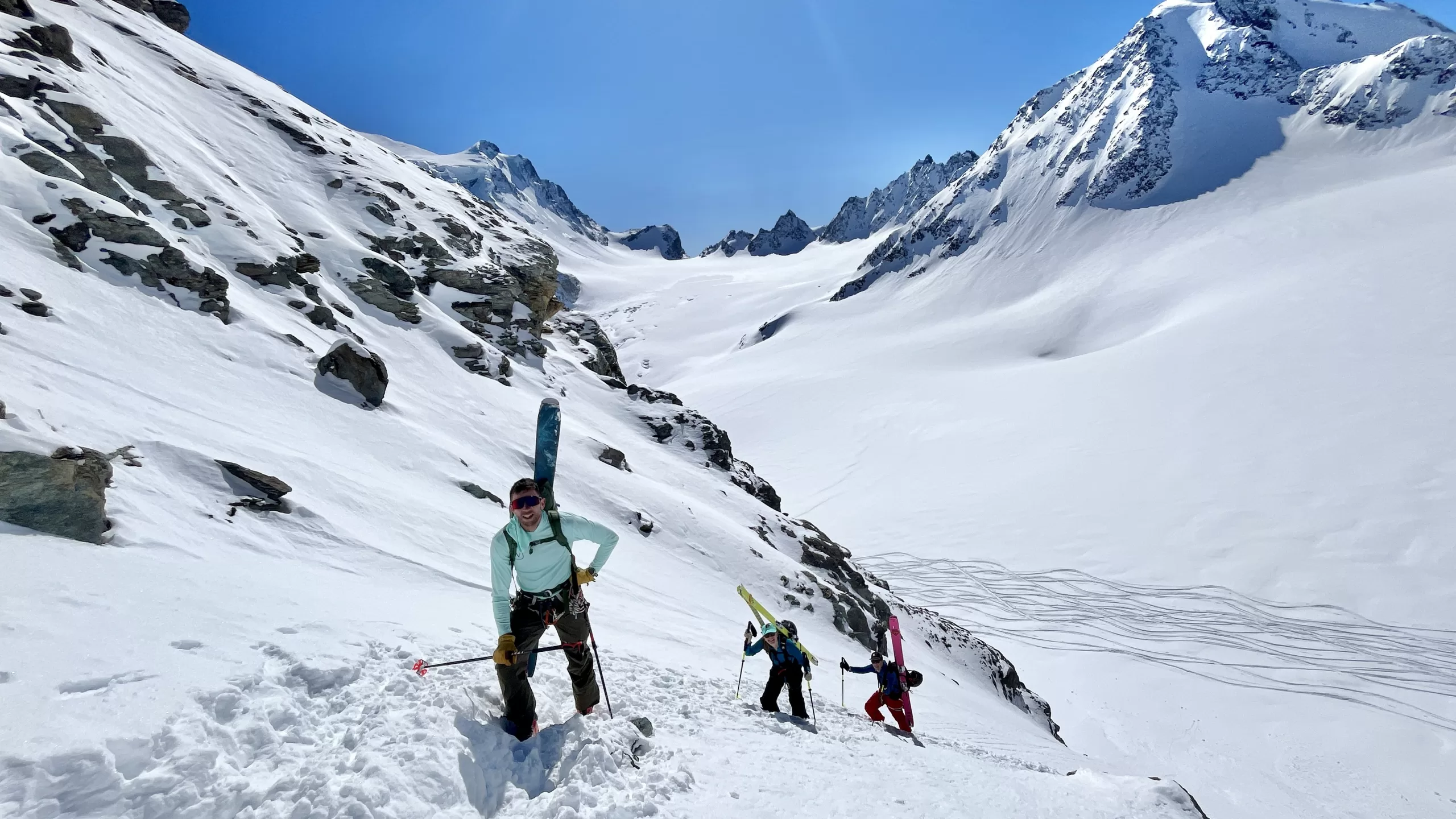
April is the perfect time to experience Chamonix’s high-altitude terrain, with stable snow conditions and stunning spring vistas. Some days, you’ll ascend breathtaking routes with the help of lifts like the infamous Aiguille du Midi cable car, opening up access to legendary descents like the Vallée Blanche and the Cosmiques Couloir. Other days, we’ll use skins or crampons and ice axes to climb the peaks around Argentière Glacier. With comfortable accommodations, including two nights at a mountain hut and exceptional local cuisine to return to each evening, this trip is not only about thrilling descents, but also about savoring the mountain lifestyle. Whether you’re chasing lifelong ski goals or simply looking to explore the Alps on skis, this week promises memories and ski lines you’ll never forget.
Can You Ski Chamonix if You’re Not an Expert Skier?
Chamonix is known for its steep and exposed ski mountaineering lines, but there are great tours for intermediate skiers as well. If you’re not interested in skiing steep, technical terrain, but still want to experience the beauty of the Alps on skis, we can easily create a custom itinerary for you.
Your Guides
Your guides are American IFMGA mountain guides who have guided extensively in the Alps and spend a large portion of each winter guiding there. They’ll be waiting for you in Chamonix when you arrive.
Contact Us with Questions or Private Trip Inquiries
If you have questions, please contact the Mountain Trip office at [email protected] or (970) 369-1153. We can customize this itinerary to meet your group’s wishes, from luxury accommodation to low skier-to-guide ratios and longer trips.
Arrival: Chamonix, France. Geneva will be your port of entry, with flights arriving from destinations around the world every day. From Geneva, it’s an easy one-hour shuttle by bus or private transfer to Chamonix. We’re happy to arrange this transportation for you if you’d like. We’ll meet at our preferred hotel for a welcome dinner and introductions.
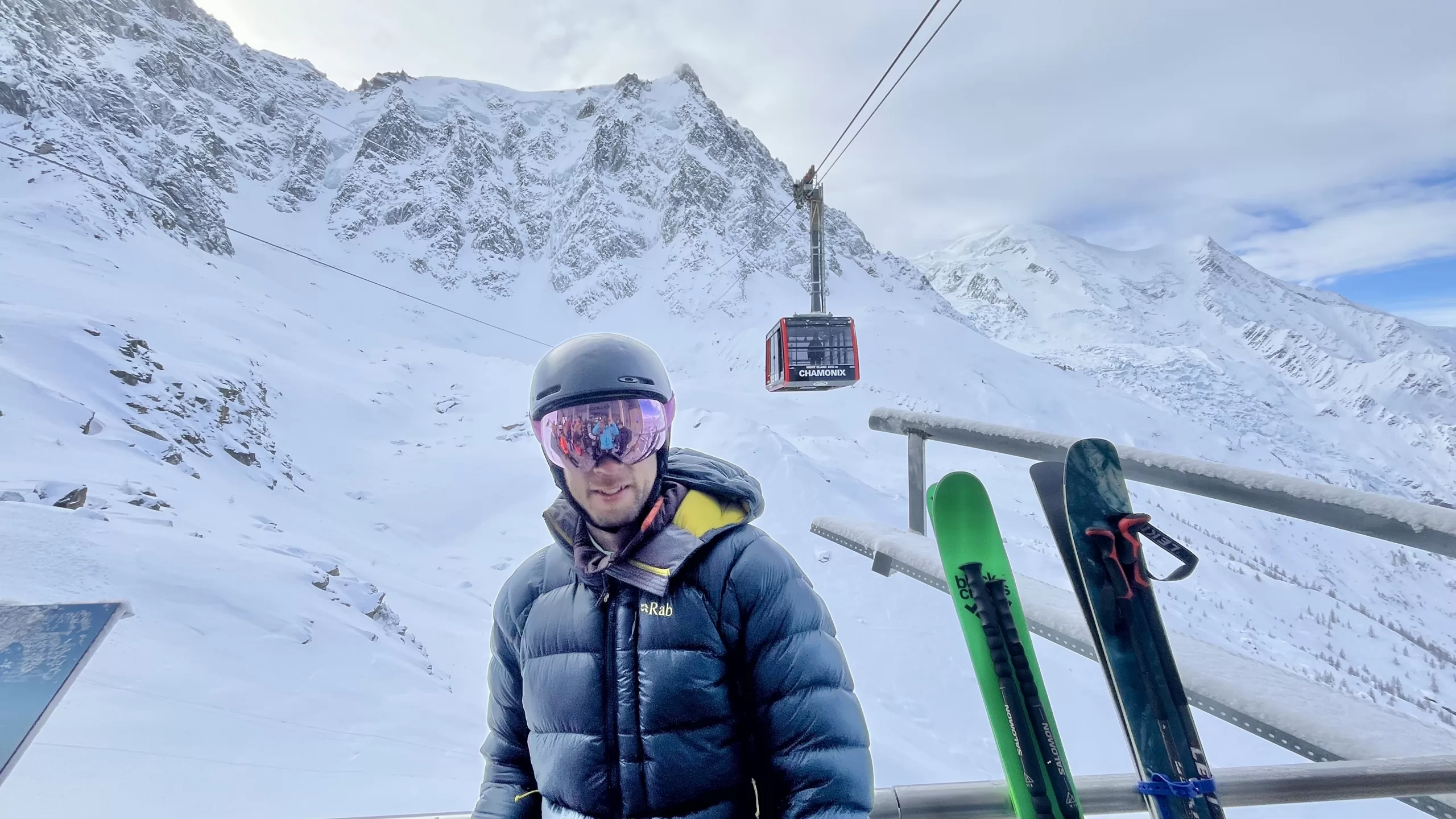
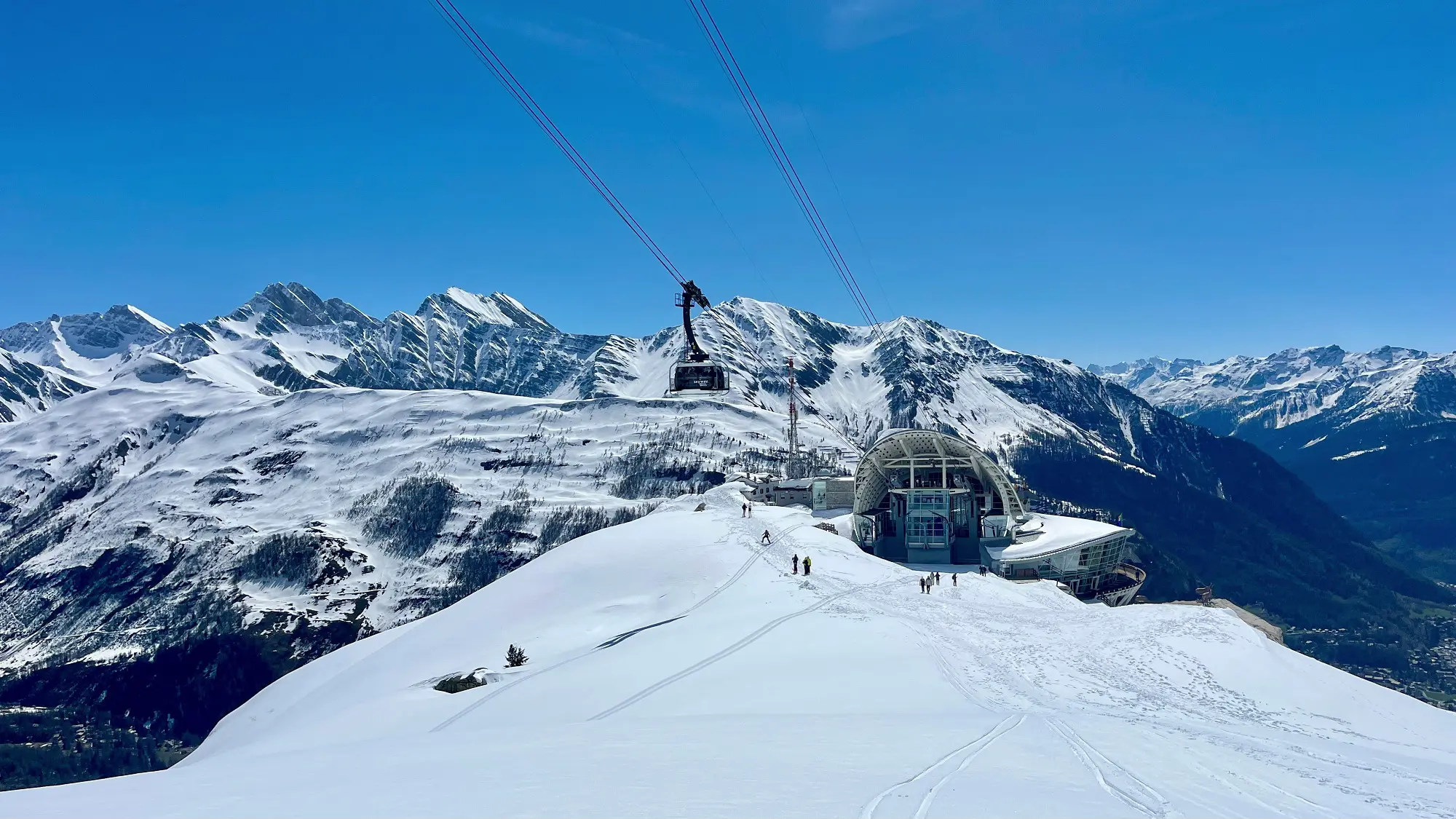
Day 1: Aiguille du Midi and the Vallée Blanche. After breakfast, we’ll ride the famed Aiguille du Midi cable car 9,200 vertical feet above Chamonix. From the summit, we’ll take in the views and ski the classic Vallée Blanche glacier through crevasses and icefalls back down to Chamonix. This ski run takes all day, and if the group and conditions allow, we’ll use skins to access additional terrain on the way down. We’ll also refresh avalanche rescue skills and introduce safe glacier travel concepts. Dinner in Chamonix.
Day 2: Aiguille du Midi’s Challenging Lines. Today, we’ll get off the beaten path and ski one of Chamonix’s classic ski descents, such as the Cosmiques Couloir, Breche Puiseux, or the Aiguille du Tacul. Dinner in Chamonix.
Day 3: Les Grands Montets and the Argentière Glacier. Today, we’ll grab a pastry in the hamlet of Argentière, then ride the Grands Montets Cable Car, with incredible views of Mont Blanc and the Chamonix Aiguilles. From the top, we’ll skin a short distance before skiing down onto the vast Argentière Glacier. Here, we’ll spend the day ski touring in this beautiful valley before reaching the Refuge d’Argentière, a mountain hut, our home for the evening. Dinner is served at the hut.
Day 4: Ski Touring the Argentière Glacier. From the hut, we’ll choose from a wide variety of possible tours, including the Glacier du Tour Noir, or if conditions allow, summiting the Aiguille d’Argentière via the Glacier de Milieu and a steep couloir below the summit. Dinner at the hut.
Day 5:Tour of the Three Cols. We’ll say goodbye to the Refuge d’Argentière after breakfast and begin the long climb towards the Col du Chardonnay, the first of three high-mountain pass crossings of the day, before skiing down into Chamonix. If we want a shorter day, we can ski back down the Argentière Glacier and into the Grands Montets ski area without any climbing. Or, we can do a shorter tour before returning to town for a celebration dinner.
Day 6: Departure. From Chamonix, a private transfer or shuttle bus will bring you to the Geneva airport, where a late-morning departure will get you home to the U.S. the same day. Or, contact us for arranging additional ski days in Chamonix or elsewhere in the Alps.
Inclusions and Exclusions for Best of Chamonix Ski Weeks
Included in the Trip Fee:
• Unlimited pre-trip access to our office resources.
• IFMGA guide fees and all guide expenses; 4:1 ratio maximum.
• Four nights lodging (shared room) at the Hôtel de L’Arve in Chamonix, France, with breakfast.
• Two nights lodging (shared room) at the Refuge d’Argentière near the Argentière Glacier, with dinner and breakfast.
• All ground transportation during the itinerary.
• Three days of lift tickets during the itinerary.
• 15% discount on Arc’teryx clothing and equipment.
Not Included in the Trip Fee:
• Transportation to and from Chamonix, France.
• Personal clothing and equipment, per our equipment list.
• Touring skis, boots, skins, and poles.
• Avalanche transceiver, shovel, and probe.
• Dinners in Chamonix, France.
• Lunches, snack food, or beverages at mountain huts.
• Costs incurred due to early evacuation or unplanned departure from the trip due to illness or other problems.
• Costs incurred due to deviations from the itinerary beyond the control of Mountain Trip.
• Costs as a result of force majeure.
Refunds and Cancellations
Mountain Trip recognizes how difficult and disappointing it can be for climbers who must cancel expeditions which they have planned for a long time. Team members must also recognize that, due to the nature of planning expeditions and dealing with governmental permits and regulations, Mountain Trip also accrues significant expenses in the months prior to expedition departure dates. We must therefore adhere to a strict refund policy for all climbers. Trip cancellation and travel insurance is generally available for all expeditions. U.S. and Canadian residents should contact us for more information regarding travel insurance. Our refund and cancellation policy is outlined below.
• All trips require a deposit to secure a spot on the scheduled inerary. Your submission of a deposit constitutes your acceptance of this Fee Schedule, Refund and Cancellation Policy.
• All deposits for the Best of Chamonix Ski Week include a non-refundable $750 administration fee. (We highly recommend you consider Trip Cancellation insurance to protect the administration fee, if not the entire cost of your climb.)
• Final payments for shipments must be received 120 days prior to the Team Meeting Day.
• Failure to pay fees by the date they are due constitutes cancellation of your spot on the team and forfeiture of your deposit.
• Any cancellation 120+ days before your Team Meeting Day will be refunded in full, less the administration fee.
• If you cancel 120-90 days before your Team Meeting Day, you are eligible for a refund of 50% of any monies paid, less the deposit.
• No refunds will be provided for cancellations occurring within the last 89 days prior to an international trip.
• All requests for refunds must be made in writing and received in our Colorado office.
• If you register for a trip within 90 days of the Team Meeting Day, trip fees will be due in full to secure your spot on the team.
• No refunds will be given for unused hotel bookings due to schedule changes, late arrivals, etc.
• Mountain Trip reserves the right to cancel an expedition prior to the departure date for any reason. In the event that the expedition is cancelled based solely on an internal administrative decision by Mountain Trip (Internal Cancellation), all monies, except for nonrefundable administrative fees, collected by Mountain Trip from team members for the canceled expedition shall be refunded within 30 days. That is the extent of our financial liability for such cancellations. This Internal Cancellation provision shall not apply when external factors that force Mountain Trip to cancel an expedition against its will, including, but not limited to, international political upheaval, terrorism, drought/famine, epidemics/pandemics, and/or cancellations imposed by foreign or domestic governments or permitting agencies (External Cancellation). All External Cancellations shall not be subject to a refund unless such cancellation occurs prior to the deadlines set forth in the Refund and Cancellation policies stated above.
The following applies only if all expedition fees are paid by the date they are due:
If Mountain Trip cancels your expedition due to External Cancellation factors resulting from coronavirus more than 90 days prior to the Team Meeting Day, Mountain Trip will credit 100% of your paid expedition fees toward a future program with Mountain Trip or refund all monies paid except for the non-refundable administrative fee.
If Mountain Trip cancels your expedition due to External Cancellation factors resulting from coronavirus 90 days or less prior to the Team Meeting Day, Mountain Trip will credit 75% of your paid expedition fees toward a future program with Mountain Trip or refund 50% of your expedition fee.
General Agreement Concerning Services to be Provided and Responsibilities of Team Members
When registering for an expedition with Mountain Trip, we want to help make sure you understand the services we are providing and the services for which you are responsible.
Transportation is Incidental
The main purpose of becoming a team member is to join us on an expedition in the mountains. As such, any transportation we provide or that you may contract for on your own is incidental to the trip. We suggest that you make sure you have time built into your itinerary for delays.
Transportation to and from Your Destination
We will designate a specific Team Meeting Day for your expedition. Transportation to the meeting point on your Team Meeting Day is to be provided by you. You must arrive in time to be ready to participate in a team meeting at the appointed time on the Team Meeting Day for your expedition. This probably means you will need to arrive the day before, as our Team Meetings for Chamonix trips are held in the morning. Expedition climbing is very dynamic, and we will provide you with a recommendation as to when you should book your flights to and from your destination. We suggest you book a ticket that allows you to change your flight with little effort or cost.
Lodging off the Mountain
Mountain Trip will provide lodging per the Inclusions and Exclusions section of the “What’s Included?” tab. Any additional lodging is your responsibility. Don’t worry about booking a room after your expedition. We generally don’t know how long we’ll be in the mountains, and we can help arrange lodging when we return to “civilization.”
Responsibilities of Team Members
You are ultimately responsible for your own well-being, including making all necessary preparations to ensure good health and physical conditioning.
You are responsible for understanding the conditions that may exist on the climb and choosing a climb that is appropriate for your abilities and interests.
You are responsible for providing Mountain Trip staff and guides with an accurate representation of your fitness level, climbing ability and the condition of your personal equipment.
You are responsible for having knowledge of all pre-departure information and for assembling the appropriate clothing and equipment for your climb. Climbers joining scheduled expeditions are responsible for carrying his or her portion of group loads, and to contribute to camp construction and the day-to-day team work.
While on the expedition, team members are responsible for maintaining basic levels of hygiene and to conduct themselves respectfully with other team members and members of the local population. If a guide feels that a team member is putting other members’ health or safety at risk, the guide has the discretion to remove a team member from an expedition.
Use our office staff and your lead guide as pre-trip resources to ensure that all your questions are answered. Travel insurance may help recover expenses if you need to leave an expedition due to an illness.
Airline Responsibility Passenger/Airline contracts are in effect while team members are onboard any aircraft contracted for use in the expedition.
No Guaranteed Outcomes
While it is one of our goals to help every climber on every Mountain Trip expedition reach the summit, Mountain Trip cannot guarantee you will reach the summit. Any number of factors, including weather, conditions encountered on the route, your personal level of fitness or ability, the abilities of your teammate(s) or any number of other circumstances, might result in you and/or your team turning around before reaching the summit. Failure to reach the summit due to any reason associated with mountaineering, such as weather, team dynamics, route conditions, avalanche and rockfall hazard, or due to your lack of fitness or preparation, are not the responsibility of Mountain Trip, and will not result in a refund or a rescheduling of your expedition.
The following is a list of guide-recommended gear for ski mountaineering in Chamonix, France with Mountain Trip. Skiers joining us will receive an updated, comprehensive equipment list that may supersede this list. In general, you want a selection of warm layers that can work together.
Many of the items on the list need to fit you well in order for you to fully enjoy your experience in the mountains. Please plan ahead with equipment purchased for your trip so you can be certain that your gear fits you well.
In addition to what we provide and have available to rent, there is also a good selection of gear available in Chamonix. If you have any specific questions about what you might need or any gear you’re considering, please don’t hesitate to reach out to the Mountain Trip office.
Lightweight down fill booties both work well on expeditions. These are great for camp and tent comfort and allow you extra opportunity to dry out your mountain or ski boots.
You will want ski socks that fit your foot well and are warm. For multi-day trips or ski expeditions, we recommend multiple pairs of socks so you can dry a pair overnight.
Many high alpine peaks are cold and dry. We are huge fans of very lightweight softshell wind jackets for high, dry, cold peaks. Weighing just a few ounces, these can be carried in your pocket or in the lid of your pack for rapid deployment. This layer is used in addition to your more waterproof hard shell jacket.
Synthetic or synthetic/cotton blend shirts are nice for hiding from the sun. Long sleeve "sun hoodies" are becoming increasingly popular, as they provide a high level of sun protection. Other people favor ventilated, button up shirts- either long or short-sleeved. Whatever you choose, consider it as part of your system, and try it out before your trip.
Vest (optional)
A lightweight down or synthetic filled vest can be a nice addition and add some warmth with little weight. **This is an optional layer**
A Sun Hoody is a great lightweight layer to help protect you from the intense UV at high altitude. It's a go-to layer for our guides, as it both keeps the sun off your skin and helps keeps you cool.
A warm down parka for hanging out in camp on a cold night. This layer should be able to fit over your lighter puffy jacket so you can layer up for warmth.
As the air thins and the wind picks up, you'll want a bit more insulation on your legs. This should be a slightly warmer layer that can go over your base layer bottoms when it gets cold.
On summit day or on a cold morning, you will need a warm layer that can go over your baselayers and softshell pants. This layer should be down or synthetic (ie. Primaloft) filled and must have fully separating side zippers. Practice putting these puffy pants on and taking them off while wearing your boots before you leave for your expedition.
Consider synthetic or Merino wool for your underwear. Most longer trips, such as Aconcagua or Denali, typically require 3-4 pair, but choose your quantity based on your personal level of comfort.
Ski Pant
A goretex or softshell ski pant with ventilation is recommended.
Warm, insulated gloves are the day-to-day workhorses on cold peaks or for cold days of ice climbing. We prefer gloves with removable liners for ease of drying.
When the sun comes out on a glacier, the temperature can soar. Light weight, soft shell gloves are great for keeping the sun off your hands, while still giving you a bit of protection from the wind and cold.
Buff is a brand of light weight neck gaiters that have grown to become a staple of every guide's kit. These are amazingly versatile, and can be worn as a hat, a neck gaiter or pulled over your face for protection from the wind or sun. They come in many thicknesses nowadays, but we prefer the original weight for its versatility.
Bring one warm hat or two hats of different weights. Wool or fleece are fine, but your hat must provide ear protection from the cold.
Sun Hat
Baseball type or wide brimmed sun hats are required for protection against the intense sunshine found on many peaks. You can combine a baseball hat with a BUFF for good sun protection or go for a wide brimmed version to protect your face, ears and neck.
Hand Warmers
Bring 4 -6+ sets of these disposable insurance policies, depending on where you are climbing. Make certain that your hand warmers are relatively new, as they do go bad over time.
Glacier Glasses
Good, dark (Category 4) glacier glasses are a must for high altitude climbs. They must have side protection and filter 100% UVA and UVB rays.
These are your for when you are actively climbing, they should be warm, water proof, and give you good dexterity for climbing. They should be a snug fit, and used in tandem with your heavy gloves between climbing and belaying.
Bringing two sleeping pads, one closed cell foam and the other an inflatable pad, will provide additional comfort and insulation, as well as a bit of insurance in case you have a catastrophic failure of your inflatable pad.
You'll want a bag rated -20 Fahrenheit. Down or synthetic will work fine, although down is lighter and more compact for traveling and packing. If you sleep cold, go with a bag rated to a colder temperature.
You'll want an Large sized (90 – 100L) duffel for your expedition. Water resistant bags like the Arcteryx Carrier 100L Duffle Bag are nice for their toughness to weight ratio. A quality duffel bag can work for a sled bag on Denali, a mule bag on Aconcagua, a bag for porters on Kilimanjaro or the Himalaya, and a great all around travel bag.
25-30 feet of 6mm-7mm accessory cord will be used to create a prussik, rig your ascender, and extra for setting up your sled for glacier travel. We will go over this in our pre-trip training.
For your primary attachment to the rope, we will use a "triple action" locking carabiner. Triple Action carabiners will not come unlocked while you are traveling on the glacier.
If you have your own boots some helpful features include; walk mode and pin binding compatibility. Whatever boot you decide to use, make sure it is compatible with your touring bindings.
**Mountain Trip has a fleet of Dynafit, Scarpa, and Atomic touring boots available to rent
A lightweight ski setup with touring specific bindings is a great way to maximize the fun in the backcountry. For a great all around touring ski, look for something around a 100mm waist.
**Mountain Trip has a fleet of touring skis with pin bindings for you to rent for Colorado backcountry ski trips.
We recommend skiing with a ski helmet. Pick something comfortable that you'll wear, there are some helmets that are designed for touring that are a bit lighter and have better ventilation like the Smith Summit helmet.
When traveling in avalanche terrain, whether it is backcountry skiing in the Alaska Range, or Colorado, we will wear avalanche transceivers (beacons). We will have an opportunity to practice at the start of the trip. Beacons are included for Colorado backcountry ski trips and available for rent on other climbs and expeditions. Bring an extra set of batteries for extended trips!
We are fans of the very light stiff sacks made from Sil Nylon fabric. Bring enough for your clothes and personal items. Light, zippered stuff bags are really nice for toiletries.
Water bottles freeze when it gets cold. Crazy, but true! Extra clothing can help insulate bottles, but dedicated water bottle insulators do a much better job. Bring at least one.
A 12 - 16 ounce (350-500 Ml) mug with an attached lid will help keep you hydrated. The Kleen Kanteen Insulated Bottle works as a mug and a thermos all in one!
A soup spoon made from Lexan will survive most trips and is more useful and versatile than a fork or even a "spork." Mark your spoon with your initials to keep spoon rustlers at bay.
Wide-mouth, collapsible Nalgene Cantenes work great- they make a 96 ounce version, which will come in handy during long storms or if you take Diamox. Ladies- look for an appropriate adapter available at your local outdoors store. These items can both be tough to find in Anchorage so plan ahead!
Tooth brush & paste, dental floss, Handi-wipes (1 per day on average), a small bottle of hand sanitizer, perhaps some foot powder… keep it small!!!
Toilet Paper
Depending on your technique, you'll want 1-2 rolls, each packed in a quality zip-lock bag.
Personal Medical Kit
Mountain Trip's guides will have fairly comprehensive medical kits developed by our Medical Director, but we encourage each climber to bring a small, personal kit. Items to consider bringing include: blister treatment and prevention, pain relievers, and antacids. Presctiption medications should be based on consultation with your personal physician. Suggested drugs for altitude expeditions include: Diamox (acetazolomide) 125 mg, Decadron (dexamthazone) 4 mg, Nifedipine XR 30 mg, and a couple of antibiotics for respiratory and gastrointestinal issues.
Journal (and pencil)
Expeditions can be a great time for reflection and a journal can be a nice way to wax poetic or just keep track of what you did each day. Keep it small and leave the leather bound version at home.
Book(s) or E-Reader
There is a lot of "down time" on an expedition, even when you have good weather. An expedition can be a good time to catch up on reading!
Camera
Most climbers these days use their phone as a camera, but if you plan to bring a dedicated camera, consider a small, light weight point and shoot camera. If you are a photography buff and really want to bring a DSLR, plan for that extra weight with your training!
Altimeter Watch
An altimeter watch can be fun to have on an expedition to keep track of your ascent and to watch for changes in barometric pressure.
Your guides will have plenty of lighters, but it is nice to have one lighter per tent, as cord always needs to be cut and melted.
Small Knife
A small knife or small multi-tool is also handy to have. One per tent is sufficient. There is emphasis on the word small when it comes to multi-tools!
Satellite Tracking/Texting Device **optional**
Satellite linked devices such as the Garmin inReach have been increasingly popular, as you can send and receive text messages with it. Again- consider how you will keep it powered over the course of your expedition. These new devices will allow you to send and receive text messages nearly anywhere in the world! It is a fun way to keep in touch with the family and let them follow along on your journey. They are not required, and Mountain Trip guides carry several forms of communication devices including satellite based communications that we can use in case of an emergency situation. **this is optional**
Bring a tube of quality lip balm with sun protection (SPF).
Sunscreen
The sun can be intense at altitude. Bring one small tube for use while climbing and one larger tube for use while not on route.
Headlamp
Bring an extra set of batteries, as well. Lithium batteries work the best in cold weather!! For some trips (Carstensz, Everest, Cho Oyu) where we will be frequently climbing at night a second headlamp is a good idea, and always bring extra batteries!
If you are planning to charge your iPhone, inReach, or other electronics on the expedition you will need a good, small solar panel. We recommend using the panel to charge a battery and then charging your devices from the battery. This is definitely some extra weight, so keep it light and maybe share a panel and battery with your tentmate!
This is a women's specific tool for expeditions and winter trips that gives women the ability to pee standing up like men. This also creates a little more privacy and protection from the elements when on a rope team. We prefer this hard-sided version.
Array
(
[0] => Array
(
[post] => Array
(
[0] => WP_Post Object
(
[ID] => 7537
[post_author] => 4
[post_date] => 2014-02-14 14:32:49
[post_date_gmt] => 2014-02-14 21:32:49
[post_content] =>
[post_title] => Booties
[post_excerpt] => Lightweight down fill booties both work well on expeditions. These are great for camp and tent comfort and allow you extra opportunity to dry out your mountain or ski boots.
[post_status] => publish
[comment_status] => closed
[ping_status] => closed
[post_password] =>
[post_name] => booties
[to_ping] =>
[pinged] =>
[post_modified] => 2022-11-04 14:58:58
[post_modified_gmt] => 2022-11-04 20:58:58
[post_content_filtered] =>
[post_parent] => 0
[guid] => http://mountaintrip.com/?post_type=equipment&p=7537
[menu_order] => 0
[post_type] => equipment
[post_mime_type] =>
[comment_count] => 0
[filter] => raw
)
[1] => WP_Post Object
(
[ID] => 9866
[post_author] => 4
[post_date] => 2015-06-04 15:11:28
[post_date_gmt] => 2015-06-04 21:11:28
[post_content] =>
[post_title] => Warm Boots for Base Camp
[post_excerpt] => It is nice to have a good pair of comfy, warm insulated boots for hanging out in camp. Classic Winter Sorel Boots, Uggs, etc. all work.
[post_status] => publish
[comment_status] => closed
[ping_status] => closed
[post_password] =>
[post_name] => warm-boots-for-base-camp
[to_ping] =>
[pinged] =>
[post_modified] => 2022-07-25 15:11:38
[post_modified_gmt] => 2022-07-25 21:11:38
[post_content_filtered] =>
[post_parent] => 0
[guid] => http://mountaintrip.com/?post_type=equipment&p=9866
[menu_order] => 0
[post_type] => equipment
[post_mime_type] =>
[comment_count] => 0
[filter] => raw
)
[2] => WP_Post Object
(
[ID] => 24866
[post_author] => 4
[post_date] => 2019-02-26 15:51:00
[post_date_gmt] => 2019-02-26 22:51:00
[post_content] =>
[post_title] => Ski Socks
[post_excerpt] =>
[post_status] => publish
[comment_status] => closed
[ping_status] => closed
[post_password] =>
[post_name] => ski-socks
[to_ping] =>
[pinged] =>
[post_modified] => 2022-10-13 13:26:56
[post_modified_gmt] => 2022-10-13 19:26:56
[post_content_filtered] =>
[post_parent] => 0
[guid] => https://mountaintrip.com/?post_type=equipment&p=24866
[menu_order] => 0
[post_type] => equipment
[post_mime_type] =>
[comment_count] => 0
[filter] => raw
)
[3] => WP_Post Object
(
[ID] => 27321
[post_author] => 10
[post_date] => 2020-02-03 10:49:13
[post_date_gmt] => 2020-02-03 17:49:13
[post_content] =>
[post_title] => Custom Insole
[post_excerpt] => A custom insole can help fine tune the fit of your boot, support your feet. A good fitting boot will be warmer and prevent blisters.
[post_status] => publish
[comment_status] => closed
[ping_status] => closed
[post_password] =>
[post_name] => custom-insole
[to_ping] =>
[pinged] =>
[post_modified] => 2025-04-25 12:11:24
[post_modified_gmt] => 2025-04-25 18:11:24
[post_content_filtered] =>
[post_parent] => 0
[guid] => https://mountaintrip.com/?post_type=equipment&p=27321
[menu_order] => 0
[post_type] => equipment
[post_mime_type] =>
[comment_count] => 0
[filter] => raw
)
)
[tax] => footwear
[trip] => ak-ski-mountaineering
)
[1] => Array
(
[post] => Array
(
[0] => WP_Post Object
(
[ID] => 7541
[post_author] => 4
[post_date] => 2014-02-14 15:03:50
[post_date_gmt] => 2014-02-14 22:03:50
[post_content] =>
[post_title] => Base Layer Top
[post_excerpt] => (1 or 2 sets) of Wool or Capilene light weight base layers. Long sleeve or short sleeve base layers work well.
[post_status] => publish
[comment_status] => closed
[ping_status] => closed
[post_password] =>
[post_name] => base-layer-top
[to_ping] =>
[pinged] =>
[post_modified] => 2024-10-24 17:35:02
[post_modified_gmt] => 2024-10-24 23:35:02
[post_content_filtered] =>
[post_parent] => 0
[guid] => http://mountaintrip.com/?post_type=equipment&p=7541
[menu_order] => 0
[post_type] => equipment
[post_mime_type] =>
[comment_count] => 0
[filter] => raw
)
[1] => WP_Post Object
(
[ID] => 7542
[post_author] => 4
[post_date] => 2014-02-14 15:07:36
[post_date_gmt] => 2014-02-14 22:07:36
[post_content] =>
[post_title] => Light Fleece Hoody
[post_excerpt] => Light/mid weight fleece (or wool) top with a hood. You will wear this over your light weight base layer.
[post_status] => publish
[comment_status] => closed
[ping_status] => closed
[post_password] =>
[post_name] => light-fleece-top
[to_ping] =>
[pinged] =>
[post_modified] => 2025-11-12 14:03:39
[post_modified_gmt] => 2025-11-12 21:03:39
[post_content_filtered] =>
[post_parent] => 0
[guid] => http://mountaintrip.com/?post_type=equipment&p=7542
[menu_order] => 0
[post_type] => equipment
[post_mime_type] =>
[comment_count] => 0
[filter] => raw
)
[2] => WP_Post Object
(
[ID] => 7546
[post_author] => 4
[post_date] => 2014-02-14 15:20:19
[post_date_gmt] => 2014-02-14 22:20:19
[post_content] =>
[post_title] => Soft Shell Wind Jacket
[post_excerpt] => Many high alpine peaks are cold and dry. We are huge fans of very lightweight softshell wind jackets for high, dry, cold peaks. Weighing just a few ounces, these can be carried in your pocket or in the lid of your pack for rapid deployment. This layer is used in addition to your more waterproof hard shell jacket.
[post_status] => publish
[comment_status] => closed
[ping_status] => closed
[post_password] =>
[post_name] => soft-shell-jacket
[to_ping] =>
[pinged] =>
[post_modified] => 2024-10-24 13:47:34
[post_modified_gmt] => 2024-10-24 19:47:34
[post_content_filtered] =>
[post_parent] => 0
[guid] => http://mountaintrip.com/?post_type=equipment&p=7546
[menu_order] => 0
[post_type] => equipment
[post_mime_type] =>
[comment_count] => 0
[filter] => raw
)
[3] => WP_Post Object
(
[ID] => 7548
[post_author] => 4
[post_date] => 2014-02-14 15:34:40
[post_date_gmt] => 2014-02-14 22:34:40
[post_content] =>
[post_title] => "T" or Sun Shirt
[post_excerpt] => Synthetic or synthetic/cotton blend shirts are nice for hiding from the sun. Long sleeve "sun hoodies" are becoming increasingly popular, as they provide a high level of sun protection. Other people favor ventilated, button up shirts- either long or short-sleeved. Whatever you choose, consider it as part of your system, and try it out before your trip.
[post_status] => publish
[comment_status] => closed
[ping_status] => closed
[post_password] =>
[post_name] => t-or-sun-shirt
[to_ping] =>
[pinged] =>
[post_modified] => 2019-11-14 11:35:21
[post_modified_gmt] => 2019-11-14 18:35:21
[post_content_filtered] =>
[post_parent] => 0
[guid] => http://mountaintrip.com/?post_type=equipment&p=7548
[menu_order] => 0
[post_type] => equipment
[post_mime_type] =>
[comment_count] => 0
[filter] => raw
)
[4] => WP_Post Object
(
[ID] => 7556
[post_author] => 4
[post_date] => 2014-02-19 11:23:57
[post_date_gmt] => 2014-02-19 18:23:57
[post_content] =>
[post_title] => Vest (optional)
[post_excerpt] => A lightweight down or synthetic filled vest can be a nice addition and add some warmth with little weight. **This is an optional layer**
[post_status] => publish
[comment_status] => closed
[ping_status] => closed
[post_password] =>
[post_name] => vest
[to_ping] =>
[pinged] =>
[post_modified] => 2024-10-25 14:37:32
[post_modified_gmt] => 2024-10-25 20:37:32
[post_content_filtered] =>
[post_parent] => 0
[guid] => http://mountaintrip.com/?post_type=equipment&p=7556
[menu_order] => 0
[post_type] => equipment
[post_mime_type] =>
[comment_count] => 0
[filter] => raw
)
[5] => WP_Post Object
(
[ID] => 16960
[post_author] => 4
[post_date] => 2015-10-05 16:12:32
[post_date_gmt] => 2015-10-05 22:12:32
[post_content] =>
[post_title] => Sun Hoody
[post_excerpt] => A Sun Hoody is a great lightweight layer to help protect you from the intense UV at high altitude. It's a go-to layer for our guides, as it both keeps the sun off your skin and helps keeps you cool.
[post_status] => publish
[comment_status] => closed
[ping_status] => closed
[post_password] =>
[post_name] => sun-hoody
[to_ping] =>
[pinged] =>
[post_modified] => 2026-02-17 12:07:17
[post_modified_gmt] => 2026-02-17 19:07:17
[post_content_filtered] =>
[post_parent] => 0
[guid] => http://mountaintrip.com/?post_type=equipment&p=16960
[menu_order] => 0
[post_type] => equipment
[post_mime_type] =>
[comment_count] => 0
[filter] => raw
)
[6] => WP_Post Object
(
[ID] => 24868
[post_author] => 4
[post_date] => 2019-02-26 16:27:31
[post_date_gmt] => 2019-02-26 23:27:31
[post_content] =>
[post_title] => Ski Shell
[post_excerpt] =>
[post_status] => publish
[comment_status] => closed
[ping_status] => closed
[post_password] =>
[post_name] => ski-shell
[to_ping] =>
[pinged] =>
[post_modified] => 2025-11-12 14:12:48
[post_modified_gmt] => 2025-11-12 21:12:48
[post_content_filtered] =>
[post_parent] => 0
[guid] => https://mountaintrip.com/?post_type=equipment&p=24868
[menu_order] => 0
[post_type] => equipment
[post_mime_type] =>
[comment_count] => 0
[filter] => raw
)
[7] => WP_Post Object
(
[ID] => 24871
[post_author] => 4
[post_date] => 2019-02-26 16:43:50
[post_date_gmt] => 2019-02-26 23:43:50
[post_content] =>
[post_title] => Puffy Jacket Skiing
[post_excerpt] => A warm puffy jacket to throw on at the top of the skin track, during breaks, in the early am or on cold days.
[post_status] => publish
[comment_status] => closed
[ping_status] => closed
[post_password] =>
[post_name] => puffy-jacket-skiing
[to_ping] =>
[pinged] =>
[post_modified] => 2025-11-12 14:21:00
[post_modified_gmt] => 2025-11-12 21:21:00
[post_content_filtered] =>
[post_parent] => 0
[guid] => https://mountaintrip.com/?post_type=equipment&p=24871
[menu_order] => 0
[post_type] => equipment
[post_mime_type] =>
[comment_count] => 0
[filter] => raw
)
[8] => WP_Post Object
(
[ID] => 33480
[post_author] => 10
[post_date] => 2022-07-25 15:27:30
[post_date_gmt] => 2022-07-25 21:27:30
[post_content] =>
[post_title] => Down Parka
[post_excerpt] => A warm down parka for hanging out in camp on a cold night. This layer should be able to fit over your lighter puffy jacket so you can layer up for warmth.
[post_status] => publish
[comment_status] => closed
[ping_status] => closed
[post_password] =>
[post_name] => down-parka
[to_ping] =>
[pinged] =>
[post_modified] => 2022-07-25 15:27:45
[post_modified_gmt] => 2022-07-25 21:27:45
[post_content_filtered] =>
[post_parent] => 0
[guid] => https://mountaintrip.com/?post_type=equipment&p=33480
[menu_order] => 0
[post_type] => equipment
[post_mime_type] =>
[comment_count] => 0
[filter] => raw
)
)
[tax] => torso-layers
[trip] => ak-ski-mountaineering
)
[2] => Array
(
[post] => Array
(
[0] => WP_Post Object
(
[ID] => 7549
[post_author] => 4
[post_date] => 2014-02-19 10:03:26
[post_date_gmt] => 2014-02-19 17:03:26
[post_content] =>
[post_title] => Base Layer Bottoms
[post_excerpt] => (1 or 2 sets) of Wool or Capilene light weight base layers.
[post_status] => publish
[comment_status] => closed
[ping_status] => closed
[post_password] =>
[post_name] => base-layer-bottoms
[to_ping] =>
[pinged] =>
[post_modified] => 2024-10-25 14:48:37
[post_modified_gmt] => 2024-10-25 20:48:37
[post_content_filtered] =>
[post_parent] => 0
[guid] => http://mountaintrip.com/?post_type=equipment&p=7549
[menu_order] => 0
[post_type] => equipment
[post_mime_type] =>
[comment_count] => 0
[filter] => raw
)
[1] => WP_Post Object
(
[ID] => 7551
[post_author] => 4
[post_date] => 2014-02-19 10:46:17
[post_date_gmt] => 2014-02-19 17:46:17
[post_content] =>
[post_title] => Light Fleece Bottoms
[post_excerpt] => As the air thins and the wind picks up, you'll want a bit more insulation on your legs. This should be a slightly warmer layer that can go over your base layer bottoms when it gets cold.
[post_status] => publish
[comment_status] => closed
[ping_status] => closed
[post_password] =>
[post_name] => light-fleece-bottoms
[to_ping] =>
[pinged] =>
[post_modified] => 2024-10-25 14:52:14
[post_modified_gmt] => 2024-10-25 20:52:14
[post_content_filtered] =>
[post_parent] => 0
[guid] => http://mountaintrip.com/?post_type=equipment&p=7551
[menu_order] => 0
[post_type] => equipment
[post_mime_type] =>
[comment_count] => 0
[filter] => raw
)
[2] => WP_Post Object
(
[ID] => 7554
[post_author] => 4
[post_date] => 2014-02-19 11:15:15
[post_date_gmt] => 2014-02-19 18:15:15
[post_content] =>
[post_title] => Puffy Insulated Expedition Pants
[post_excerpt] => On summit day or on a cold morning, you will need a warm layer that can go over your baselayers and softshell pants. This layer should be down or synthetic (ie. Primaloft) filled and must have fully separating side zippers. Practice putting these puffy pants on and taking them off while wearing your boots before you leave for your expedition.
[post_status] => publish
[comment_status] => closed
[ping_status] => closed
[post_password] =>
[post_name] => down-or-puffy-expedition-pants
[to_ping] =>
[pinged] =>
[post_modified] => 2025-01-31 14:25:39
[post_modified_gmt] => 2025-01-31 21:25:39
[post_content_filtered] =>
[post_parent] => 0
[guid] => http://mountaintrip.com/?post_type=equipment&p=7554
[menu_order] => 0
[post_type] => equipment
[post_mime_type] =>
[comment_count] => 0
[filter] => raw
)
[3] => WP_Post Object
(
[ID] => 7555
[post_author] => 4
[post_date] => 2014-02-19 11:18:22
[post_date_gmt] => 2014-02-19 18:18:22
[post_content] =>
[post_title] => Underwear
[post_excerpt] => Consider synthetic or Merino wool for your underwear. Most longer trips, such as Aconcagua or Denali, typically require 3-4 pair, but choose your quantity based on your personal level of comfort.
[post_status] => publish
[comment_status] => closed
[ping_status] => closed
[post_password] =>
[post_name] => underwear
[to_ping] =>
[pinged] =>
[post_modified] => 2022-10-14 12:50:15
[post_modified_gmt] => 2022-10-14 18:50:15
[post_content_filtered] =>
[post_parent] => 0
[guid] => http://mountaintrip.com/?post_type=equipment&p=7555
[menu_order] => 0
[post_type] => equipment
[post_mime_type] =>
[comment_count] => 0
[filter] => raw
)
[4] => WP_Post Object
(
[ID] => 24869
[post_author] => 4
[post_date] => 2019-02-26 16:30:32
[post_date_gmt] => 2019-02-26 23:30:32
[post_content] =>
[post_title] => Ski Pant
[post_excerpt] =>
[post_status] => publish
[comment_status] => closed
[ping_status] => closed
[post_password] =>
[post_name] => ski-pant
[to_ping] =>
[pinged] =>
[post_modified] => 2025-11-11 10:01:57
[post_modified_gmt] => 2025-11-11 17:01:57
[post_content_filtered] =>
[post_parent] => 0
[guid] => https://mountaintrip.com/?post_type=equipment&p=24869
[menu_order] => 0
[post_type] => equipment
[post_mime_type] =>
[comment_count] => 0
[filter] => raw
)
)
[tax] => leg-layers
[trip] => ak-ski-mountaineering
)
[3] => Array
(
[post] => Array
(
[0] => WP_Post Object
(
[ID] => 7560
[post_author] => 4
[post_date] => 2014-02-19 11:47:41
[post_date_gmt] => 2014-02-19 18:47:41
[post_content] =>
[post_title] => Heavyweight Gloves
[post_excerpt] => Warm, insulated gloves are the day-to-day workhorses on cold peaks or for cold days of ice climbing. We prefer gloves with removable liners for ease of drying.
[post_status] => publish
[comment_status] => closed
[ping_status] => closed
[post_password] =>
[post_name] => heavyweight-gloves
[to_ping] =>
[pinged] =>
[post_modified] => 2025-11-10 16:31:07
[post_modified_gmt] => 2025-11-10 23:31:07
[post_content_filtered] =>
[post_parent] => 0
[guid] => http://mountaintrip.com/?post_type=equipment&p=7560
[menu_order] => 0
[post_type] => equipment
[post_mime_type] =>
[comment_count] => 0
[filter] => raw
)
[1] => WP_Post Object
(
[ID] => 7562
[post_author] => 4
[post_date] => 2014-02-19 11:54:29
[post_date_gmt] => 2014-02-19 18:54:29
[post_content] =>
[post_title] => Medium Weight Gloves
[post_excerpt] => A mid-weight glove will generally be a softshell type glove with some light synthetic insulation.
[post_status] => publish
[comment_status] => closed
[ping_status] => closed
[post_password] =>
[post_name] => medium-weight-gloves
[to_ping] =>
[pinged] =>
[post_modified] => 2025-11-10 16:35:42
[post_modified_gmt] => 2025-11-10 23:35:42
[post_content_filtered] =>
[post_parent] => 0
[guid] => http://mountaintrip.com/?post_type=equipment&p=7562
[menu_order] => 0
[post_type] => equipment
[post_mime_type] =>
[comment_count] => 0
[filter] => raw
)
[2] => WP_Post Object
(
[ID] => 7563
[post_author] => 4
[post_date] => 2014-02-19 11:57:48
[post_date_gmt] => 2014-02-19 18:57:48
[post_content] =>
[post_title] => Light Weight Gloves
[post_excerpt] => When the sun comes out on a glacier, the temperature can soar. Light weight, soft shell gloves are great for keeping the sun off your hands, while still giving you a bit of protection from the wind and cold.
[post_status] => publish
[comment_status] => closed
[ping_status] => closed
[post_password] =>
[post_name] => light-weight-gloves
[to_ping] =>
[pinged] =>
[post_modified] => 2025-11-10 16:38:48
[post_modified_gmt] => 2025-11-10 23:38:48
[post_content_filtered] =>
[post_parent] => 0
[guid] => http://mountaintrip.com/?post_type=equipment&p=7563
[menu_order] => 0
[post_type] => equipment
[post_mime_type] =>
[comment_count] => 0
[filter] => raw
)
[3] => WP_Post Object
(
[ID] => 7565
[post_author] => 4
[post_date] => 2014-02-19 12:13:57
[post_date_gmt] => 2014-02-19 19:13:57
[post_content] =>
[post_title] => Buff Neck Gaiter
[post_excerpt] => Buff is a brand of light weight neck gaiters that have grown to become a staple of every guide's kit. These are amazingly versatile, and can be worn as a hat, a neck gaiter or pulled over your face for protection from the wind or sun. They come in many thicknesses nowadays, but we prefer the original weight for its versatility.
[post_status] => publish
[comment_status] => closed
[ping_status] => closed
[post_password] =>
[post_name] => buff-neck-gaiter
[to_ping] =>
[pinged] =>
[post_modified] => 2022-11-03 15:34:33
[post_modified_gmt] => 2022-11-03 21:34:33
[post_content_filtered] =>
[post_parent] => 0
[guid] => http://mountaintrip.com/?post_type=equipment&p=7565
[menu_order] => 0
[post_type] => equipment
[post_mime_type] =>
[comment_count] => 0
[filter] => raw
)
[4] => WP_Post Object
(
[ID] => 7567
[post_author] => 4
[post_date] => 2014-02-19 12:16:10
[post_date_gmt] => 2014-02-19 19:16:10
[post_content] =>
[post_title] => Warm Hat
[post_excerpt] => Bring one warm hat or two hats of different weights. Wool or fleece are fine, but your hat must provide ear protection from the cold.
[post_status] => publish
[comment_status] => closed
[ping_status] => closed
[post_password] =>
[post_name] => warm-hat
[to_ping] =>
[pinged] =>
[post_modified] => 2023-09-17 14:38:06
[post_modified_gmt] => 2023-09-17 20:38:06
[post_content_filtered] =>
[post_parent] => 0
[guid] => http://mountaintrip.com/?post_type=equipment&p=7567
[menu_order] => 0
[post_type] => equipment
[post_mime_type] =>
[comment_count] => 0
[filter] => raw
)
[5] => WP_Post Object
(
[ID] => 7570
[post_author] => 4
[post_date] => 2014-02-19 12:24:24
[post_date_gmt] => 2014-02-19 19:24:24
[post_content] =>
[post_title] => Sun Hat
[post_excerpt] => Baseball type or wide brimmed sun hats are required for protection against the intense sunshine found on many peaks. You can combine a baseball hat with a BUFF for good sun protection or go for a wide brimmed version to protect your face, ears and neck.
[post_status] => publish
[comment_status] => closed
[ping_status] => closed
[post_password] =>
[post_name] => sun-hat
[to_ping] =>
[pinged] =>
[post_modified] => 2022-10-13 14:18:14
[post_modified_gmt] => 2022-10-13 20:18:14
[post_content_filtered] =>
[post_parent] => 0
[guid] => http://mountaintrip.com/?post_type=equipment&p=7570
[menu_order] => 0
[post_type] => equipment
[post_mime_type] =>
[comment_count] => 0
[filter] => raw
)
[6] => WP_Post Object
(
[ID] => 7571
[post_author] => 4
[post_date] => 2014-02-19 12:34:43
[post_date_gmt] => 2014-02-19 19:34:43
[post_content] =>
[post_title] => Hand Warmers
[post_excerpt] => Bring 4 -6+ sets of these disposable insurance policies, depending on where you are climbing. Make certain that your hand warmers are relatively new, as they do go bad over time.
[post_status] => publish
[comment_status] => closed
[ping_status] => closed
[post_password] =>
[post_name] => hand-warmers
[to_ping] =>
[pinged] =>
[post_modified] => 2019-11-14 11:31:57
[post_modified_gmt] => 2019-11-14 18:31:57
[post_content_filtered] =>
[post_parent] => 0
[guid] => http://mountaintrip.com/?post_type=equipment&p=7571
[menu_order] => 0
[post_type] => equipment
[post_mime_type] =>
[comment_count] => 0
[filter] => raw
)
[7] => WP_Post Object
(
[ID] => 7572
[post_author] => 4
[post_date] => 2014-02-19 12:33:38
[post_date_gmt] => 2014-02-19 19:33:38
[post_content] =>
[post_title] => Glacier Glasses
[post_excerpt] => Good, dark (Category 4) glacier glasses are a must for high altitude climbs. They must have side protection and filter 100% UVA and UVB rays.
[post_status] => publish
[comment_status] => closed
[ping_status] => closed
[post_password] =>
[post_name] => sun-glasses
[to_ping] =>
[pinged] =>
[post_modified] => 2022-11-03 15:45:53
[post_modified_gmt] => 2022-11-03 21:45:53
[post_content_filtered] =>
[post_parent] => 0
[guid] => http://mountaintrip.com/?post_type=equipment&p=7572
[menu_order] => 0
[post_type] => equipment
[post_mime_type] =>
[comment_count] => 0
[filter] => raw
)
[8] => WP_Post Object
(
[ID] => 34784
[post_author] => 10
[post_date] => 2023-02-09 09:28:19
[post_date_gmt] => 2023-02-09 16:28:19
[post_content] =>
[post_title] => Ski Goggles
[post_excerpt] => Ski Goggles
[post_status] => publish
[comment_status] => closed
[ping_status] => closed
[post_password] =>
[post_name] => ski-goggles-2
[to_ping] =>
[pinged] =>
[post_modified] => 2023-02-09 09:28:19
[post_modified_gmt] => 2023-02-09 16:28:19
[post_content_filtered] =>
[post_parent] => 0
[guid] => https://mountaintrip.com/?post_type=equipment&p=34784
[menu_order] => 0
[post_type] => equipment
[post_mime_type] =>
[comment_count] => 0
[filter] => raw
)
[9] => WP_Post Object
(
[ID] => 36853
[post_author] => 28
[post_date] => 2023-09-17 14:33:52
[post_date_gmt] => 2023-09-17 20:33:52
[post_content] =>
[post_title] => Technical Winter Climbing Gloves
[post_excerpt] => These are your for when you are actively climbing, they should be warm, water proof, and give you good dexterity for climbing. They should be a snug fit, and used in tandem with your heavy gloves between climbing and belaying.
[post_status] => publish
[comment_status] => closed
[ping_status] => closed
[post_password] =>
[post_name] => technical-winter-climbing-gloves
[to_ping] =>
[pinged] =>
[post_modified] => 2024-11-07 15:27:41
[post_modified_gmt] => 2024-11-07 22:27:41
[post_content_filtered] =>
[post_parent] => 0
[guid] => https://mountaintrip.com/?post_type=equipment&p=36853
[menu_order] => 0
[post_type] => equipment
[post_mime_type] =>
[comment_count] => 0
[filter] => raw
)
)
[tax] => head-and-hands
[trip] => ak-ski-mountaineering
)
[4] => Array
(
[post] => Array
(
[0] => WP_Post Object
(
[ID] => 7582
[post_author] => 4
[post_date] => 2014-02-19 14:13:02
[post_date_gmt] => 2014-02-19 21:13:02
[post_content] =>
[post_title] => Inflatable Sleeping Pad
[post_excerpt] => Inflatable pads have improved tremendously in recent years, they are the foundation of a warm and comfortable night!
[post_status] => publish
[comment_status] => closed
[ping_status] => closed
[post_password] =>
[post_name] => inflatable-sleeping-pad
[to_ping] =>
[pinged] =>
[post_modified] => 2022-11-04 16:48:48
[post_modified_gmt] => 2022-11-04 22:48:48
[post_content_filtered] =>
[post_parent] => 0
[guid] => http://mountaintrip.com/?post_type=equipment&p=7582
[menu_order] => 0
[post_type] => equipment
[post_mime_type] =>
[comment_count] => 0
[filter] => raw
)
[1] => WP_Post Object
(
[ID] => 7583
[post_author] => 4
[post_date] => 2014-02-19 14:15:20
[post_date_gmt] => 2014-02-19 21:15:20
[post_content] =>
[post_title] => Foam Sleeping Pad
[post_excerpt] => Bringing two sleeping pads, one closed cell foam and the other an inflatable pad, will provide additional comfort and insulation, as well as a bit of insurance in case you have a catastrophic failure of your inflatable pad.
[post_status] => publish
[comment_status] => closed
[ping_status] => closed
[post_password] =>
[post_name] => foam-sleeping-pad
[to_ping] =>
[pinged] =>
[post_modified] => 2022-11-04 11:07:55
[post_modified_gmt] => 2022-11-04 17:07:55
[post_content_filtered] =>
[post_parent] => 0
[guid] => http://mountaintrip.com/?post_type=equipment&p=7583
[menu_order] => 0
[post_type] => equipment
[post_mime_type] =>
[comment_count] => 0
[filter] => raw
)
[2] => WP_Post Object
(
[ID] => 26967
[post_author] => 4
[post_date] => 2019-11-14 12:13:45
[post_date_gmt] => 2019-11-14 19:13:45
[post_content] =>
[post_title] => Sleeping Bag (-20)
[post_excerpt] => You'll want a bag rated -20 Fahrenheit. Down or synthetic will work fine, although down is lighter and more compact for traveling and packing. If you sleep cold, go with a bag rated to a colder temperature.
[post_status] => publish
[comment_status] => closed
[ping_status] => closed
[post_password] =>
[post_name] => sleeping-bag-20
[to_ping] =>
[pinged] =>
[post_modified] => 2025-01-02 12:34:47
[post_modified_gmt] => 2025-01-02 19:34:47
[post_content_filtered] =>
[post_parent] => 0
[guid] => https://mountaintrip.com/?post_type=equipment&p=26967
[menu_order] => 0
[post_type] => equipment
[post_mime_type] =>
[comment_count] => 0
[filter] => raw
)
)
[tax] => sleeping-gear
[trip] => ak-ski-mountaineering
)
[5] => Array
(
[post] => Array
(
[0] => WP_Post Object
(
[ID] => 7577
[post_author] => 4
[post_date] => 2014-02-19 13:45:20
[post_date_gmt] => 2014-02-19 20:45:20
[post_content] =>
[post_title] => Large Zippered Duffel
[post_excerpt] => You'll want an Large sized (90 – 100L) duffel for your expedition. Water resistant bags like the Arcteryx Carrier 100L Duffle Bag are nice for their toughness to weight ratio. A quality duffel bag can work for a sled bag on Denali, a mule bag on Aconcagua, a bag for porters on Kilimanjaro or the Himalaya, and a great all around travel bag.
[post_status] => publish
[comment_status] => closed
[ping_status] => closed
[post_password] =>
[post_name] => large-zippered-duffel
[to_ping] =>
[pinged] =>
[post_modified] => 2026-03-31 08:24:26
[post_modified_gmt] => 2026-03-31 14:24:26
[post_content_filtered] =>
[post_parent] => 0
[guid] => http://mountaintrip.com/?post_type=equipment&p=7577
[menu_order] => 0
[post_type] => equipment
[post_mime_type] =>
[comment_count] => 0
[filter] => raw
)
)
[tax] => packs-and-duffels
[trip] => ak-ski-mountaineering
)
[6] => Array
(
[post] => Array
(
[0] => WP_Post Object
(
[ID] => 7585
[post_author] => 4
[post_date] => 2014-02-19 14:20:35
[post_date_gmt] => 2014-02-19 21:20:35
[post_content] =>
[post_title] => Alpine Climbing Harness
[post_excerpt] => Your harness should be adjustable enough to accommodate several layers of clothing. As with most items on this list, choose a light weight harness.
[post_status] => publish
[comment_status] => closed
[ping_status] => closed
[post_password] =>
[post_name] => climbing-harness
[to_ping] =>
[pinged] =>
[post_modified] => 2025-11-19 14:42:42
[post_modified_gmt] => 2025-11-19 21:42:42
[post_content_filtered] =>
[post_parent] => 0
[guid] => http://mountaintrip.com/?post_type=equipment&p=7585
[menu_order] => 0
[post_type] => equipment
[post_mime_type] =>
[comment_count] => 0
[filter] => raw
)
[1] => WP_Post Object
(
[ID] => 7587
[post_author] => 4
[post_date] => 2014-02-19 14:29:25
[post_date_gmt] => 2014-02-19 21:29:25
[post_content] =>
[post_title] => Locking Carabiners
[post_excerpt] => Bring three locking carabiners.
[post_status] => publish
[comment_status] => closed
[ping_status] => closed
[post_password] =>
[post_name] => locking-carabiners
[to_ping] =>
[pinged] =>
[post_modified] => 2025-11-10 15:17:59
[post_modified_gmt] => 2025-11-10 22:17:59
[post_content_filtered] =>
[post_parent] => 0
[guid] => http://mountaintrip.com/?post_type=equipment&p=7587
[menu_order] => 0
[post_type] => equipment
[post_mime_type] =>
[comment_count] => 0
[filter] => raw
)
[2] => WP_Post Object
(
[ID] => 7588
[post_author] => 4
[post_date] => 2014-02-19 14:45:05
[post_date_gmt] => 2014-02-19 21:45:05
[post_content] =>
[post_title] => Accessory/Prussik Cord
[post_excerpt] => 25-30 feet of 6mm-7mm accessory cord will be used to create a prussik, rig your ascender, and extra for setting up your sled for glacier travel. We will go over this in our pre-trip training.
[post_status] => publish
[comment_status] => closed
[ping_status] => closed
[post_password] =>
[post_name] => accessory-prussik-cord
[to_ping] =>
[pinged] =>
[post_modified] => 2025-11-10 15:08:39
[post_modified_gmt] => 2025-11-10 22:08:39
[post_content_filtered] =>
[post_parent] => 0
[guid] => http://mountaintrip.com/?post_type=equipment&p=7588
[menu_order] => 0
[post_type] => equipment
[post_mime_type] =>
[comment_count] => 0
[filter] => raw
)
[3] => WP_Post Object
(
[ID] => 16962
[post_author] => 4
[post_date] => 2015-10-05 16:34:58
[post_date_gmt] => 2015-10-05 22:34:58
[post_content] =>
[post_title] => Primary Attachment Locking Carabiner
[post_excerpt] =>
[post_status] => publish
[comment_status] => closed
[ping_status] => closed
[post_password] =>
[post_name] => primary-attachment-locking-carabiner
[to_ping] =>
[pinged] =>
[post_modified] => 2026-03-24 09:47:31
[post_modified_gmt] => 2026-03-24 15:47:31
[post_content_filtered] =>
[post_parent] => 0
[guid] => http://mountaintrip.com/?post_type=equipment&p=16962
[menu_order] => 0
[post_type] => equipment
[post_mime_type] =>
[comment_count] => 0
[filter] => raw
)
[4] => WP_Post Object
(
[ID] => 27193
[post_author] => 10
[post_date] => 2020-01-17 12:41:22
[post_date_gmt] => 2020-01-17 19:41:22
[post_content] =>
[post_title] => Lightweight Piolet (Ice Axe)
[post_excerpt] => A light weight Piolet for self arrest and to aid on steep terrain. 50 cm length is great for a ski-mountaineering axe.
[post_status] => publish
[comment_status] => closed
[ping_status] => closed
[post_password] =>
[post_name] => lightweight-piolet-ice-axe
[to_ping] =>
[pinged] =>
[post_modified] => 2025-11-19 13:59:07
[post_modified_gmt] => 2025-11-19 20:59:07
[post_content_filtered] =>
[post_parent] => 0
[guid] => https://mountaintrip.com/?post_type=equipment&p=27193
[menu_order] => 0
[post_type] => equipment
[post_mime_type] =>
[comment_count] => 0
[filter] => raw
)
[5] => WP_Post Object
(
[ID] => 27196
[post_author] => 10
[post_date] => 2020-01-17 12:52:39
[post_date_gmt] => 2020-01-17 19:52:39
[post_content] =>
[post_title] => Lightweight Crampons for Ski Boots
[post_excerpt] => A lightweight aluminum crampon that fits on your ski boot for steep terrain.
[post_status] => publish
[comment_status] => closed
[ping_status] => closed
[post_password] =>
[post_name] => lightweight-crampons-for-ski-boots
[to_ping] =>
[pinged] =>
[post_modified] => 2020-01-17 12:52:39
[post_modified_gmt] => 2020-01-17 19:52:39
[post_content_filtered] =>
[post_parent] => 0
[guid] => https://mountaintrip.com/?post_type=equipment&p=27196
[menu_order] => 0
[post_type] => equipment
[post_mime_type] =>
[comment_count] => 0
[filter] => raw
)
)
[tax] => climbing-gear
[trip] => ak-ski-mountaineering
)
[7] => Array
(
[post] => Array
(
[0] => WP_Post Object
(
[ID] => 24859
[post_author] => 4
[post_date] => 2019-02-26 15:10:14
[post_date_gmt] => 2019-02-26 22:10:14
[post_content] =>
[post_title] => Backcountry Ski Poles
[post_excerpt] =>
[post_status] => publish
[comment_status] => closed
[ping_status] => closed
[post_password] =>
[post_name] => backcountry-ski-poles
[to_ping] =>
[pinged] =>
[post_modified] => 2025-11-12 13:34:47
[post_modified_gmt] => 2025-11-12 20:34:47
[post_content_filtered] =>
[post_parent] => 0
[guid] => https://mountaintrip.com/?post_type=equipment&p=24859
[menu_order] => 0
[post_type] => equipment
[post_mime_type] =>
[comment_count] => 0
[filter] => raw
)
[1] => WP_Post Object
(
[ID] => 24862
[post_author] => 4
[post_date] => 2019-02-26 15:38:04
[post_date_gmt] => 2019-02-26 22:38:04
[post_content] =>
[post_title] => Touring Boots
[post_excerpt] =>
[post_status] => publish
[comment_status] => closed
[ping_status] => closed
[post_password] =>
[post_name] => touring-boots
[to_ping] =>
[pinged] =>
[post_modified] => 2025-11-11 09:30:27
[post_modified_gmt] => 2025-11-11 16:30:27
[post_content_filtered] =>
[post_parent] => 0
[guid] => https://mountaintrip.com/?post_type=equipment&p=24862
[menu_order] => 0
[post_type] => equipment
[post_mime_type] =>
[comment_count] => 0
[filter] => raw
)
[2] => WP_Post Object
(
[ID] => 24863
[post_author] => 4
[post_date] => 2019-02-26 15:39:55
[post_date_gmt] => 2019-02-26 22:39:55
[post_content] =>
[post_title] => Climbing Skins
[post_excerpt] =>
[post_status] => publish
[comment_status] => closed
[ping_status] => closed
[post_password] =>
[post_name] => climbing-skins
[to_ping] =>
[pinged] =>
[post_modified] => 2023-02-09 10:43:12
[post_modified_gmt] => 2023-02-09 17:43:12
[post_content_filtered] =>
[post_parent] => 0
[guid] => https://mountaintrip.com/?post_type=equipment&p=24863
[menu_order] => 0
[post_type] => equipment
[post_mime_type] =>
[comment_count] => 0
[filter] => raw
)
[3] => WP_Post Object
(
[ID] => 24864
[post_author] => 4
[post_date] => 2019-02-26 15:43:54
[post_date_gmt] => 2019-02-26 22:43:54
[post_content] =>
[post_title] => Backcountry Skis
[post_excerpt] =>
[post_status] => publish
[comment_status] => closed
[ping_status] => closed
[post_password] =>
[post_name] => backcountry-skis
[to_ping] =>
[pinged] =>
[post_modified] => 2025-11-12 14:22:29
[post_modified_gmt] => 2025-11-12 21:22:29
[post_content_filtered] =>
[post_parent] => 0
[guid] => https://mountaintrip.com/?post_type=equipment&p=24864
[menu_order] => 0
[post_type] => equipment
[post_mime_type] =>
[comment_count] => 0
[filter] => raw
)
[4] => WP_Post Object
(
[ID] => 24865
[post_author] => 4
[post_date] => 2019-02-26 15:46:58
[post_date_gmt] => 2019-02-26 22:46:58
[post_content] =>
[post_title] => Ski Helmet
[post_excerpt] =>
[post_status] => publish
[comment_status] => closed
[ping_status] => closed
[post_password] =>
[post_name] => ski-helmet
[to_ping] =>
[pinged] =>
[post_modified] => 2025-11-12 13:48:20
[post_modified_gmt] => 2025-11-12 20:48:20
[post_content_filtered] =>
[post_parent] => 0
[guid] => https://mountaintrip.com/?post_type=equipment&p=24865
[menu_order] => 0
[post_type] => equipment
[post_mime_type] =>
[comment_count] => 0
[filter] => raw
)
[5] => WP_Post Object
(
[ID] => 27197
[post_author] => 10
[post_date] => 2020-01-17 13:01:33
[post_date_gmt] => 2020-01-17 20:01:33
[post_content] =>
[post_title] => Ski Crampons
[post_excerpt] => Ski crampons that work with your touring bindings. Make sure these work with your bindings!
[post_status] => publish
[comment_status] => closed
[ping_status] => closed
[post_password] =>
[post_name] => ski-crampons
[to_ping] =>
[pinged] =>
[post_modified] => 2022-11-09 13:21:09
[post_modified_gmt] => 2022-11-09 20:21:09
[post_content_filtered] =>
[post_parent] => 0
[guid] => https://mountaintrip.com/?post_type=equipment&p=27197
[menu_order] => 0
[post_type] => equipment
[post_mime_type] =>
[comment_count] => 0
[filter] => raw
)
[6] => WP_Post Object
(
[ID] => 27198
[post_author] => 10
[post_date] => 2020-01-17 13:06:56
[post_date_gmt] => 2020-01-17 20:06:56
[post_content] =>
[post_title] => Ski Pack
[post_excerpt] => A 30-40 liter ski pack with a spot for your ice axe. Airbag backpacks are recommended but not required.
[post_status] => publish
[comment_status] => closed
[ping_status] => closed
[post_password] =>
[post_name] => ski-pack
[to_ping] =>
[pinged] =>
[post_modified] => 2022-10-13 13:17:22
[post_modified_gmt] => 2022-10-13 19:17:22
[post_content_filtered] =>
[post_parent] => 0
[guid] => https://mountaintrip.com/?post_type=equipment&p=27198
[menu_order] => 0
[post_type] => equipment
[post_mime_type] =>
[comment_count] => 0
[filter] => raw
)
[7] => WP_Post Object
(
[ID] => 27319
[post_author] => 10
[post_date] => 2020-01-31 16:51:04
[post_date_gmt] => 2020-01-31 23:51:04
[post_content] =>
[post_title] => Ascent Plates *optional*
[post_excerpt] => Ascent plates are like snowshoes for booting up steep couloirs. They are used with a crampon, they can be a useful tool, or we may not pull them out.
[post_status] => publish
[comment_status] => closed
[ping_status] => closed
[post_password] =>
[post_name] => ascent-plates-optional
[to_ping] =>
[pinged] =>
[post_modified] => 2020-01-31 16:51:04
[post_modified_gmt] => 2020-01-31 23:51:04
[post_content_filtered] =>
[post_parent] => 0
[guid] => https://mountaintrip.com/?post_type=equipment&p=27319
[menu_order] => 0
[post_type] => equipment
[post_mime_type] =>
[comment_count] => 0
[filter] => raw
)
)
[tax] => ski-gear
[trip] => ak-ski-mountaineering
)
[8] => Array
(
[post] => Array
(
[0] => WP_Post Object
(
[ID] => 24270
[post_author] => 10
[post_date] => 2018-11-08 13:26:15
[post_date_gmt] => 2018-11-08 20:26:15
[post_content] =>
[post_title] => Avalanche Transceiver/Beacon
[post_excerpt] => When traveling in avalanche terrain, whether it is backcountry skiing in the Alaska Range, or Colorado, we will wear avalanche transceivers (beacons). We will have an opportunity to practice at the start of the trip. Beacons are included for Colorado backcountry ski trips and available for rent on other climbs and expeditions. Bring an extra set of batteries for extended trips!
[post_status] => publish
[comment_status] => closed
[ping_status] => closed
[post_password] =>
[post_name] => avalanche-transceiver-beacon
[to_ping] =>
[pinged] =>
[post_modified] => 2025-11-12 14:24:47
[post_modified_gmt] => 2025-11-12 21:24:47
[post_content_filtered] =>
[post_parent] => 0
[guid] => https://mountaintrip.com/?post_type=equipment&p=24270
[menu_order] => 0
[post_type] => equipment
[post_mime_type] =>
[comment_count] => 0
[filter] => raw
)
[1] => WP_Post Object
(
[ID] => 24860
[post_author] => 4
[post_date] => 2019-02-26 15:13:44
[post_date_gmt] => 2019-02-26 22:13:44
[post_content] =>
[post_title] => Avalanche Probe
[post_excerpt] =>
[post_status] => publish
[comment_status] => closed
[ping_status] => closed
[post_password] =>
[post_name] => avalanche-probe
[to_ping] =>
[pinged] =>
[post_modified] => 2023-04-28 13:08:05
[post_modified_gmt] => 2023-04-28 19:08:05
[post_content_filtered] =>
[post_parent] => 0
[guid] => https://mountaintrip.com/?post_type=equipment&p=24860
[menu_order] => 0
[post_type] => equipment
[post_mime_type] =>
[comment_count] => 0
[filter] => raw
)
[2] => WP_Post Object
(
[ID] => 24861
[post_author] => 4
[post_date] => 2019-02-26 15:16:04
[post_date_gmt] => 2019-02-26 22:16:04
[post_content] =>
[post_title] => Avalanche Shovel
[post_excerpt] =>
[post_status] => publish
[comment_status] => closed
[ping_status] => closed
[post_password] =>
[post_name] => avalanche-shovel
[to_ping] =>
[pinged] =>
[post_modified] => 2025-11-12 14:41:22
[post_modified_gmt] => 2025-11-12 21:41:22
[post_content_filtered] =>
[post_parent] => 0
[guid] => https://mountaintrip.com/?post_type=equipment&p=24861
[menu_order] => 0
[post_type] => equipment
[post_mime_type] =>
[comment_count] => 0
[filter] => raw
)
)
[tax] => avalanche-safety-equipment
[trip] => ak-ski-mountaineering
)
[9] => Array
(
[post] => Array
(
[0] => WP_Post Object
(
[ID] => 7593
[post_author] => 4
[post_date] => 2014-02-19 14:53:21
[post_date_gmt] => 2014-02-19 21:53:21
[post_content] =>
[post_title] => Stuff Sacks
[post_excerpt] => We are fans of the very light stiff sacks made from Sil Nylon fabric. Bring enough for your clothes and personal items. Light, zippered stuff bags are really nice for toiletries.
[post_status] => publish
[comment_status] => closed
[ping_status] => closed
[post_password] =>
[post_name] => stuff-sacks
[to_ping] =>
[pinged] =>
[post_modified] => 2022-11-04 11:47:56
[post_modified_gmt] => 2022-11-04 17:47:56
[post_content_filtered] =>
[post_parent] => 0
[guid] => http://mountaintrip.com/?post_type=equipment&p=7593
[menu_order] => 0
[post_type] => equipment
[post_mime_type] =>
[comment_count] => 0
[filter] => raw
)
[1] => WP_Post Object
(
[ID] => 7596
[post_author] => 4
[post_date] => 2014-02-19 15:02:19
[post_date_gmt] => 2014-02-19 22:02:19
[post_content] =>
[post_title] => Insulated Bottle Cover(s)
[post_excerpt] => Water bottles freeze when it gets cold. Crazy, but true! Extra clothing can help insulate bottles, but dedicated water bottle insulators do a much better job. Bring at least one.
[post_status] => publish
[comment_status] => closed
[ping_status] => closed
[post_password] =>
[post_name] => insulated-bottle-covers
[to_ping] =>
[pinged] =>
[post_modified] => 2022-11-04 12:17:13
[post_modified_gmt] => 2022-11-04 18:17:13
[post_content_filtered] =>
[post_parent] => 0
[guid] => http://mountaintrip.com/?post_type=equipment&p=7596
[menu_order] => 0
[post_type] => equipment
[post_mime_type] =>
[comment_count] => 0
[filter] => raw
)
[2] => WP_Post Object
(
[ID] => 7597
[post_author] => 4
[post_date] => 2014-02-19 15:04:27
[post_date_gmt] => 2014-02-19 22:04:27
[post_content] =>
[post_title] => Large Bowl
[post_excerpt] => Bring a 2-4 cup camping bowl for your mountain dining.
[post_status] => publish
[comment_status] => closed
[ping_status] => closed
[post_password] =>
[post_name] => large-bowl
[to_ping] =>
[pinged] =>
[post_modified] => 2026-03-24 09:37:05
[post_modified_gmt] => 2026-03-24 15:37:05
[post_content_filtered] =>
[post_parent] => 0
[guid] => http://mountaintrip.com/?post_type=equipment&p=7597
[menu_order] => 0
[post_type] => equipment
[post_mime_type] =>
[comment_count] => 0
[filter] => raw
)
[3] => WP_Post Object
(
[ID] => 7598
[post_author] => 4
[post_date] => 2014-02-19 15:50:45
[post_date_gmt] => 2014-02-19 22:50:45
[post_content] =>
[post_title] => Insulated Cup or Mug
[post_excerpt] => A 12 - 16 ounce (350-500 Ml) mug with an attached lid will help keep you hydrated. The Kleen Kanteen Insulated Bottle works as a mug and a thermos all in one!
[post_status] => publish
[comment_status] => closed
[ping_status] => closed
[post_password] =>
[post_name] => insulated-cup-or-mug
[to_ping] =>
[pinged] =>
[post_modified] => 2025-11-10 15:31:03
[post_modified_gmt] => 2025-11-10 22:31:03
[post_content_filtered] =>
[post_parent] => 0
[guid] => http://mountaintrip.com/?post_type=equipment&p=7598
[menu_order] => 0
[post_type] => equipment
[post_mime_type] =>
[comment_count] => 0
[filter] => raw
)
[4] => WP_Post Object
(
[ID] => 7599
[post_author] => 4
[post_date] => 2014-02-19 15:52:44
[post_date_gmt] => 2014-02-19 22:52:44
[post_content] =>
[post_title] => Lexan Spoon
[post_excerpt] => A soup spoon made from Lexan will survive most trips and is more useful and versatile than a fork or even a "spork." Mark your spoon with your initials to keep spoon rustlers at bay.
[post_status] => publish
[comment_status] => closed
[ping_status] => closed
[post_password] =>
[post_name] => lexan-spoon
[to_ping] =>
[pinged] =>
[post_modified] => 2022-11-04 14:00:30
[post_modified_gmt] => 2022-11-04 20:00:30
[post_content_filtered] =>
[post_parent] => 0
[guid] => http://mountaintrip.com/?post_type=equipment&p=7599
[menu_order] => 0
[post_type] => equipment
[post_mime_type] =>
[comment_count] => 0
[filter] => raw
)
[5] => WP_Post Object
(
[ID] => 7603
[post_author] => 4
[post_date] => 2014-02-19 16:14:53
[post_date_gmt] => 2014-02-19 23:14:53
[post_content] =>
[post_title] => P-Bottle
[post_excerpt] => Wide-mouth, collapsible Nalgene Cantenes work great- they make a 96 ounce version, which will come in handy during long storms or if you take Diamox. Ladies- look for an appropriate adapter available at your local outdoors store. These items can both be tough to find in Anchorage so plan ahead!
[post_status] => publish
[comment_status] => closed
[ping_status] => closed
[post_password] =>
[post_name] => p-bottle
[to_ping] =>
[pinged] =>
[post_modified] => 2022-11-04 14:03:35
[post_modified_gmt] => 2022-11-04 20:03:35
[post_content_filtered] =>
[post_parent] => 0
[guid] => http://mountaintrip.com/?post_type=equipment&p=7603
[menu_order] => 0
[post_type] => equipment
[post_mime_type] =>
[comment_count] => 0
[filter] => raw
)
[6] => WP_Post Object
(
[ID] => 7604
[post_author] => 4
[post_date] => 2014-02-19 16:02:52
[post_date_gmt] => 2014-02-19 23:02:52
[post_content] =>
[post_title] => Toiletry Kit
[post_excerpt] => Tooth brush & paste, dental floss, Handi-wipes (1 per day on average), a small bottle of hand sanitizer, perhaps some foot powder… keep it small!!!
[post_status] => publish
[comment_status] => closed
[ping_status] => closed
[post_password] =>
[post_name] => toiletry-kit
[to_ping] =>
[pinged] =>
[post_modified] => 2022-10-13 14:07:10
[post_modified_gmt] => 2022-10-13 20:07:10
[post_content_filtered] =>
[post_parent] => 0
[guid] => http://mountaintrip.com/?post_type=equipment&p=7604
[menu_order] => 0
[post_type] => equipment
[post_mime_type] =>
[comment_count] => 0
[filter] => raw
)
[7] => WP_Post Object
(
[ID] => 7605
[post_author] => 4
[post_date] => 2014-02-19 16:01:19
[post_date_gmt] => 2014-02-19 23:01:19
[post_content] =>
[post_title] => Toilet Paper
[post_excerpt] => Depending on your technique, you'll want 1-2 rolls, each packed in a quality zip-lock bag.
[post_status] => publish
[comment_status] => closed
[ping_status] => closed
[post_password] =>
[post_name] => toilet-paper
[to_ping] =>
[pinged] =>
[post_modified] => 2019-11-14 11:28:29
[post_modified_gmt] => 2019-11-14 18:28:29
[post_content_filtered] =>
[post_parent] => 0
[guid] => http://mountaintrip.com/?post_type=equipment&p=7605
[menu_order] => 0
[post_type] => equipment
[post_mime_type] =>
[comment_count] => 0
[filter] => raw
)
[8] => WP_Post Object
(
[ID] => 7606
[post_author] => 4
[post_date] => 2014-02-20 11:27:57
[post_date_gmt] => 2014-02-20 18:27:57
[post_content] =>
[post_title] => Personal Medical Kit
[post_excerpt] => Mountain Trip's guides will have fairly comprehensive medical kits developed by our Medical Director, but we encourage each climber to bring a small, personal kit. Items to consider bringing include: blister treatment and prevention, pain relievers, and antacids. Presctiption medications should be based on consultation with your personal physician. Suggested drugs for altitude expeditions include: Diamox (acetazolomide) 125 mg, Decadron (dexamthazone) 4 mg, Nifedipine XR 30 mg, and a couple of antibiotics for respiratory and gastrointestinal issues.
[post_status] => publish
[comment_status] => closed
[ping_status] => closed
[post_password] =>
[post_name] => personal-medical-kit
[to_ping] =>
[pinged] =>
[post_modified] => 2019-11-14 11:11:41
[post_modified_gmt] => 2019-11-14 18:11:41
[post_content_filtered] =>
[post_parent] => 0
[guid] => http://mountaintrip.com/?post_type=equipment&p=7606
[menu_order] => 0
[post_type] => equipment
[post_mime_type] =>
[comment_count] => 0
[filter] => raw
)
[9] => WP_Post Object
(
[ID] => 7609
[post_author] => 4
[post_date] => 2014-02-20 11:33:23
[post_date_gmt] => 2014-02-20 18:33:23
[post_content] =>
[post_title] => Journal (and pencil)
[post_excerpt] => Expeditions can be a great time for reflection and a journal can be a nice way to wax poetic or just keep track of what you did each day. Keep it small and leave the leather bound version at home.
[post_status] => publish
[comment_status] => closed
[ping_status] => closed
[post_password] =>
[post_name] => journal-and-pencil
[to_ping] =>
[pinged] =>
[post_modified] => 2019-11-14 11:10:26
[post_modified_gmt] => 2019-11-14 18:10:26
[post_content_filtered] =>
[post_parent] => 0
[guid] => http://mountaintrip.com/?post_type=equipment&p=7609
[menu_order] => 0
[post_type] => equipment
[post_mime_type] =>
[comment_count] => 0
[filter] => raw
)
[10] => WP_Post Object
(
[ID] => 7610
[post_author] => 4
[post_date] => 2014-02-20 11:31:50
[post_date_gmt] => 2014-02-20 18:31:50
[post_content] =>
[post_title] => Book(s) or E-Reader
[post_excerpt] => There is a lot of "down time" on an expedition, even when you have good weather. An expedition can be a good time to catch up on reading!
[post_status] => publish
[comment_status] => closed
[ping_status] => closed
[post_password] =>
[post_name] => books-or-e-reader
[to_ping] =>
[pinged] =>
[post_modified] => 2019-11-14 11:10:40
[post_modified_gmt] => 2019-11-14 18:10:40
[post_content_filtered] =>
[post_parent] => 0
[guid] => http://mountaintrip.com/?post_type=equipment&p=7610
[menu_order] => 0
[post_type] => equipment
[post_mime_type] =>
[comment_count] => 0
[filter] => raw
)
[11] => WP_Post Object
(
[ID] => 7611
[post_author] => 4
[post_date] => 2014-02-20 11:29:38
[post_date_gmt] => 2014-02-20 18:29:38
[post_content] =>
[post_title] => Camera
[post_excerpt] => Most climbers these days use their phone as a camera, but if you plan to bring a dedicated camera, consider a small, light weight point and shoot camera. If you are a photography buff and really want to bring a DSLR, plan for that extra weight with your training!
[post_status] => publish
[comment_status] => closed
[ping_status] => closed
[post_password] =>
[post_name] => camera
[to_ping] =>
[pinged] =>
[post_modified] => 2022-06-08 08:26:28
[post_modified_gmt] => 2022-06-08 14:26:28
[post_content_filtered] =>
[post_parent] => 0
[guid] => http://mountaintrip.com/?post_type=equipment&p=7611
[menu_order] => 0
[post_type] => equipment
[post_mime_type] =>
[comment_count] => 0
[filter] => raw
)
[12] => WP_Post Object
(
[ID] => 7612
[post_author] => 4
[post_date] => 2014-02-20 11:35:18
[post_date_gmt] => 2014-02-20 18:35:18
[post_content] =>
[post_title] => Altimeter Watch
[post_excerpt] => An altimeter watch can be fun to have on an expedition to keep track of your ascent and to watch for changes in barometric pressure.
[post_status] => publish
[comment_status] => closed
[ping_status] => closed
[post_password] =>
[post_name] => altimeter-watch
[to_ping] =>
[pinged] =>
[post_modified] => 2022-11-04 14:05:54
[post_modified_gmt] => 2022-11-04 20:05:54
[post_content_filtered] =>
[post_parent] => 0
[guid] => http://mountaintrip.com/?post_type=equipment&p=7612
[menu_order] => 0
[post_type] => equipment
[post_mime_type] =>
[comment_count] => 0
[filter] => raw
)
[13] => WP_Post Object
(
[ID] => 7614
[post_author] => 4
[post_date] => 2014-02-20 11:37:21
[post_date_gmt] => 2014-02-20 18:37:21
[post_content] =>
[post_title] => Lighter
[post_excerpt] => Your guides will have plenty of lighters, but it is nice to have one lighter per tent, as cord always needs to be cut and melted.
[post_status] => publish
[comment_status] => closed
[ping_status] => closed
[post_password] =>
[post_name] => lighter
[to_ping] =>
[pinged] =>
[post_modified] => 2019-11-14 11:09:20
[post_modified_gmt] => 2019-11-14 18:09:20
[post_content_filtered] =>
[post_parent] => 0
[guid] => http://mountaintrip.com/?post_type=equipment&p=7614
[menu_order] => 0
[post_type] => equipment
[post_mime_type] =>
[comment_count] => 0
[filter] => raw
)
[14] => WP_Post Object
(
[ID] => 7615
[post_author] => 4
[post_date] => 2014-02-20 11:38:53
[post_date_gmt] => 2014-02-20 18:38:53
[post_content] =>
[post_title] => Small Knife
[post_excerpt] => A small knife or small multi-tool is also handy to have. One per tent is sufficient. There is emphasis on the word small when it comes to multi-tools!
[post_status] => publish
[comment_status] => closed
[ping_status] => closed
[post_password] =>
[post_name] => small-knife
[to_ping] =>
[pinged] =>
[post_modified] => 2019-11-14 11:09:42
[post_modified_gmt] => 2019-11-14 18:09:42
[post_content_filtered] =>
[post_parent] => 0
[guid] => http://mountaintrip.com/?post_type=equipment&p=7615
[menu_order] => 0
[post_type] => equipment
[post_mime_type] =>
[comment_count] => 0
[filter] => raw
)
[15] => WP_Post Object
(
[ID] => 7617
[post_author] => 4
[post_date] => 2014-02-20 11:43:12
[post_date_gmt] => 2014-02-20 18:43:12
[post_content] =>
[post_title] => Satellite Tracking/Texting Device **optional**
[post_excerpt] => Satellite linked devices such as the Garmin inReach have been increasingly popular, as you can send and receive text messages with it. Again- consider how you will keep it powered over the course of your expedition. These new devices will allow you to send and receive text messages nearly anywhere in the world! It is a fun way to keep in touch with the family and let them follow along on your journey. They are not required, and Mountain Trip guides carry several forms of communication devices including satellite based communications that we can use in case of an emergency situation. **this is optional**
[post_status] => publish
[comment_status] => closed
[ping_status] => closed
[post_password] =>
[post_name] => gps-tracking-device
[to_ping] =>
[pinged] =>
[post_modified] => 2026-03-24 09:50:04
[post_modified_gmt] => 2026-03-24 15:50:04
[post_content_filtered] =>
[post_parent] => 0
[guid] => http://mountaintrip.com/?post_type=equipment&p=7617
[menu_order] => 0
[post_type] => equipment
[post_mime_type] =>
[comment_count] => 0
[filter] => raw
)
[16] => WP_Post Object
(
[ID] => 7618
[post_author] => 4
[post_date] => 2014-02-20 11:44:32
[post_date_gmt] => 2014-02-20 18:44:32
[post_content] =>
[post_title] => Several Good Jokes!
[post_excerpt] => "A Moose walks into a bar..."
[post_status] => publish
[comment_status] => closed
[ping_status] => closed
[post_password] =>
[post_name] => several-good-jokes
[to_ping] =>
[pinged] =>
[post_modified] => 2019-11-14 11:08:30
[post_modified_gmt] => 2019-11-14 18:08:30
[post_content_filtered] =>
[post_parent] => 0
[guid] => http://mountaintrip.com/?post_type=equipment&p=7618
[menu_order] => 0
[post_type] => equipment
[post_mime_type] =>
[comment_count] => 0
[filter] => raw
)
[17] => WP_Post Object
(
[ID] => 7631
[post_author] => 4
[post_date] => 2014-02-24 11:15:26
[post_date_gmt] => 2014-02-24 18:15:26
[post_content] =>
[post_title] => Lip Balm
[post_excerpt] => Bring a tube of quality lip balm with sun protection (SPF).
[post_status] => publish
[comment_status] => closed
[ping_status] => closed
[post_password] =>
[post_name] => lip-balm
[to_ping] =>
[pinged] =>
[post_modified] => 2022-10-13 14:05:43
[post_modified_gmt] => 2022-10-13 20:05:43
[post_content_filtered] =>
[post_parent] => 0
[guid] => http://mountaintrip.com/?post_type=equipment&p=7631
[menu_order] => 0
[post_type] => equipment
[post_mime_type] =>
[comment_count] => 0
[filter] => raw
)
[18] => WP_Post Object
(
[ID] => 16754
[post_author] => 4
[post_date] => 2015-07-17 17:31:25
[post_date_gmt] => 2015-07-17 23:31:25
[post_content] =>
[post_title] => Sunscreen
[post_excerpt] => The sun can be intense at altitude. Bring one small tube for use while climbing and one larger tube for use while not on route.
[post_status] => publish
[comment_status] => closed
[ping_status] => closed
[post_password] =>
[post_name] => sunscreen-2
[to_ping] =>
[pinged] =>
[post_modified] => 2019-11-14 11:07:02
[post_modified_gmt] => 2019-11-14 18:07:02
[post_content_filtered] =>
[post_parent] => 0
[guid] => http://mountaintrip.com/?post_type=equipment&p=16754
[menu_order] => 0
[post_type] => equipment
[post_mime_type] =>
[comment_count] => 0
[filter] => raw
)
[19] => WP_Post Object
(
[ID] => 16938
[post_author] => 4
[post_date] => 2015-09-18 16:11:36
[post_date_gmt] => 2015-09-18 22:11:36
[post_content] =>
[post_title] => Headlamp
[post_excerpt] => Bring an extra set of batteries, as well. Lithium batteries work the best in cold weather!! For some trips (Carstensz, Everest, Cho Oyu) where we will be frequently climbing at night a second headlamp is a good idea, and always bring extra batteries!
[post_status] => publish
[comment_status] => closed
[ping_status] => closed
[post_password] =>
[post_name] => headlamp-with-new-batteries
[to_ping] =>
[pinged] =>
[post_modified] => 2022-11-04 14:09:43
[post_modified_gmt] => 2022-11-04 20:09:43
[post_content_filtered] =>
[post_parent] => 0
[guid] => http://mountaintrip.com/?post_type=equipment&p=16938
[menu_order] => 0
[post_type] => equipment
[post_mime_type] =>
[comment_count] => 0
[filter] => raw
)
[20] => WP_Post Object
(
[ID] => 21950
[post_author] => 4
[post_date] => 2017-12-13 11:04:50
[post_date_gmt] => 2017-12-13 18:04:50
[post_content] =>
[post_title] => Solar Panel/Battery *optional
[post_excerpt] => If you are planning to charge your iPhone, inReach, or other electronics on the expedition you will need a good, small solar panel. We recommend using the panel to charge a battery and then charging your devices from the battery. This is definitely some extra weight, so keep it light and maybe share a panel and battery with your tentmate!
[post_status] => publish
[comment_status] => closed
[ping_status] => closed
[post_password] =>
[post_name] => solar-panel-battery-optional
[to_ping] =>
[pinged] =>
[post_modified] => 2023-02-09 09:09:36
[post_modified_gmt] => 2023-02-09 16:09:36
[post_content_filtered] =>
[post_parent] => 0
[guid] => http://mountaintrip.com/?post_type=equipment&p=21950
[menu_order] => 0
[post_type] => equipment
[post_mime_type] =>
[comment_count] => 0
[filter] => raw
)
[21] => WP_Post Object
(
[ID] => 30434
[post_author] => 18
[post_date] => 2021-07-23 11:30:27
[post_date_gmt] => 2021-07-23 17:30:27
[post_content] =>
[post_title] => Pee Funnel
[post_excerpt] => This is a women's specific tool for expeditions and winter trips that gives women the ability to pee standing up like men. This also creates a little more privacy and protection from the elements when on a rope team. We prefer this hard-sided version.
[post_status] => publish
[comment_status] => closed
[ping_status] => closed
[post_password] =>
[post_name] => pee-funnel
[to_ping] =>
[pinged] =>
[post_modified] => 2023-02-09 09:35:49
[post_modified_gmt] => 2023-02-09 16:35:49
[post_content_filtered] =>
[post_parent] => 0
[guid] => https://mountaintrip.com/?post_type=equipment&p=30434
[menu_order] => 0
[post_type] => equipment
[post_mime_type] =>
[comment_count] => 0
[filter] => raw
)
[22] => WP_Post Object
(
[ID] => 41759
[post_author] => 10
[post_date] => 2025-11-12 14:37:50
[post_date_gmt] => 2025-11-12 21:37:50
[post_content] =>
[post_title] => Water Bottle
[post_excerpt] => Bring a bottle with water in it! 1 liter is a minimum for day trips.
[post_status] => publish
[comment_status] => closed
[ping_status] => closed
[post_password] =>
[post_name] => water-bottle
[to_ping] =>
[pinged] =>
[post_modified] => 2025-11-12 14:37:50
[post_modified_gmt] => 2025-11-12 21:37:50
[post_content_filtered] =>
[post_parent] => 0
[guid] => https://mountaintrip.com/?post_type=equipment&p=41759
[menu_order] => 0
[post_type] => equipment
[post_mime_type] =>
[comment_count] => 0
[filter] => raw
)
)
[tax] => other
[trip] => ak-ski-mountaineering
)
)
Wow! Telluride Via Ferrata with Mountain Trip! JP was our guide, it was our first time and we didn’t know what to expect. JP Was great with me, and my boys, super patient while giving us confidence to traverse the mountain with our nerves being rattled! What a rush! we had a memory that will last lifetime. I
Took my three boys age 11, 13, 17 and myself. Thank you, JP and thank you Mountain Trip!
read moreread less
Chris W.
Jul 2026
Great team, great experience, definitely worth every $
read moreread less
Ron W.
Jul 2026
Thank you so much Dave for showing us Telluride's hiking spots.
My husband enjoyed the hike and taking photographs of the waterfall and the aspen trees along the way.
We hope to see you next year in the Fall.
Kind regards, May and Chester
read moreread less
Chester L.
Jun 2026
This was my most outstanding and exhilarating hiking and climbing experience ever!! This course was more challenging then Angels Landing at Zion. Our guide, Chris shared many facts and features regarding the landscape and history for the surrounding area. I highly reccomend this hike/traverse and beautiful scenery activity for all athletes.
read moreread less
Julie M.
May 2026
This was my most outstanding and exhilarating hiking and climbing experience ever!! This course was more challenging then Angels Landing at Zion. Our guide, Chris shared many facts and features regarding the landscape and history for the surrounding area. I highly reccomend this hike/traverse and beautiful scenery activity for all athletes.
read moreread less
Julie M.
May 2026
Taka was a phenomenal guide! Being our first time ice climbing, he was thorough and patient. We felt very safe and secure under his tutelage. He touched base with us a few days beforehand by phone to assess what we were looking for in our experience, our skill level and made sure we had the right outer wear. Highly recommend!
read moreread less
christylou60
Feb 2026
Taka was a phenomenal guide! Being our first time ice climbing, he was thorough and patient. We felt very safe and secure under his tutelage. He touched base with us a few days beforehand by phone to assess what we were looking for in our experience, our skill level and made sure we had the right outer wear. Highly recommend!
read moreread less
Chris L.
Feb 2026
This was not on our bingo card, but because of the strike and the mountain entirely closed, we had to find other options. This was one. We all had a great time and Jeff the guide was tremendous.
read moreread less
Larissa M.
Jan 2026
Marcus was beyond helpful and knowledgeable in his craft. His excellent conveyance of mountaineering techniques enhanced my understanding of exploring and surviving out in the mountains. Extensive expertise in avalanche condition identification and recovery methods. Professional assurance and assessment on beginner technical techniques to climb peaks in Colorado and beyond. Already booked trip #2 and looking forward to continuing my relationship with Mountain Trip! Couldn’t recommend Marcus and the group for beginner to advanced mountaineering experience.
read moreread less
Virginia D.
Dec 2025
Joe was an excellent guide and made our adventure together a memory that we will never forget! Highly recommend Via Ferrata if you love adventure!
read moreread less
Jenny S.
Oct 2025
Joe was an excellent guide and made our adventure together a memory that we will never forget! Highly recommend Via Ferrata if you love adventure!
read moreread less
Jenny S.
Oct 2025
64 and counting, one of the most exhilarating experiences in my life; soooo high up, soooo secure. To trek along whilst being attached to the world-class Telluride Kroger Via Ferrata on the sheer cliff faces of Telluride's iconic box canyon is the experience of a lifetime. Cliffs, old growth forest, Colorado's tallest Bridal Veil Falls, 13,000 plus foot peaks, extraordinary geology, beautiful town of Telluride in the distance. MountainTrip is a friendly, professional organization with a deep passion for all things Outdoor Adventure. Our guide Ashley was Superb!!!!! Perfect balance of informative guide and expert leader.
read moreread less
Peter D.
Oct 2025
64 and counting, one of the most exhilarating experiences in my life; soooo high up, soooo secure. To trek along whilst being attached to the world-class Telluride Kroger Via Ferrata on the sheer cliff faces of Telluride's iconic box canyon is the experience of a lifetime. Cliffs, old growth forest, Colorado's tallest Bridal Veil Falls, 13,000 plus foot peaks, extraordinary geology, beautiful town of Telluride in the distance. MountainTrip is a friendly, professional organization with a deep passion for all things Outdoor Adventure. Our guide Ashley was Superb!!!!! Perfect balance of informative guide and expert leader.
read moreread less
Peter D.
Oct 2025
Our family had an absolutely amazing experience on our rock climbing trip in Colorado! We brought
four children ranging from 11-14, and every single one of them had a blast. From the moment
we met our guide, we knew we were in great hands. Eric was incredibly patient, encouraging, and
safety-focused — exactly what you hope for when climbing with kids.
Eric’s credentials were truly impressive — he held the highest certifications in the industry and it
showed in every detail, from how he set up routes to how he explained each step clearly and calmly. He
made sure the kids got to do everything they wanted to do — from beginner climbs to more challenging
routes — all while keeping the mood upbeat and adventurous.
The scenery was breathtaking, the experience was empowering, and our kids are already asking when
we can go back. This was hands down one of our favorite family adventures ever, and we can’t wait to do it again.
read moreread less
Heather C.
Oct 2025
This was a fantastic trip! We had to reschedule due to the rain but the company was easy and flexible on that. Our guide was very knowledgeable about the trail and was super helpful on navigating through, especially in the more technical sections. Not to mention the views were incredible of the entire Telluride area. He also took great pictures of us as well which is a nice added bonus. Overall, we had an amazing time and would do it again.
read moreread less
544dantef
Sep 2025
This was a fantastic trip! We had to reschedule due to the rain but the company was easy and flexible on that. Our guide was very knowledgeable about the trail and was super helpful on navigating through, especially in the more technical sections. Not to mention the views were incredible of the entire Telluride area. He also took great pictures of us as well which is a nice added bonus. Overall, we had an amazing time and would do it again.
read moreread less
Dante F.
Sep 2025
We had an amazing day at Telluride Via Ferrata thanks to our incredible guide Carly thank for doing and incredible job guiding us on these unforgettable experiences
read moreread less
Miguel F.
Sep 2025
We had an amazing day at Telluride Via Ferrata thanks to our incredible guide Carly thank for doing and incredible job guiding us on these unforgettable experiences
read moreread less
Miguel F.
Sep 2025
JP was a great guide and the experience was top notch! This was my first via ferrata and I definitely have the itch to do more.
read moreread less
Seth G.
Sep 2025
JP was a great guide and the experience was top notch! This was my first via ferrata and I definitely have the itch to do more.
read moreread less
Seth G.
Aug 2025
Chris was an amazing guide! Kept us safe and comfortable while telling us tons of fun Telluride and Via facts
read moreread less
Logan K.
Aug 2025
Chad's calm and enthusiastic presence made everyone in our group eager to tackle the Telluride Via Ferrata. He revisited the strategy and approach before each section, giving us confidence as we progressed through our journey. Can't wait to take on the next adventure with Chad and the Mountain Trip team!
read moreread less
Harrison S.
Aug 2025
My son (19) and I (44) did an open trip Telluride Via Ferrata. There were 9 of us and 3 guides. It didn’t feel rushed, crowded, or too slow. The “main event” was jaw-dropping. Even my son, who had ridden his bike down Pike’s Peak the day before, was quaking a little bit. It was *intense*, but amazing. Shout out to our guides Tom, JP, and Marcus. They were all very personable and did a great job of explaining and demonstrating how to use all the gear, and were happy to walk us through where to put our hands and feet and give us directions on the safest and best way to approach everything. The views were spectacular. This is something I will remember for a long time. All 3 guides took pictures during the trip and shared with everyone afterwards. Incredible experience! Parking lot to parking lot was about 4.5 hours.
read moreread less
Andrea C.
Aug 2025
Wow! What an exhilarating experience for our guys trip to Teluride. The best thing you can do out of your comfort zone!
Via Ferrata Telluride is an amazing experience with Mountain Trip guides.
My middle-aged buddies and I go on some guy trips and like to try new things. We tried a Via Ferrata in Lake Tahoe and had a good experience and we wanted to do a bit more challenging route in Colorado.
Having the right guide is critical to and we chose Mountain Trip Guides based on the many reviews online. We got even luckier to get Carly as our guide. She has an incredible amount of local experience and countless trips on this route. She coached us through harnesses, the correct safety line techniques, explained things along the way, and made sure we were never at risk. She’s awesome!
For the Telluride Via Ferrata, you meet your guide at the trailhead just outside of town and hike 30 minutes up a fire road to begin the climbing section. The route has metal footsteps and handholds all along it and also a metal safety cable you clip onto. It takes a few minutes to get the technique of clipping and unclipping with one hand while holding on with the other but it’s an act you’ll do a hundred times and becomes natural.
The route is mostly a horizontal movement across the cliff face and there are several challenging sections like the famous Main Event where you are literally 600 feet up on a sheer cliff face. It makes for amazing pictures and lifetime memories. Our guide Carly took photos of us on the best sections. We liked it so much we did the Ouray Via Ferrata the next day using Mountain Trip guides again. I highly recommend this for anyone with a sense of adventure and most any ages 12 -70+.
read moreread less
Brett P.
Aug 2025
A day's climbing with Elias with my 14yo daughter was excellent. Having climbed in many continents with many guides, I can confirm the whole service was super-high-quality, very safe and a great day out for a Dad-daughter team. Thank you to Elias and the whoel team.
read moreread less
james b.
Aug 2025
I've used mountain trip a few times now for Telluride area activities. Always amazing service with very competent guides. Summited Wilson Peak with Tom in 8 hrs up and down, moved at my pace, knowledgeable about the area, fun conversation - rad day all around!
read moreread less
Jordan M.
Aug 2025
Our 16 yr old boys absolutely loved this excursion. One of them has a lifelong fear of heights but decided to face it with via ferrata in Ouray with your guide Tom. He now wants to do it any time he can so thank you for helping him meet and conquer this challenge! We will definitely book again the next time we are in the area.
read moreread less
Nikki G.
Aug 2025
Joe was an amazing guide. We've been in the mountains many times as a family. Joe gave us one of our best experiences. A lovely guy who did us really well. Highly recommended.
read moreread less
james b.
Aug 2025
Tom was an excellent guide. He provided the perfect blend of thrill and safety. The route is insanely exposed and also quite safe, as long as you pay attention and listen to your guide.
read moreread less
Randall M.
Aug 2025
Joe was an amazing guide. We've been in the mountains many times as a family. Joe gave us one of our best experiences. A lovely guy who did us really well. Highly recommended.
read moreread less
James B.
Aug 2025
We did a half day of rock climbing with JP and it was awesome! My three teenage kids were engaged and having a fabulous time. They were challenged by different climbs and learned accurate ways to belay each other. JP is a great guide. It was a blast. We’ll definitely do it again!
read moreread less
liamsM4562AS
Jul 2025
We did a guided hike to the summit of Mt. Sneffel’s (our first time climbing a 14er). Amazing experience and views from the summit. Highly recommend Mountain Trips (and our guide, Marcus)!
read moreread less
Brad D.
Jul 2025
This was an amazing experience! I'm so glad I did it. It was a day of incredible views, great outdoor exercise and overcoming fears. Chris was a fantastic guide. He was knowledgeable, safety conscious, patient and kind.
read moreread less
Summer M.
Jul 2025
Our guide was exemplary. Arrived on time, knowledgeable, provided instruction on gear and safety, took great photos of us, and overall made for a fantastic day! Highly recommend.
read moreread less
Ethan L.
Jul 2025
This was an amazing experience! I'm so glad I did it. It was a day of incredible views, great outdoor exercise and overcoming fears. Chris was a fantastic guide. He was knowledgeable, safety conscious, patient and kind.
read moreread less
Summer M.
Jul 2025
This was an amazing experience! I'm so glad I did it. It was a day of incredible views, great outdoor exercise and overcoming fears. Chris was a fantastic guide. He was knowledgeable, safety conscious, patient and kind.
read moreread less
Summer M.
Jul 2025
The Telluride Via Ferrata guided by Mountain Trips is without a doubt one of the coolest experiences you can do in all of Colorado. The entire trip lasted about 4 hours with 2:30 hours of hiking across the via ferrata. Mountain Trip will supply the necessary equipment that you need for the route (rock helmet, harness, carabiners, etc.). If you're ever in Telluride and are interested in an adventure that's unique, fulfilling and safe then I'd highly recommend signing up to do this route with Mountain Trips.
For more experienced climbers/hikers who have their own equipment I'd recommend doing the via ferrata with a guide for your first time, but once you know the route you can easily accomplish this epic traverse on your own.
read moreread less
Hunter G.
Jul 2025
So lucky to get the best possible guide, Tom not sure how I would have done it without him 1st ferrata and it was as much a psychological challenge as anything with heights and exposure. Tom is extremely experienced (probably overqualified) and most of all has a stellar demeanor calm, instructive, encouraging and reassuring. Whatever he's paid, it can't be enough. Thank you Mountain Trip and Tom for making my first ferrata experience a success.
read moreread less
Buffy S.
Jul 2025
So lucky to get the best possible guide, Tom ... not sure how I would have done it without him ... 1st ferrata and it was as much a psychological challenge as anything with heights and exposure. Tom is extremely experienced (probably overqualified) and most of all has a stellar demeanor ... calm, instructive, encouraging and reassuring. Whatever he's paid, it can't be enough. Thank you Mountain Trip and Tom for making my first ferrata experience a success.
read moreread less
Buffy S.
Jul 2025
Three weeks ago Hannah and Taka were attentive, personable, and careful guiding us on Telluride’s exposed via ferrata.
They made appropriate suggestions and monitored the group's safety and comfort.
Easy for us to book trip online; thanks.
read moreread less
Hubey
Jul 2025
Went with 3 coworkers during a work trip. Chris D was our guide. What an epic experience - I was on a high for days. When Chris wasn’t whistling or updating his snap (I kid, I kid!), he was super attentive and helped us every step of the way. Chris was always calm but also fun, took great pics and videos that we will be bragging about for a long time. Thanks again, Chris!
-Lori
read moreread less
Lori B.
Jul 2025
Three weeks ago Hannah and Taka were attentive, personable, and careful guiding us on Telluride’s exposed via ferrata.
They made appropriate suggestions and monitored the group's safety and comfort.
Easy for us to book trip online; thanks.
read moreread less
HubeyFolsom
Jul 2025
Chris was knowledgeable and friendly. Had a heck of a time. Would do it over again. Be ready to experience the thrill of your life.
read moreread less
Adventure19621131913
Jul 2025
I went on the Via Ferrata with Ashley and had an amazing time!!
read moreread less
Leda P.
Jul 2025
Tom was an excellent guide. He provided the perfect blend of thrill and safety. The route is insanely exposed and also quite safe, as long as you pay attention and listen to your guide.
read moreread less
Randall M.
Jul 2025
Went with 3 coworkers during a work trip. Chris D was our guide. What an epic experience - I was on a high for days. When Chris wasn’t whistling or updating his snap (I kid, I kid!), he was super attentive and helped us every step of the way. Chris was always calm but also fun, took great pics and videos that we will be bragging about for a long time. Thanks again, Chris! -Lori
read moreread less
Lori B.
Jul 2025
Great guide and amazing adventure!
read moreread less
Ricardo L.
Jul 2025
The Telluride Via Ferrata is an exhilarating yet absolutely terrifying adventure. I don't really consider myself a thrill seeker but decided to take one for the team and join my thrill seeking niece. We booked a private tour with Mountain Trip and it was amazing. Without our guide, Carly, I would have completely chickened out on the main event but her calm demeanor, extreme expertise, and coaching got me through it. I'm so happy we chose Mountain Trip to lead us on the adventure.
read moreread less
Misty M.
Jul 2025
The Telluride Via Ferrata is an exhilarating yet absolutely terrifying adventure. I don't really consider myself a thrill seeker but decided to take one for the team and join my thrill seeking niece. We booked a private tour with Mountain Trip and it was amazing. Without our guide, Carly, I would have completely chickened out on the main event but her calm demeanor, extreme expertise, and coaching got me through it. I'm so happy we chose Mountain Trip to lead us on the adventure.
read moreread less
508mistym
Jul 2025
The Telluride Via Ferrata is an exhilarating yet absolutely terrifying adventure. I don't really consider myself a thrill seeker but decided to take one for the team and join my thrill seeking niece. We booked a private tour with Mountain Trip and it was amazing. Without our guide, Carly, I would have completely chickened out on the main event but her calm demeanor, extreme expertise, and coaching got me through it. I'm so happy we chose Mountain Trip to lead us on the adventure.
read moreread less
Misty M.
Jul 2025
I did the downstream via ferrata open guided trip with Hannah, Suzanna, and Andres as guides. They were all fantastic, welcoming, and personable. They made the trip even better! We all had so much fun and felt safe but challenged. Would highly recommend.
read moreread less
Cole H.
Jul 2025
Hands down the best operators on Denali, and the best guides I’ve ever had the pleasure of meeting. Ty, Aili & Taylor led our group of five in May 2025. Their combined experience turned what is technically a very inhospitable and hazardous place into a safe and fun experience for us all. We all learned heaps of technical skills from them, right down to the very small tips and tricks that only come from 10+ trips to the Alaskan Range.
They went above and beyond in every way, and each brought their own unique style and energies. Always hard working and always positive. They were a perfect model for us to (try to) emulate in terms of managing yourself and a group on a long expedition. As a guiding team they were damn near perfect. Every decision they made was well considered, weighed up based on each of their experiences, communicated expertly, and every single time was correct.
Once you reach 17k camp, and go beyond for the summit push their experience is even more important. Things become a level more serious, and that was handled with respect and in a way that gave us a lot of confidence in them. Planning from here involved the Mountain Trip office via radio also, and ultimately they put together a plan which saw safe and successful summits. Once back at camp we were back to the fun humour and laughing that defined our trip, but I respected the manner with which the summit push was treated and ultimately tackled to make it as safe as possible.
You’ll find that Mountain Trip are usually the most recommended company when you ask around about Denali. This is what led me to them, and my experience has me echoing that whole heartedly. This mountain poses considerable risks, and at a minimum is a huge investment of both training and money. To ensure the best chances of a safe and positive experience I’d look to no one else. Thank you all for such a great trip.
read moreread less
Brian O.
Jul 2025
Hands down the best operators on Denali, and the best guides I’ve ever had the pleasure of meeting. Ty, Aili & Taylor led our group of five in May 2025. Their combined experience turned what is technically a very inhospitable and hazardous place into a safe and fun experience for us all. We all learned heaps of technical skills from them, right down to the very small tips and tricks that only come from 10+ trips to the Alaskan Range.
They went above and beyond in every way, and each brought their own unique style and energies. Always hard working and always positive. They were a perfect model for us to (try to) emulate in terms of managing yourself and a group on a long expedition. As a guiding team they were damn near perfect. Every decision they made was well considered, weighed up based on each of their experiences, communicated expertly, and every single time was correct.
Once you reach 17k camp, and go beyond for the summit push their experience is even more important. Things become a level more serious, and that was handled with respect and in a way that gave us a lot of confidence in them. Planning from here involved the Mountain Trip office via radio also, and ultimately they put together a plan which saw safe and successful summits. Once back at camp we were back to the fun humour and laughing that defined our trip, but I respected the manner with which the summit push was treated and ultimately tackled to make it as safe as possible.
You’ll find that Mountain Trip are usually the most recommended company when you ask around about Denali. This is what led me to them, and my experience has me echoing that whole heartedly. This mountain poses considerable risks, and at a minimum is a huge investment of both training and money. To ensure the best chances of a safe and positive experience I’d look to no one else. Thank you all for such a great trip.
read moreread less
brianom95
Jul 2025
I cannot say enough great things about our experience this past weekend with Chad Peele. My husband signed us up for the Telluride Via Ferrata and I was so nervous. Chad made me feel incredibly safe and comfortable the entire time. He was such a pleasure to spend the day with. I would give more than 5 stars if possible!!! Thanks for a memorable experience! Alison & Kevin Sisson
read moreread less
Alison H.
Jul 2025
Chad Peel was our guide on the Telluride Via Ferrata. He was AWESOME. My wife was nervous and her talked her through and helped her the entire way. He made our hike an experience we will never forget.
read moreread less
Kevin S.
Jul 2025
Absolutely worth it! Our group had an amazing time on the Via Ferrata. Chris was a phenomenal guide. He made us all feel safe throughout the entire climb, and was attentive to everyone’s needs. Communication was great both before and during the trip. The views were stunning and it was such a unique experience while in Telluride. Would definitely recommend going through Mountain Trip and Chris for anyone considering doing this climb!
read moreread less
Leah G.
Jun 2025
Hannah and Taka were attentive, personable, and careful guiding us on Telluride’s exposed via ferrata.
They made appropriate suggestions and monitored the group.
Easy for us to book trip online; thanks.
read moreread less
Hubey
Jun 2025
Great experience and the folks at Mountain Trip made it super enjoyable. Recommended
read moreread less
Franco T.
Jun 2025
This was one badASS excursion! Definitely go through Mountain Trip and request a personal guide! Chad was ours and he made our entire journey amazing! He was extremely experienced in his field and he took the time to educate us to ensure we had the best and safest time during our expedition!
read moreread less
Susie O.
Jun 2025
Our guide Eric was knowledgeable and made it an awesome experience. Would do it again in a heartbeat. The views are phenomenal
read moreread less
Ryan M.
Jun 2025
Our guide Eric was knowledgeable and made it an awesome experience. Would do it again in a heartbeat. The views are phenomenal
read moreread less
ryanmF4839LE
Jun 2025
Took a semi private trip on the via Ferrata. It was a magnificently memorable journey! Joe, our guide was great at making sure all was done safely. He was also enthusiastic and encouraging when we got to the hair raising sections! Views were breathtaking. Highly recommended (if fear of heights is not too bad!!!).
read moreread less
Gary R.
Jun 2025
Took a semi private trip on the via Ferrata. It was a magnificently memorable journey! Joe, our guide was great at making sure all was done safely. He was also enthusiastic and encouraging when we got to the hair raising sections! Views were breathtaking. Highly recommended (if fear of heights is not too bad!!!).
read moreread less
Gary R.
Jun 2025
We did the Ouray Via Ferrata with tour guide Colton, and it was amazing!!! Highly recommend the Mountain Trip and Colton as a tour guide. Full explanation of the safety guidelines and was super fun to have as a tour guide! Took great pictures too! We definitely recommend this tour company and will come back to do the upstream course soon! Still thinking about ice climbing 🙂
read moreread less
F1041SMdenised
Jun 2025
What a great experience. The views were spectacular. The cable climbing exhilarating. Chad was an excellent guide. We felt safe the whole time.
read moreread less
Andrew F.
Jun 2025
Did the upstream via ferrata and enjoyed it thoroughly! My guide, Colton, was very personable, extremely safety conscious, and upbeat. A great day was had.
read moreread less
Susan W.
Jun 2025
We went on two private guided hikes with Mountain Trip with a family of 6 adults. Both guides (Chris and Joe) were extremely informative and responsive to our needs. The experiences were truly memorable and the guides selected routes around Telluride that met all of out needs. Having the guides really allowed us to feel comfortable in a new setting and the guides provided ongoing commentary on what we were seeing in the geography and plants (along with some history about Telluride). I highly recommend Mountain Trip!
read moreread less
JBMaryland
Jun 2025
Hannah with Mountain Trip was AMAZING. This was our first experience doing a via ferrata and we can’t imagine what our experience would have been like without Hannah as our guide! Thanks for an awesome memory!
read moreread less
Austin L.
Jun 2025
We had a fantastic time on the Ouray Via Ferrata with our guide, Jeff! It's a great challenge with beautiful views - truly unforgettable. Mountain Trip & Jeff made the whole thing easy in terms of gear, logistics and safety.
read moreread less
MCsquaredtravel
Jun 2025
My wife and I did the Telluride
Via Ferrata with Mountain Trip Guide, Taka. He was awesome! My wife was very afraid during a handful of times during the climb. He was excellent at helping her overcome her fears. The experience was exhilarating and was a major adrenaline rush. I would recommend Mountain Trip to anyone wanting to do the style of climbing. I would absolutely use them again. I can’t say enough about what a great experience it was!
read moreread less
Cameron
Jun 2025
Our guide, Carly, was amazing! She was patient and took time to make us feel comfortable. The views are amazing and it absolutely worth it if you are in telluride and looking for an adventure! Thank you Carly and Mountain Trip for an unforgettable time!
read moreread less
Heather D.
Jun 2025
Highly recommend mountain trip for Ouray Via Ferrata! Very communicative and easy to work with. Had accidently booked incorrect day and they quickly and easily updated. Guide reached out day before to discuss meeting place, time and packing list.
We really enjoyed our guide and the climb - I was very nervous and was quickly put at ease by the experience of our guide and how she explained everything. She was an amazing cheerleader during as well and we cannot wait to come back and try upper and the ice park!
read moreread less
Jennifer K.
May 2025
Went on a guided trip of the Telluride Via Ferrata today. The guide, Eric Larson, was fantastic and made the experience feel super safe. I have a fear of heights and was questioning going, but I am very glad I did. If you are deciding about whether or not to go, I highly recommend you book a guided trip with Mountain Trip. You will not regret it.
read moreread less
Isaac R.
May 2025
We did the downstream Via Ferrata with Mountain Trip and it was fantastic. I highly recommend. They were terrific answering all of my questions before hand, very easy to communicate with, and then the trip with our guide Hannah excellent.
read moreread less
Jeannette S.
May 2025
Our wonderful guide, Spencer, was fun and a great instructor giving us the tools for a successful experience. Dey will request him again!