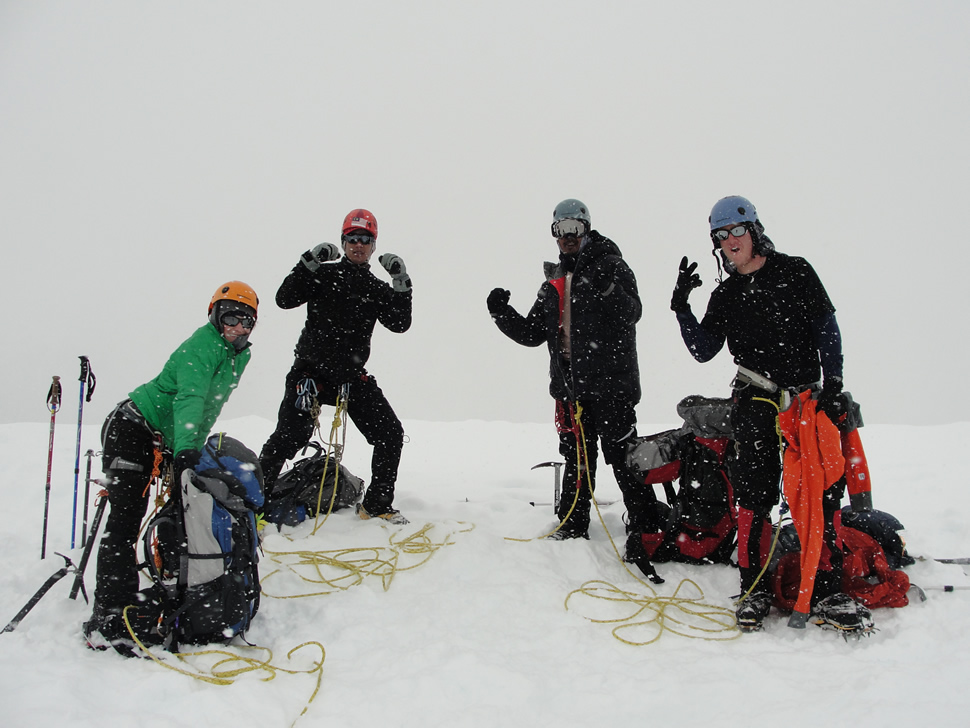
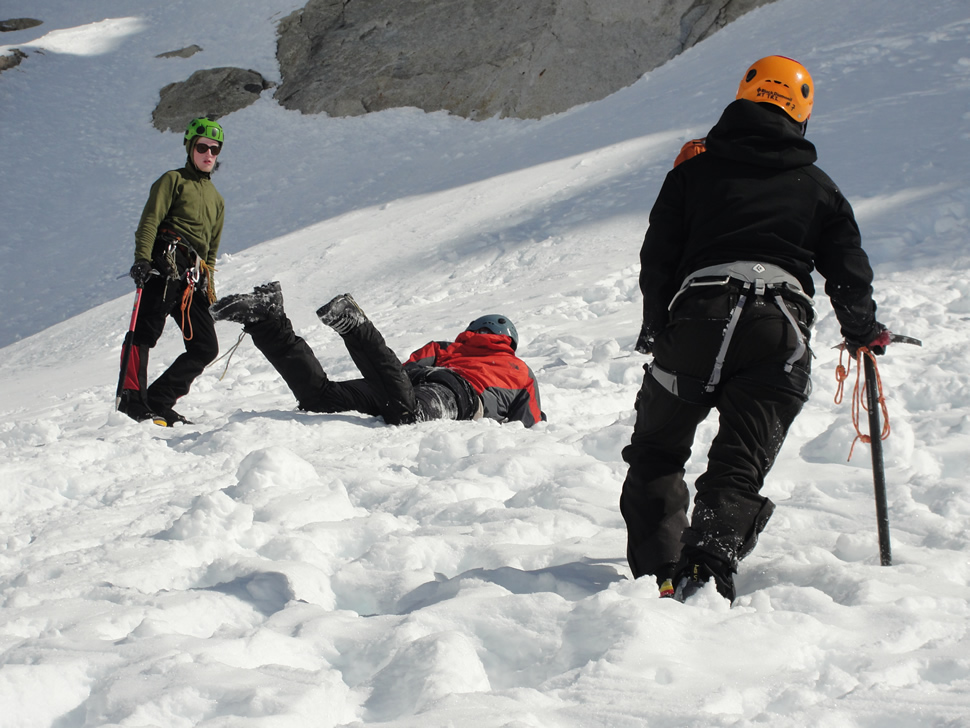
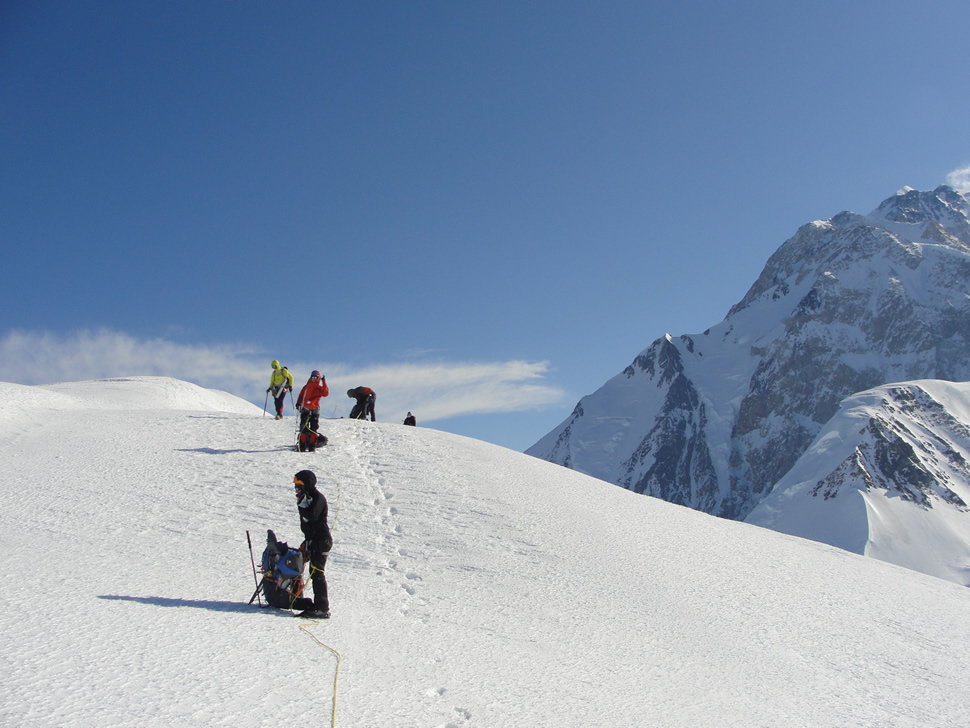
The following is a general list of required gear for Alaska Range mountaineering courses with Mountain Trip. Climbers joining us on an course will receive an updated, comprehensive equipment list that may supersede this list.
Many of the items on the list need to fit you well in order for you to fully enjoy your experience on the mountain. Please plan ahead with equipment purchased for your trip so you can be certain that your gear fits you well. Hiking up a glacier in the Alaska Range is not the place to discover that your pack is too small for your torso, or that your boots give you blisters. Recommended items reflect the opinions of our guides. We have used and have faith in all of our recommendations, but they may not necessarily fit or work for you.
Call or email us with any gear questions. We want you to be as prepared as possible for your expedition.
Please follow this list closely and do not hesitate to call us for clarifications or to solicit an opinion about anything you are considering. There is a good selection of gear available in Anchorage, but please plan ahead for things that you might need in a particular size, as local shops do not always have every item in stock. Lastly, only bring quality gear that is in very good condition on your expedition.
Array
(
[0] => Array
(
[post] => Array
(
[0] => WP_Post Object
(
[ID] => 7557
[post_author] => 4
[post_date] => 2014-02-19 11:40:53
[post_date_gmt] => 2014-02-19 18:40:53
[post_content] =>
[post_title] => Mountaineering Socks
[post_excerpt] => 3 - 5 pairs of good wool socks. Try a couple of different weights as that will affect the fit of your boot.
[post_status] => publish
[comment_status] => closed
[ping_status] => closed
[post_password] =>
[post_name] => mountaineering-socks-for-denali
[to_ping] =>
[pinged] =>
[post_modified] => 2019-02-01 09:12:49
[post_modified_gmt] => 2019-02-01 16:12:49
[post_content_filtered] =>
[post_parent] => 0
[guid] => http://mountaintrip.com/?post_type=equipment&p=7557
[menu_order] => 0
[post_type] => equipment
[post_mime_type] =>
[comment_count] => 0
[filter] => raw
)
[1] => WP_Post Object
(
[ID] => 22164
[post_author] => 4
[post_date] => 2018-01-16 13:27:18
[post_date_gmt] => 2018-01-16 20:27:18
[post_content] =>
[post_title] => 6000 meter Mountain Boots
[post_excerpt] => Modern expedition mountaineering boots fall into two categories, traditional double boots, and triple boot systems with integrated gaiters. Both versions are plenty warm; however, triple boots are warmer for the weight, and arguably simpler than dealing with gaiters and/or overboots.
For Aconcagua and mountaineering courses, you do not need the warmth of a triple boot unless you have particularly cold feet. Also, the rocks and scree on Aconcagua can wear through the soles on some of these high altitude boots due to the materials used to make the soles more insulating.
Whichever you decide to use, the goal is to have warm, comfortable feet. Try on a variety of boots as they all fit differently, and get the pair that fits best. You might want to consider your future mountaineering objectives when purchasing boots as well. If you are taking a mountaineering course and looking at a Denali climb, triple boots might be a good choice.
[post_status] => publish
[comment_status] => closed
[ping_status] => closed
[post_password] =>
[post_name] => 6000-meter-mountain-boots
[to_ping] =>
[pinged] =>
[post_modified] => 2025-11-11 09:32:05
[post_modified_gmt] => 2025-11-11 16:32:05
[post_content_filtered] =>
[post_parent] => 0
[guid] => http://mountaintrip.com/?post_type=equipment&p=22164
[menu_order] => 0
[post_type] => equipment
[post_mime_type] =>
[comment_count] => 0
[filter] => raw
)
[2] => WP_Post Object
(
[ID] => 27321
[post_author] => 10
[post_date] => 2020-02-03 10:49:13
[post_date_gmt] => 2020-02-03 17:49:13
[post_content] =>
[post_title] => Custom Insole
[post_excerpt] => A custom insole can help fine tune the fit of your boot, support your feet. A good fitting boot will be warmer and prevent blisters.
[post_status] => publish
[comment_status] => closed
[ping_status] => closed
[post_password] =>
[post_name] => custom-insole
[to_ping] =>
[pinged] =>
[post_modified] => 2025-04-25 12:11:24
[post_modified_gmt] => 2025-04-25 18:11:24
[post_content_filtered] =>
[post_parent] => 0
[guid] => https://mountaintrip.com/?post_type=equipment&p=27321
[menu_order] => 0
[post_type] => equipment
[post_mime_type] =>
[comment_count] => 0
[filter] => raw
)
[3] => WP_Post Object
(
[ID] => 182
[post_author] => 2
[post_date] => 2013-11-21 15:41:50
[post_date_gmt] => 2013-11-21 22:41:50
[post_content] =>
[post_title] => Gaiters
[post_excerpt] => If your pants fit tightly around your boot you do not need gaiters. Many modern boots have built in gaiters. They do help keep out water, and can prevent crampons from catching your pant legs.
[post_status] => publish
[comment_status] => closed
[ping_status] => closed
[post_password] =>
[post_name] => gaiters
[to_ping] =>
[pinged] =>
[post_modified] => 2023-12-22 14:56:11
[post_modified_gmt] => 2023-12-22 21:56:11
[post_content_filtered] =>
[post_parent] => 0
[guid] => http://mountaintrip.com/?post_type=equipment&p=182
[menu_order] => 2
[post_type] => equipment
[post_mime_type] =>
[comment_count] => 0
[filter] => raw
)
)
[tax] => footwear
[trip] => 7-day-course
)
[1] => Array
(
[post] => Array
(
[0] => WP_Post Object
(
[ID] => 201
[post_author] => 2
[post_date] => 2013-12-03 13:08:35
[post_date_gmt] => 2013-12-03 20:08:35
[post_content] =>
[post_title] => Expedition Down Parka
[post_excerpt] => This is an important layer so don't skimp! You do not need the heaviest 8000meter parka for peaks like Denali and Aconcagua, but you should have a warm, baffled parka with a hood.
[post_status] => publish
[comment_status] => closed
[ping_status] => closed
[post_password] =>
[post_name] => expedition-parka
[to_ping] =>
[pinged] =>
[post_modified] => 2026-03-31 08:19:01
[post_modified_gmt] => 2026-03-31 14:19:01
[post_content_filtered] =>
[post_parent] => 0
[guid] => http://mountaintrip.com/?post_type=equipment&p=201
[menu_order] => 0
[post_type] => equipment
[post_mime_type] =>
[comment_count] => 0
[filter] => raw
)
[1] => WP_Post Object
(
[ID] => 7541
[post_author] => 4
[post_date] => 2014-02-14 15:03:50
[post_date_gmt] => 2014-02-14 22:03:50
[post_content] =>
[post_title] => Base Layer Top
[post_excerpt] => (1 or 2 sets) of Wool or Capilene light weight base layers. Long sleeve or short sleeve base layers work well.
[post_status] => publish
[comment_status] => closed
[ping_status] => closed
[post_password] =>
[post_name] => base-layer-top
[to_ping] =>
[pinged] =>
[post_modified] => 2024-10-24 17:35:02
[post_modified_gmt] => 2024-10-24 23:35:02
[post_content_filtered] =>
[post_parent] => 0
[guid] => http://mountaintrip.com/?post_type=equipment&p=7541
[menu_order] => 0
[post_type] => equipment
[post_mime_type] =>
[comment_count] => 0
[filter] => raw
)
[2] => WP_Post Object
(
[ID] => 7542
[post_author] => 4
[post_date] => 2014-02-14 15:07:36
[post_date_gmt] => 2014-02-14 22:07:36
[post_content] =>
[post_title] => Light Fleece Hoody
[post_excerpt] => Light/mid weight fleece (or wool) top with a hood. You will wear this over your light weight base layer.
[post_status] => publish
[comment_status] => closed
[ping_status] => closed
[post_password] =>
[post_name] => light-fleece-top
[to_ping] =>
[pinged] =>
[post_modified] => 2025-11-12 14:03:39
[post_modified_gmt] => 2025-11-12 21:03:39
[post_content_filtered] =>
[post_parent] => 0
[guid] => http://mountaintrip.com/?post_type=equipment&p=7542
[menu_order] => 0
[post_type] => equipment
[post_mime_type] =>
[comment_count] => 0
[filter] => raw
)
[3] => WP_Post Object
(
[ID] => 7543
[post_author] => 4
[post_date] => 2014-02-14 15:09:55
[post_date_gmt] => 2014-02-14 22:09:55
[post_content] =>
[post_title] => Puffy Light Insulated Jacket
[post_excerpt] => Size this layer to fit over your light fleece hoody and wind shell, and it is often layered underneath your expedition parka. Synthetic is easier to deal with and not worry about getting compared to a down filled layer. A hood on this layer in mandatory!
*** Guides Tip! Use TWO lightweight puffy layers in the early season or if you are worried about being cold. A Micro or Nano Puff jacket with a Ultra Light Down Jacket or Vest allows versatile layering options.
[post_status] => publish
[comment_status] => closed
[ping_status] => closed
[post_password] =>
[post_name] => puffy-synthetic-jacket
[to_ping] =>
[pinged] =>
[post_modified] => 2026-02-17 11:55:43
[post_modified_gmt] => 2026-02-17 18:55:43
[post_content_filtered] =>
[post_parent] => 0
[guid] => http://mountaintrip.com/?post_type=equipment&p=7543
[menu_order] => 0
[post_type] => equipment
[post_mime_type] =>
[comment_count] => 0
[filter] => raw
)
[4] => WP_Post Object
(
[ID] => 7544
[post_author] => 4
[post_date] => 2014-02-14 15:14:47
[post_date_gmt] => 2014-02-14 22:14:47
[post_content] =>
[post_title] => Hard Shell Jacket
[post_excerpt] => This jacket should be large enough to go over your light puffy jacket layer. You do not need the burliest/heaviest Gore-Tex jacket you can find, and we prefer the lightest weight versions.
[post_status] => publish
[comment_status] => closed
[ping_status] => closed
[post_password] =>
[post_name] => hard-shell-jacket
[to_ping] =>
[pinged] =>
[post_modified] => 2024-10-24 17:43:39
[post_modified_gmt] => 2024-10-24 23:43:39
[post_content_filtered] =>
[post_parent] => 0
[guid] => http://mountaintrip.com/?post_type=equipment&p=7544
[menu_order] => 0
[post_type] => equipment
[post_mime_type] =>
[comment_count] => 0
[filter] => raw
)
[5] => WP_Post Object
(
[ID] => 7546
[post_author] => 4
[post_date] => 2014-02-14 15:20:19
[post_date_gmt] => 2014-02-14 22:20:19
[post_content] =>
[post_title] => Soft Shell Wind Jacket
[post_excerpt] => Many high alpine peaks are cold and dry. We are huge fans of very lightweight softshell wind jackets for high, dry, cold peaks. Weighing just a few ounces, these can be carried in your pocket or in the lid of your pack for rapid deployment. This layer is used in addition to your more waterproof hard shell jacket.
[post_status] => publish
[comment_status] => closed
[ping_status] => closed
[post_password] =>
[post_name] => soft-shell-jacket
[to_ping] =>
[pinged] =>
[post_modified] => 2024-10-24 13:47:34
[post_modified_gmt] => 2024-10-24 19:47:34
[post_content_filtered] =>
[post_parent] => 0
[guid] => http://mountaintrip.com/?post_type=equipment&p=7546
[menu_order] => 0
[post_type] => equipment
[post_mime_type] =>
[comment_count] => 0
[filter] => raw
)
[6] => WP_Post Object
(
[ID] => 7556
[post_author] => 4
[post_date] => 2014-02-19 11:23:57
[post_date_gmt] => 2014-02-19 18:23:57
[post_content] =>
[post_title] => Vest (optional)
[post_excerpt] => A lightweight down or synthetic filled vest can be a nice addition and add some warmth with little weight. **This is an optional layer**
[post_status] => publish
[comment_status] => closed
[ping_status] => closed
[post_password] =>
[post_name] => vest
[to_ping] =>
[pinged] =>
[post_modified] => 2024-10-25 14:37:32
[post_modified_gmt] => 2024-10-25 20:37:32
[post_content_filtered] =>
[post_parent] => 0
[guid] => http://mountaintrip.com/?post_type=equipment&p=7556
[menu_order] => 0
[post_type] => equipment
[post_mime_type] =>
[comment_count] => 0
[filter] => raw
)
[7] => WP_Post Object
(
[ID] => 16960
[post_author] => 4
[post_date] => 2015-10-05 16:12:32
[post_date_gmt] => 2015-10-05 22:12:32
[post_content] =>
[post_title] => Sun Hoody
[post_excerpt] => A Sun Hoody is a great lightweight layer to help protect you from the intense UV at high altitude. It's a go-to layer for our guides, as it both keeps the sun off your skin and helps keeps you cool.
[post_status] => publish
[comment_status] => closed
[ping_status] => closed
[post_password] =>
[post_name] => sun-hoody
[to_ping] =>
[pinged] =>
[post_modified] => 2026-02-17 12:07:17
[post_modified_gmt] => 2026-02-17 19:07:17
[post_content_filtered] =>
[post_parent] => 0
[guid] => http://mountaintrip.com/?post_type=equipment&p=16960
[menu_order] => 0
[post_type] => equipment
[post_mime_type] =>
[comment_count] => 0
[filter] => raw
)
)
[tax] => torso-layers
[trip] => 7-day-course
)
[2] => Array
(
[post] => Array
(
[0] => WP_Post Object
(
[ID] => 7549
[post_author] => 4
[post_date] => 2014-02-19 10:03:26
[post_date_gmt] => 2014-02-19 17:03:26
[post_content] =>
[post_title] => Base Layer Bottoms
[post_excerpt] => (1 or 2 sets) of Wool or Capilene light weight base layers.
[post_status] => publish
[comment_status] => closed
[ping_status] => closed
[post_password] =>
[post_name] => base-layer-bottoms
[to_ping] =>
[pinged] =>
[post_modified] => 2024-10-25 14:48:37
[post_modified_gmt] => 2024-10-25 20:48:37
[post_content_filtered] =>
[post_parent] => 0
[guid] => http://mountaintrip.com/?post_type=equipment&p=7549
[menu_order] => 0
[post_type] => equipment
[post_mime_type] =>
[comment_count] => 0
[filter] => raw
)
[1] => WP_Post Object
(
[ID] => 7551
[post_author] => 4
[post_date] => 2014-02-19 10:46:17
[post_date_gmt] => 2014-02-19 17:46:17
[post_content] =>
[post_title] => Light Fleece Bottoms
[post_excerpt] => As the air thins and the wind picks up, you'll want a bit more insulation on your legs. This should be a slightly warmer layer that can go over your base layer bottoms when it gets cold.
[post_status] => publish
[comment_status] => closed
[ping_status] => closed
[post_password] =>
[post_name] => light-fleece-bottoms
[to_ping] =>
[pinged] =>
[post_modified] => 2024-10-25 14:52:14
[post_modified_gmt] => 2024-10-25 20:52:14
[post_content_filtered] =>
[post_parent] => 0
[guid] => http://mountaintrip.com/?post_type=equipment&p=7551
[menu_order] => 0
[post_type] => equipment
[post_mime_type] =>
[comment_count] => 0
[filter] => raw
)
[2] => WP_Post Object
(
[ID] => 7552
[post_author] => 4
[post_date] => 2014-02-19 10:49:45
[post_date_gmt] => 2014-02-19 17:49:45
[post_content] =>
[post_title] => Soft Shell Pants
[post_excerpt] => Soft Shell pants are the workhorse in the mountains and you'll be wearing these day in and day out on most expeditions. On peaks like Denali and Aconcagua, you can wear them in lieu of your hard shell pants for much of the expedition.
[post_status] => publish
[comment_status] => closed
[ping_status] => closed
[post_password] =>
[post_name] => soft-shell-pants
[to_ping] =>
[pinged] =>
[post_modified] => 2025-11-11 09:57:02
[post_modified_gmt] => 2025-11-11 16:57:02
[post_content_filtered] =>
[post_parent] => 0
[guid] => http://mountaintrip.com/?post_type=equipment&p=7552
[menu_order] => 0
[post_type] => equipment
[post_mime_type] =>
[comment_count] => 0
[filter] => raw
)
[3] => WP_Post Object
(
[ID] => 7553
[post_author] => 4
[post_date] => 2014-02-19 12:22:23
[post_date_gmt] => 2014-02-19 19:22:23
[post_content] =>
[post_title] => Hard Shell, Waterproof Pants
[post_excerpt] => When it's raining a soft shell pant just isn't enough and you'll need a waterproof "hard shell" pant, meaning Gore-Tex or equivalent. These should be as light weight as possible. Fully separating side zippers will help you get them on without taking off your boots. On some peaks, you might carry hard shell pants for the lower mountain, but switch to soft shell pants for the colder and drier upper mountain.
[post_status] => publish
[comment_status] => closed
[ping_status] => closed
[post_password] =>
[post_name] => hard-shell-waterproof-pants
[to_ping] =>
[pinged] =>
[post_modified] => 2024-10-25 15:02:43
[post_modified_gmt] => 2024-10-25 21:02:43
[post_content_filtered] =>
[post_parent] => 0
[guid] => http://mountaintrip.com/?post_type=equipment&p=7553
[menu_order] => 0
[post_type] => equipment
[post_mime_type] =>
[comment_count] => 0
[filter] => raw
)
[4] => WP_Post Object
(
[ID] => 7554
[post_author] => 4
[post_date] => 2014-02-19 11:15:15
[post_date_gmt] => 2014-02-19 18:15:15
[post_content] =>
[post_title] => Puffy Insulated Expedition Pants
[post_excerpt] => On summit day or on a cold morning, you will need a warm layer that can go over your baselayers and softshell pants. This layer should be down or synthetic (ie. Primaloft) filled and must have fully separating side zippers. Practice putting these puffy pants on and taking them off while wearing your boots before you leave for your expedition.
[post_status] => publish
[comment_status] => closed
[ping_status] => closed
[post_password] =>
[post_name] => down-or-puffy-expedition-pants
[to_ping] =>
[pinged] =>
[post_modified] => 2025-01-31 14:25:39
[post_modified_gmt] => 2025-01-31 21:25:39
[post_content_filtered] =>
[post_parent] => 0
[guid] => http://mountaintrip.com/?post_type=equipment&p=7554
[menu_order] => 0
[post_type] => equipment
[post_mime_type] =>
[comment_count] => 0
[filter] => raw
)
[5] => WP_Post Object
(
[ID] => 7555
[post_author] => 4
[post_date] => 2014-02-19 11:18:22
[post_date_gmt] => 2014-02-19 18:18:22
[post_content] =>
[post_title] => Underwear
[post_excerpt] => Consider synthetic or Merino wool for your underwear. Most longer trips, such as Aconcagua or Denali, typically require 3-4 pair, but choose your quantity based on your personal level of comfort.
[post_status] => publish
[comment_status] => closed
[ping_status] => closed
[post_password] =>
[post_name] => underwear
[to_ping] =>
[pinged] =>
[post_modified] => 2022-10-14 12:50:15
[post_modified_gmt] => 2022-10-14 18:50:15
[post_content_filtered] =>
[post_parent] => 0
[guid] => http://mountaintrip.com/?post_type=equipment&p=7555
[menu_order] => 0
[post_type] => equipment
[post_mime_type] =>
[comment_count] => 0
[filter] => raw
)
)
[tax] => leg-layers
[trip] => 7-day-course
)
[3] => Array
(
[post] => Array
(
[0] => WP_Post Object
(
[ID] => 7560
[post_author] => 4
[post_date] => 2014-02-19 11:47:41
[post_date_gmt] => 2014-02-19 18:47:41
[post_content] =>
[post_title] => Heavyweight Gloves
[post_excerpt] => Warm, insulated gloves are the day-to-day workhorses on cold peaks or for cold days of ice climbing. We prefer gloves with removable liners for ease of drying.
[post_status] => publish
[comment_status] => closed
[ping_status] => closed
[post_password] =>
[post_name] => heavyweight-gloves
[to_ping] =>
[pinged] =>
[post_modified] => 2025-11-10 16:31:07
[post_modified_gmt] => 2025-11-10 23:31:07
[post_content_filtered] =>
[post_parent] => 0
[guid] => http://mountaintrip.com/?post_type=equipment&p=7560
[menu_order] => 0
[post_type] => equipment
[post_mime_type] =>
[comment_count] => 0
[filter] => raw
)
[1] => WP_Post Object
(
[ID] => 7562
[post_author] => 4
[post_date] => 2014-02-19 11:54:29
[post_date_gmt] => 2014-02-19 18:54:29
[post_content] =>
[post_title] => Medium Weight Gloves
[post_excerpt] => A mid-weight glove will generally be a softshell type glove with some light synthetic insulation.
[post_status] => publish
[comment_status] => closed
[ping_status] => closed
[post_password] =>
[post_name] => medium-weight-gloves
[to_ping] =>
[pinged] =>
[post_modified] => 2025-11-10 16:35:42
[post_modified_gmt] => 2025-11-10 23:35:42
[post_content_filtered] =>
[post_parent] => 0
[guid] => http://mountaintrip.com/?post_type=equipment&p=7562
[menu_order] => 0
[post_type] => equipment
[post_mime_type] =>
[comment_count] => 0
[filter] => raw
)
[2] => WP_Post Object
(
[ID] => 7563
[post_author] => 4
[post_date] => 2014-02-19 11:57:48
[post_date_gmt] => 2014-02-19 18:57:48
[post_content] =>
[post_title] => Light Weight Gloves
[post_excerpt] => When the sun comes out on a glacier, the temperature can soar. Light weight, soft shell gloves are great for keeping the sun off your hands, while still giving you a bit of protection from the wind and cold.
[post_status] => publish
[comment_status] => closed
[ping_status] => closed
[post_password] =>
[post_name] => light-weight-gloves
[to_ping] =>
[pinged] =>
[post_modified] => 2025-11-10 16:38:48
[post_modified_gmt] => 2025-11-10 23:38:48
[post_content_filtered] =>
[post_parent] => 0
[guid] => http://mountaintrip.com/?post_type=equipment&p=7563
[menu_order] => 0
[post_type] => equipment
[post_mime_type] =>
[comment_count] => 0
[filter] => raw
)
[3] => WP_Post Object
(
[ID] => 7565
[post_author] => 4
[post_date] => 2014-02-19 12:13:57
[post_date_gmt] => 2014-02-19 19:13:57
[post_content] =>
[post_title] => Buff Neck Gaiter
[post_excerpt] => Buff is a brand of light weight neck gaiters that have grown to become a staple of every guide's kit. These are amazingly versatile, and can be worn as a hat, a neck gaiter or pulled over your face for protection from the wind or sun. They come in many thicknesses nowadays, but we prefer the original weight for its versatility.
[post_status] => publish
[comment_status] => closed
[ping_status] => closed
[post_password] =>
[post_name] => buff-neck-gaiter
[to_ping] =>
[pinged] =>
[post_modified] => 2022-11-03 15:34:33
[post_modified_gmt] => 2022-11-03 21:34:33
[post_content_filtered] =>
[post_parent] => 0
[guid] => http://mountaintrip.com/?post_type=equipment&p=7565
[menu_order] => 0
[post_type] => equipment
[post_mime_type] =>
[comment_count] => 0
[filter] => raw
)
[4] => WP_Post Object
(
[ID] => 7566
[post_author] => 4
[post_date] => 2014-02-19 12:04:16
[post_date_gmt] => 2014-02-19 19:04:16
[post_content] =>
[post_title] => Summit Mittens
[post_excerpt] => Thick, warm mittens made from down, synthetic fill, or a combination of insulation are crucial for summit morning on many big, cold mountains. Most come with some form of retention straps, which can help reduce the chance of losing them to a gust of wind or in the event of a fall. Good mittens are expensive, but how much is one finger worth?
[post_status] => publish
[comment_status] => closed
[ping_status] => closed
[post_password] =>
[post_name] => summit-mittens
[to_ping] =>
[pinged] =>
[post_modified] => 2023-09-12 13:41:21
[post_modified_gmt] => 2023-09-12 19:41:21
[post_content_filtered] =>
[post_parent] => 0
[guid] => http://mountaintrip.com/?post_type=equipment&p=7566
[menu_order] => 0
[post_type] => equipment
[post_mime_type] =>
[comment_count] => 0
[filter] => raw
)
[5] => WP_Post Object
(
[ID] => 7567
[post_author] => 4
[post_date] => 2014-02-19 12:16:10
[post_date_gmt] => 2014-02-19 19:16:10
[post_content] =>
[post_title] => Warm Hat
[post_excerpt] => Bring one warm hat or two hats of different weights. Wool or fleece are fine, but your hat must provide ear protection from the cold.
[post_status] => publish
[comment_status] => closed
[ping_status] => closed
[post_password] =>
[post_name] => warm-hat
[to_ping] =>
[pinged] =>
[post_modified] => 2023-09-17 14:38:06
[post_modified_gmt] => 2023-09-17 20:38:06
[post_content_filtered] =>
[post_parent] => 0
[guid] => http://mountaintrip.com/?post_type=equipment&p=7567
[menu_order] => 0
[post_type] => equipment
[post_mime_type] =>
[comment_count] => 0
[filter] => raw
)
[6] => WP_Post Object
(
[ID] => 7569
[post_author] => 4
[post_date] => 2014-02-19 12:26:22
[post_date_gmt] => 2014-02-19 19:26:22
[post_content] =>
[post_title] => Face Covering
[post_excerpt] => Cheeks and the tip of your nose are always exposed and easily freeze in a biting wind. Neoprene face masks do a great job of protecting those exposed surfaces. The Outer U FaceGlove can also be used for sun protection!
[post_status] => publish
[comment_status] => closed
[ping_status] => closed
[post_password] =>
[post_name] => face-mask
[to_ping] =>
[pinged] =>
[post_modified] => 2025-11-10 15:57:29
[post_modified_gmt] => 2025-11-10 22:57:29
[post_content_filtered] =>
[post_parent] => 0
[guid] => http://mountaintrip.com/?post_type=equipment&p=7569
[menu_order] => 0
[post_type] => equipment
[post_mime_type] =>
[comment_count] => 0
[filter] => raw
)
[7] => WP_Post Object
(
[ID] => 7570
[post_author] => 4
[post_date] => 2014-02-19 12:24:24
[post_date_gmt] => 2014-02-19 19:24:24
[post_content] =>
[post_title] => Sun Hat
[post_excerpt] => Baseball type or wide brimmed sun hats are required for protection against the intense sunshine found on many peaks. You can combine a baseball hat with a BUFF for good sun protection or go for a wide brimmed version to protect your face, ears and neck.
[post_status] => publish
[comment_status] => closed
[ping_status] => closed
[post_password] =>
[post_name] => sun-hat
[to_ping] =>
[pinged] =>
[post_modified] => 2022-10-13 14:18:14
[post_modified_gmt] => 2022-10-13 20:18:14
[post_content_filtered] =>
[post_parent] => 0
[guid] => http://mountaintrip.com/?post_type=equipment&p=7570
[menu_order] => 0
[post_type] => equipment
[post_mime_type] =>
[comment_count] => 0
[filter] => raw
)
[8] => WP_Post Object
(
[ID] => 7571
[post_author] => 4
[post_date] => 2014-02-19 12:34:43
[post_date_gmt] => 2014-02-19 19:34:43
[post_content] =>
[post_title] => Hand Warmers
[post_excerpt] => Bring 4 -6+ sets of these disposable insurance policies, depending on where you are climbing. Make certain that your hand warmers are relatively new, as they do go bad over time.
[post_status] => publish
[comment_status] => closed
[ping_status] => closed
[post_password] =>
[post_name] => hand-warmers
[to_ping] =>
[pinged] =>
[post_modified] => 2019-11-14 11:31:57
[post_modified_gmt] => 2019-11-14 18:31:57
[post_content_filtered] =>
[post_parent] => 0
[guid] => http://mountaintrip.com/?post_type=equipment&p=7571
[menu_order] => 0
[post_type] => equipment
[post_mime_type] =>
[comment_count] => 0
[filter] => raw
)
[9] => WP_Post Object
(
[ID] => 7572
[post_author] => 4
[post_date] => 2014-02-19 12:33:38
[post_date_gmt] => 2014-02-19 19:33:38
[post_content] =>
[post_title] => Glacier Glasses
[post_excerpt] => Good, dark (Category 4) glacier glasses are a must for high altitude climbs. They must have side protection and filter 100% UVA and UVB rays.
[post_status] => publish
[comment_status] => closed
[ping_status] => closed
[post_password] =>
[post_name] => sun-glasses
[to_ping] =>
[pinged] =>
[post_modified] => 2022-11-03 15:45:53
[post_modified_gmt] => 2022-11-03 21:45:53
[post_content_filtered] =>
[post_parent] => 0
[guid] => http://mountaintrip.com/?post_type=equipment&p=7572
[menu_order] => 0
[post_type] => equipment
[post_mime_type] =>
[comment_count] => 0
[filter] => raw
)
[10] => WP_Post Object
(
[ID] => 7573
[post_author] => 4
[post_date] => 2014-02-19 12:37:34
[post_date_gmt] => 2014-02-19 19:37:34
[post_content] =>
[post_title] => Expedition Ski Goggles
[post_excerpt] => These are necessary for use while traveling during storms or during really cold and windy weather. These must have double lenses and provide full UV protection. Fogging is a real challenge, so goggles that actively vent are worth the investment. Julbo's Aerospace or Airflux have a slick venting system or Smith makes battery-powered "Turbo Fan" models. Select a general purpose lens that will provide some protection in bright light, but not be so dark as to make them useless on a cloudy or flat-light day.
[post_status] => publish
[comment_status] => closed
[ping_status] => closed
[post_password] =>
[post_name] => ski-goggles
[to_ping] =>
[pinged] =>
[post_modified] => 2023-02-09 09:25:19
[post_modified_gmt] => 2023-02-09 16:25:19
[post_content_filtered] =>
[post_parent] => 0
[guid] => http://mountaintrip.com/?post_type=equipment&p=7573
[menu_order] => 0
[post_type] => equipment
[post_mime_type] =>
[comment_count] => 0
[filter] => raw
)
[11] => WP_Post Object
(
[ID] => 7590
[post_author] => 4
[post_date] => 2014-02-19 14:51:13
[post_date_gmt] => 2014-02-19 21:51:13
[post_content] =>
[post_title] => Nose Guard
[post_excerpt] => Beko makes nice nose protectors that keep the wind and sun from wreaking havoc on your skin.
[post_status] => publish
[comment_status] => closed
[ping_status] => closed
[post_password] =>
[post_name] => nose-guard
[to_ping] =>
[pinged] =>
[post_modified] => 2020-01-17 12:55:39
[post_modified_gmt] => 2020-01-17 19:55:39
[post_content_filtered] =>
[post_parent] => 0
[guid] => http://mountaintrip.com/?post_type=equipment&p=7590
[menu_order] => 0
[post_type] => equipment
[post_mime_type] =>
[comment_count] => 0
[filter] => raw
)
[12] => WP_Post Object
(
[ID] => 36853
[post_author] => 28
[post_date] => 2023-09-17 14:33:52
[post_date_gmt] => 2023-09-17 20:33:52
[post_content] =>
[post_title] => Technical Winter Climbing Gloves
[post_excerpt] => These are your for when you are actively climbing, they should be warm, water proof, and give you good dexterity for climbing. They should be a snug fit, and used in tandem with your heavy gloves between climbing and belaying.
[post_status] => publish
[comment_status] => closed
[ping_status] => closed
[post_password] =>
[post_name] => technical-winter-climbing-gloves
[to_ping] =>
[pinged] =>
[post_modified] => 2024-11-07 15:27:41
[post_modified_gmt] => 2024-11-07 22:27:41
[post_content_filtered] =>
[post_parent] => 0
[guid] => https://mountaintrip.com/?post_type=equipment&p=36853
[menu_order] => 0
[post_type] => equipment
[post_mime_type] =>
[comment_count] => 0
[filter] => raw
)
)
[tax] => head-and-hands
[trip] => 7-day-course
)
[4] => Array
(
[post] => Array
(
[0] => WP_Post Object
(
[ID] => 7580
[post_author] => 4
[post_date] => 2014-02-19 14:02:14
[post_date_gmt] => 2014-02-19 21:02:14
[post_content] =>
[post_title] => Denali Sleeping Bag
[post_excerpt] => A good Denali sleeping bag should be down filled and rated between -20 F (-29C) to -40 F (-40C). If you sleep cold, consider the warmer bag. A Down filled sleeping bag is required, synthetic bags are not acceptable. Sleeping bag systems or over bags are generally a compromise and not recommended.
Mountain Equipment makes some of the best down bags on the market, but can be hard to find in the US. Contact our friends at Jagged Edge in Telluride for custom orders!
[post_status] => publish
[comment_status] => closed
[ping_status] => closed
[post_password] =>
[post_name] => denali-sleeping-bag
[to_ping] =>
[pinged] =>
[post_modified] => 2025-11-10 15:48:03
[post_modified_gmt] => 2025-11-10 22:48:03
[post_content_filtered] =>
[post_parent] => 0
[guid] => http://mountaintrip.com/?post_type=equipment&p=7580
[menu_order] => 0
[post_type] => equipment
[post_mime_type] =>
[comment_count] => 0
[filter] => raw
)
[1] => WP_Post Object
(
[ID] => 7582
[post_author] => 4
[post_date] => 2014-02-19 14:13:02
[post_date_gmt] => 2014-02-19 21:13:02
[post_content] =>
[post_title] => Inflatable Sleeping Pad
[post_excerpt] => Inflatable pads have improved tremendously in recent years, they are the foundation of a warm and comfortable night!
[post_status] => publish
[comment_status] => closed
[ping_status] => closed
[post_password] =>
[post_name] => inflatable-sleeping-pad
[to_ping] =>
[pinged] =>
[post_modified] => 2022-11-04 16:48:48
[post_modified_gmt] => 2022-11-04 22:48:48
[post_content_filtered] =>
[post_parent] => 0
[guid] => http://mountaintrip.com/?post_type=equipment&p=7582
[menu_order] => 0
[post_type] => equipment
[post_mime_type] =>
[comment_count] => 0
[filter] => raw
)
[2] => WP_Post Object
(
[ID] => 7583
[post_author] => 4
[post_date] => 2014-02-19 14:15:20
[post_date_gmt] => 2014-02-19 21:15:20
[post_content] =>
[post_title] => Foam Sleeping Pad
[post_excerpt] => Bringing two sleeping pads, one closed cell foam and the other an inflatable pad, will provide additional comfort and insulation, as well as a bit of insurance in case you have a catastrophic failure of your inflatable pad.
[post_status] => publish
[comment_status] => closed
[ping_status] => closed
[post_password] =>
[post_name] => foam-sleeping-pad
[to_ping] =>
[pinged] =>
[post_modified] => 2022-11-04 11:07:55
[post_modified_gmt] => 2022-11-04 17:07:55
[post_content_filtered] =>
[post_parent] => 0
[guid] => http://mountaintrip.com/?post_type=equipment&p=7583
[menu_order] => 0
[post_type] => equipment
[post_mime_type] =>
[comment_count] => 0
[filter] => raw
)
)
[tax] => sleeping-gear
[trip] => 7-day-course
)
[5] => Array
(
[post] => Array
(
[0] => WP_Post Object
(
[ID] => 7574
[post_author] => 4
[post_date] => 2014-02-19 12:43:40
[post_date_gmt] => 2014-02-19 19:43:40
[post_content] =>
[post_title] => Backpack for Expeditions
[post_excerpt] => Denali and Mount Vinson climbs require a larger capacity pack than any other expeditions! Climbers need to have a pack with a minimum volume of 100 liters, and bigger is better for most climbers. You'll need enough capacity to carry all your personal gear, plus your share of the group food and equipment. Small People needing a smaller framed pack can get the Osprey Ariel 85. ***We have MT Hardwear AMG 105 packs available to rent, please contact the office to reserve.
[post_status] => publish
[comment_status] => closed
[ping_status] => closed
[post_password] =>
[post_name] => backpack-for-denali
[to_ping] =>
[pinged] =>
[post_modified] => 2025-11-10 15:38:29
[post_modified_gmt] => 2025-11-10 22:38:29
[post_content_filtered] =>
[post_parent] => 0
[guid] => http://mountaintrip.com/?post_type=equipment&p=7574
[menu_order] => 0
[post_type] => equipment
[post_mime_type] =>
[comment_count] => 0
[filter] => raw
)
[1] => WP_Post Object
(
[ID] => 7577
[post_author] => 4
[post_date] => 2014-02-19 13:45:20
[post_date_gmt] => 2014-02-19 20:45:20
[post_content] =>
[post_title] => Large Zippered Duffel
[post_excerpt] => You'll want an Large sized (90 – 100L) duffel for your expedition. Water resistant bags like the Arcteryx Carrier 100L Duffle Bag are nice for their toughness to weight ratio. A quality duffel bag can work for a sled bag on Denali, a mule bag on Aconcagua, a bag for porters on Kilimanjaro or the Himalaya, and a great all around travel bag.
[post_status] => publish
[comment_status] => closed
[ping_status] => closed
[post_password] =>
[post_name] => large-zippered-duffel
[to_ping] =>
[pinged] =>
[post_modified] => 2026-03-31 08:24:26
[post_modified_gmt] => 2026-03-31 14:24:26
[post_content_filtered] =>
[post_parent] => 0
[guid] => http://mountaintrip.com/?post_type=equipment&p=7577
[menu_order] => 0
[post_type] => equipment
[post_mime_type] =>
[comment_count] => 0
[filter] => raw
)
)
[tax] => packs-and-duffels
[trip] => 7-day-course
)
[6] => Array
(
[post] => Array
(
[0] => WP_Post Object
(
[ID] => 7540
[post_author] => 4
[post_date] => 2014-02-14 14:38:26
[post_date_gmt] => 2014-02-14 21:38:26
[post_content] =>
[post_title] => Ski / Trekking Poles
[post_excerpt] => Adjustable poles work great and are easier to travel with as they fit better in your duffel bag. The small “trekking” baskets on some poles are not large enough for use on soft snow, so make certain your poles have bigger “snowflake” style baskets for any climb with glacier or snow travel.
[post_status] => publish
[comment_status] => closed
[ping_status] => closed
[post_password] =>
[post_name] => ski-trekking-poles
[to_ping] =>
[pinged] =>
[post_modified] => 2025-07-21 11:29:07
[post_modified_gmt] => 2025-07-21 17:29:07
[post_content_filtered] =>
[post_parent] => 0
[guid] => http://mountaintrip.com/?post_type=equipment&p=7540
[menu_order] => 0
[post_type] => equipment
[post_mime_type] =>
[comment_count] => 0
[filter] => raw
)
[1] => WP_Post Object
(
[ID] => 7578
[post_author] => 4
[post_date] => 2014-02-19 14:22:14
[post_date_gmt] => 2014-02-19 21:22:14
[post_content] =>
[post_title] => Ascender
[post_excerpt] => You need one full-sized ascender to clip into the fixed lines on the route, and to use for crevasse rescue applications.
[post_status] => publish
[comment_status] => closed
[ping_status] => closed
[post_password] =>
[post_name] => ascender
[to_ping] =>
[pinged] =>
[post_modified] => 2025-11-19 14:54:01
[post_modified_gmt] => 2025-11-19 21:54:01
[post_content_filtered] =>
[post_parent] => 0
[guid] => http://mountaintrip.com/?post_type=equipment&p=7578
[menu_order] => 0
[post_type] => equipment
[post_mime_type] =>
[comment_count] => 0
[filter] => raw
)
[2] => WP_Post Object
(
[ID] => 7584
[post_author] => 4
[post_date] => 2014-02-19 14:18:25
[post_date_gmt] => 2014-02-19 21:18:25
[post_content] =>
[post_title] => Ice Axe
[post_excerpt] => A general use, mountaineering axe is sufficient for this climb. Some axes are much lighter than others, so select for weight as well as a size for your height. Most climbers do well with a 60 - 75 cm axe. On less technical routes, a longer axe can act like a walking stick on flatter terrain.
[post_status] => publish
[comment_status] => closed
[ping_status] => closed
[post_password] =>
[post_name] => ice-axe
[to_ping] =>
[pinged] =>
[post_modified] => 2025-11-19 13:48:15
[post_modified_gmt] => 2025-11-19 20:48:15
[post_content_filtered] =>
[post_parent] => 0
[guid] => http://mountaintrip.com/?post_type=equipment&p=7584
[menu_order] => 0
[post_type] => equipment
[post_mime_type] =>
[comment_count] => 0
[filter] => raw
)
[3] => WP_Post Object
(
[ID] => 7585
[post_author] => 4
[post_date] => 2014-02-19 14:20:35
[post_date_gmt] => 2014-02-19 21:20:35
[post_content] =>
[post_title] => Alpine Climbing Harness
[post_excerpt] => Your harness should be adjustable enough to accommodate several layers of clothing. As with most items on this list, choose a light weight harness.
[post_status] => publish
[comment_status] => closed
[ping_status] => closed
[post_password] =>
[post_name] => climbing-harness
[to_ping] =>
[pinged] =>
[post_modified] => 2025-11-19 14:42:42
[post_modified_gmt] => 2025-11-19 21:42:42
[post_content_filtered] =>
[post_parent] => 0
[guid] => http://mountaintrip.com/?post_type=equipment&p=7585
[menu_order] => 0
[post_type] => equipment
[post_mime_type] =>
[comment_count] => 0
[filter] => raw
)
[4] => WP_Post Object
(
[ID] => 7586
[post_author] => 4
[post_date] => 2014-02-19 14:23:53
[post_date_gmt] => 2014-02-19 21:23:53
[post_content] =>
[post_title] => Carabiners
[post_excerpt] => Bring eight regular (non-locking) carabiners. Mark your gear so you don't loose it!
[post_status] => publish
[comment_status] => closed
[ping_status] => closed
[post_password] =>
[post_name] => carabiners
[to_ping] =>
[pinged] =>
[post_modified] => 2025-11-10 15:12:50
[post_modified_gmt] => 2025-11-10 22:12:50
[post_content_filtered] =>
[post_parent] => 0
[guid] => http://mountaintrip.com/?post_type=equipment&p=7586
[menu_order] => 0
[post_type] => equipment
[post_mime_type] =>
[comment_count] => 0
[filter] => raw
)
[5] => WP_Post Object
(
[ID] => 7587
[post_author] => 4
[post_date] => 2014-02-19 14:29:25
[post_date_gmt] => 2014-02-19 21:29:25
[post_content] =>
[post_title] => Locking Carabiners
[post_excerpt] => Bring three locking carabiners.
[post_status] => publish
[comment_status] => closed
[ping_status] => closed
[post_password] =>
[post_name] => locking-carabiners
[to_ping] =>
[pinged] =>
[post_modified] => 2025-11-10 15:17:59
[post_modified_gmt] => 2025-11-10 22:17:59
[post_content_filtered] =>
[post_parent] => 0
[guid] => http://mountaintrip.com/?post_type=equipment&p=7587
[menu_order] => 0
[post_type] => equipment
[post_mime_type] =>
[comment_count] => 0
[filter] => raw
)
[6] => WP_Post Object
(
[ID] => 7588
[post_author] => 4
[post_date] => 2014-02-19 14:45:05
[post_date_gmt] => 2014-02-19 21:45:05
[post_content] =>
[post_title] => Accessory/Prussik Cord
[post_excerpt] => 25-30 feet of 6mm-7mm accessory cord will be used to create a prussik, rig your ascender, and extra for setting up your sled for glacier travel. We will go over this in our pre-trip training.
[post_status] => publish
[comment_status] => closed
[ping_status] => closed
[post_password] =>
[post_name] => accessory-prussik-cord
[to_ping] =>
[pinged] =>
[post_modified] => 2025-11-10 15:08:39
[post_modified_gmt] => 2025-11-10 22:08:39
[post_content_filtered] =>
[post_parent] => 0
[guid] => http://mountaintrip.com/?post_type=equipment&p=7588
[menu_order] => 0
[post_type] => equipment
[post_mime_type] =>
[comment_count] => 0
[filter] => raw
)
[7] => WP_Post Object
(
[ID] => 7589
[post_author] => 4
[post_date] => 2014-02-19 14:47:45
[post_date_gmt] => 2014-02-19 21:47:45
[post_content] =>
[post_title] => Climbing Helmet
[post_excerpt] => Make certain it fits over your warmest hat and under the hood of your shell. The super-lightweight foam helmets are great, but can get crushed in your duffel bags during travel, so protect your lid!
[post_status] => publish
[comment_status] => closed
[ping_status] => closed
[post_password] =>
[post_name] => climbing-helmet
[to_ping] =>
[pinged] =>
[post_modified] => 2024-10-24 13:30:10
[post_modified_gmt] => 2024-10-24 19:30:10
[post_content_filtered] =>
[post_parent] => 0
[guid] => http://mountaintrip.com/?post_type=equipment&p=7589
[menu_order] => 0
[post_type] => equipment
[post_mime_type] =>
[comment_count] => 0
[filter] => raw
)
[8] => WP_Post Object
(
[ID] => 16933
[post_author] => 4
[post_date] => 2015-09-18 12:16:49
[post_date_gmt] => 2015-09-18 18:16:49
[post_content] =>
[post_title] => Crampons
[post_excerpt] => Select a pair 12-point Mountaineering Crampons that fit your boots well. Step-in or strap versions work equally well; just make sure they fit your mountain boots and overboots. You may need to lengthen your crampons to accommodate your overboots, please make sure you can make this adjustment in the field. Aluminum crampons are not acceptable for expeditions.
[post_status] => publish
[comment_status] => closed
[ping_status] => closed
[post_password] =>
[post_name] => crampons
[to_ping] =>
[pinged] =>
[post_modified] => 2025-11-19 13:54:26
[post_modified_gmt] => 2025-11-19 20:54:26
[post_content_filtered] =>
[post_parent] => 0
[guid] => http://mountaintrip.com/?post_type=equipment&p=16933
[menu_order] => 0
[post_type] => equipment
[post_mime_type] =>
[comment_count] => 0
[filter] => raw
)
[9] => WP_Post Object
(
[ID] => 16962
[post_author] => 4
[post_date] => 2015-10-05 16:34:58
[post_date_gmt] => 2015-10-05 22:34:58
[post_content] =>
[post_title] => Primary Attachment Locking Carabiner
[post_excerpt] =>
[post_status] => publish
[comment_status] => closed
[ping_status] => closed
[post_password] =>
[post_name] => primary-attachment-locking-carabiner
[to_ping] =>
[pinged] =>
[post_modified] => 2026-03-24 09:47:31
[post_modified_gmt] => 2026-03-24 15:47:31
[post_content_filtered] =>
[post_parent] => 0
[guid] => http://mountaintrip.com/?post_type=equipment&p=16962
[menu_order] => 0
[post_type] => equipment
[post_mime_type] =>
[comment_count] => 0
[filter] => raw
)
[10] => WP_Post Object
(
[ID] => 24035
[post_author] => 10
[post_date] => 2018-08-08 11:51:43
[post_date_gmt] => 2018-08-08 17:51:43
[post_content] =>
[post_title] => Double Length Runner (48")
[post_excerpt] => Double Length (48") runner. Nylon or Dyneema runners are versatile and utilitarian. For glacier trips they can be used as a chest harness. For technical climbs (Carstensz Pyramid, rock climbing trips in Colorado) please bring 2.
[post_status] => publish
[comment_status] => closed
[ping_status] => closed
[post_password] =>
[post_name] => double-length-runner-48
[to_ping] =>
[pinged] =>
[post_modified] => 2025-11-10 15:23:12
[post_modified_gmt] => 2025-11-10 22:23:12
[post_content_filtered] =>
[post_parent] => 0
[guid] => https://mountaintrip.com/?post_type=equipment&p=24035
[menu_order] => 0
[post_type] => equipment
[post_mime_type] =>
[comment_count] => 0
[filter] => raw
)
[11] => WP_Post Object
(
[ID] => 24067
[post_author] => 10
[post_date] => 2018-09-07 12:07:11
[post_date_gmt] => 2018-09-07 18:07:11
[post_content] =>
[post_title] => Belay/Rappel Device
[post_excerpt] => A plaquette style belay/rappel device.
[post_status] => publish
[comment_status] => closed
[ping_status] => closed
[post_password] =>
[post_name] => belay-rappel-device
[to_ping] =>
[pinged] =>
[post_modified] => 2022-11-11 17:26:58
[post_modified_gmt] => 2022-11-12 00:26:58
[post_content_filtered] =>
[post_parent] => 0
[guid] => https://mountaintrip.com/?post_type=equipment&p=24067
[menu_order] => 0
[post_type] => equipment
[post_mime_type] =>
[comment_count] => 0
[filter] => raw
)
[12] => WP_Post Object
(
[ID] => 41734
[post_author] => 10
[post_date] => 2025-11-10 14:58:12
[post_date_gmt] => 2025-11-10 21:58:12
[post_content] =>
[post_title] => Ice Axe Leash
[post_excerpt] =>
[post_status] => publish
[comment_status] => closed
[ping_status] => closed
[post_password] =>
[post_name] => ice-axe-leash
[to_ping] =>
[pinged] =>
[post_modified] => 2026-03-26 16:10:50
[post_modified_gmt] => 2026-03-26 22:10:50
[post_content_filtered] =>
[post_parent] => 0
[guid] => https://mountaintrip.com/?post_type=equipment&p=41734
[menu_order] => 0
[post_type] => equipment
[post_mime_type] =>
[comment_count] => 0
[filter] => raw
)
)
[tax] => climbing-gear
[trip] => 7-day-course
)
[7] => Array
(
[post] => Array
(
[0] => WP_Post Object
(
[ID] => 16819
[post_author] => 4
[post_date] => 2015-08-12 14:32:16
[post_date_gmt] => 2015-08-12 20:32:16
[post_content] =>
[post_title] => Snowshoes
[post_excerpt] => Select lightweight snowshoes for your trip in a 22-28 inch length. The addition of a heel riser is welcome when ascending steeper hills, but is not necessary. You won't need optional, add-on tails, which add length to some models. *** We rent high quality MSR snowshoes, please contact the office to reserve!
[post_status] => publish
[comment_status] => closed
[ping_status] => closed
[post_password] =>
[post_name] => snowshoes
[to_ping] =>
[pinged] =>
[post_modified] => 2025-11-10 15:25:19
[post_modified_gmt] => 2025-11-10 22:25:19
[post_content_filtered] =>
[post_parent] => 0
[guid] => http://mountaintrip.com/?post_type=equipment&p=16819
[menu_order] => 0
[post_type] => equipment
[post_mime_type] =>
[comment_count] => 0
[filter] => raw
)
)
[tax] => glacier-travel
[trip] => 7-day-course
)
[8] => Array
(
[post] => Array
(
[0] => WP_Post Object
(
[ID] => 24270
[post_author] => 10
[post_date] => 2018-11-08 13:26:15
[post_date_gmt] => 2018-11-08 20:26:15
[post_content] =>
[post_title] => Avalanche Transceiver/Beacon
[post_excerpt] => When traveling in avalanche terrain, whether it is backcountry skiing in the Alaska Range, or Colorado, we will wear avalanche transceivers (beacons). We will have an opportunity to practice at the start of the trip. Beacons are included for Colorado backcountry ski trips and available for rent on other climbs and expeditions. Bring an extra set of batteries for extended trips!
[post_status] => publish
[comment_status] => closed
[ping_status] => closed
[post_password] =>
[post_name] => avalanche-transceiver-beacon
[to_ping] =>
[pinged] =>
[post_modified] => 2025-11-12 14:24:47
[post_modified_gmt] => 2025-11-12 21:24:47
[post_content_filtered] =>
[post_parent] => 0
[guid] => https://mountaintrip.com/?post_type=equipment&p=24270
[menu_order] => 0
[post_type] => equipment
[post_mime_type] =>
[comment_count] => 0
[filter] => raw
)
[1] => WP_Post Object
(
[ID] => 24860
[post_author] => 4
[post_date] => 2019-02-26 15:13:44
[post_date_gmt] => 2019-02-26 22:13:44
[post_content] =>
[post_title] => Avalanche Probe
[post_excerpt] =>
[post_status] => publish
[comment_status] => closed
[ping_status] => closed
[post_password] =>
[post_name] => avalanche-probe
[to_ping] =>
[pinged] =>
[post_modified] => 2023-04-28 13:08:05
[post_modified_gmt] => 2023-04-28 19:08:05
[post_content_filtered] =>
[post_parent] => 0
[guid] => https://mountaintrip.com/?post_type=equipment&p=24860
[menu_order] => 0
[post_type] => equipment
[post_mime_type] =>
[comment_count] => 0
[filter] => raw
)
)
[tax] => avalanche-safety-equipment
[trip] => 7-day-course
)
[9] => Array
(
[post] => Array
(
[0] => WP_Post Object
(
[ID] => 7593
[post_author] => 4
[post_date] => 2014-02-19 14:53:21
[post_date_gmt] => 2014-02-19 21:53:21
[post_content] =>
[post_title] => Stuff Sacks
[post_excerpt] => We are fans of the very light stiff sacks made from Sil Nylon fabric. Bring enough for your clothes and personal items. Light, zippered stuff bags are really nice for toiletries.
[post_status] => publish
[comment_status] => closed
[ping_status] => closed
[post_password] =>
[post_name] => stuff-sacks
[to_ping] =>
[pinged] =>
[post_modified] => 2022-11-04 11:47:56
[post_modified_gmt] => 2022-11-04 17:47:56
[post_content_filtered] =>
[post_parent] => 0
[guid] => http://mountaintrip.com/?post_type=equipment&p=7593
[menu_order] => 0
[post_type] => equipment
[post_mime_type] =>
[comment_count] => 0
[filter] => raw
)
[1] => WP_Post Object
(
[ID] => 7595
[post_author] => 4
[post_date] => 2014-02-19 15:00:33
[post_date_gmt] => 2014-02-19 22:00:33
[post_content] =>
[post_title] => Two (2) One-Liter Water Bottles
[post_excerpt] => You will need two, 1-liter plastic water bottles. Please bring wide-mouth bottles, such as those from Nalgene, as these are much easier to fill than bottles with small openings.
[post_status] => publish
[comment_status] => closed
[ping_status] => closed
[post_password] =>
[post_name] => two-2-one-liter-water-bottles
[to_ping] =>
[pinged] =>
[post_modified] => 2026-02-17 12:31:17
[post_modified_gmt] => 2026-02-17 19:31:17
[post_content_filtered] =>
[post_parent] => 0
[guid] => http://mountaintrip.com/?post_type=equipment&p=7595
[menu_order] => 0
[post_type] => equipment
[post_mime_type] =>
[comment_count] => 0
[filter] => raw
)
[2] => WP_Post Object
(
[ID] => 7596
[post_author] => 4
[post_date] => 2014-02-19 15:02:19
[post_date_gmt] => 2014-02-19 22:02:19
[post_content] =>
[post_title] => Insulated Bottle Cover(s)
[post_excerpt] => Water bottles freeze when it gets cold. Crazy, but true! Extra clothing can help insulate bottles, but dedicated water bottle insulators do a much better job. Bring at least one.
[post_status] => publish
[comment_status] => closed
[ping_status] => closed
[post_password] =>
[post_name] => insulated-bottle-covers
[to_ping] =>
[pinged] =>
[post_modified] => 2022-11-04 12:17:13
[post_modified_gmt] => 2022-11-04 18:17:13
[post_content_filtered] =>
[post_parent] => 0
[guid] => http://mountaintrip.com/?post_type=equipment&p=7596
[menu_order] => 0
[post_type] => equipment
[post_mime_type] =>
[comment_count] => 0
[filter] => raw
)
[3] => WP_Post Object
(
[ID] => 7597
[post_author] => 4
[post_date] => 2014-02-19 15:04:27
[post_date_gmt] => 2014-02-19 22:04:27
[post_content] =>
[post_title] => Large Bowl
[post_excerpt] => Bring a 2-4 cup camping bowl for your mountain dining.
[post_status] => publish
[comment_status] => closed
[ping_status] => closed
[post_password] =>
[post_name] => large-bowl
[to_ping] =>
[pinged] =>
[post_modified] => 2026-03-24 09:37:05
[post_modified_gmt] => 2026-03-24 15:37:05
[post_content_filtered] =>
[post_parent] => 0
[guid] => http://mountaintrip.com/?post_type=equipment&p=7597
[menu_order] => 0
[post_type] => equipment
[post_mime_type] =>
[comment_count] => 0
[filter] => raw
)
[4] => WP_Post Object
(
[ID] => 7598
[post_author] => 4
[post_date] => 2014-02-19 15:50:45
[post_date_gmt] => 2014-02-19 22:50:45
[post_content] =>
[post_title] => Insulated Cup or Mug
[post_excerpt] => A 12 - 16 ounce (350-500 Ml) mug with an attached lid will help keep you hydrated. The Kleen Kanteen Insulated Bottle works as a mug and a thermos all in one!
[post_status] => publish
[comment_status] => closed
[ping_status] => closed
[post_password] =>
[post_name] => insulated-cup-or-mug
[to_ping] =>
[pinged] =>
[post_modified] => 2025-11-10 15:31:03
[post_modified_gmt] => 2025-11-10 22:31:03
[post_content_filtered] =>
[post_parent] => 0
[guid] => http://mountaintrip.com/?post_type=equipment&p=7598
[menu_order] => 0
[post_type] => equipment
[post_mime_type] =>
[comment_count] => 0
[filter] => raw
)
[5] => WP_Post Object
(
[ID] => 7599
[post_author] => 4
[post_date] => 2014-02-19 15:52:44
[post_date_gmt] => 2014-02-19 22:52:44
[post_content] =>
[post_title] => Lexan Spoon
[post_excerpt] => A soup spoon made from Lexan will survive most trips and is more useful and versatile than a fork or even a "spork." Mark your spoon with your initials to keep spoon rustlers at bay.
[post_status] => publish
[comment_status] => closed
[ping_status] => closed
[post_password] =>
[post_name] => lexan-spoon
[to_ping] =>
[pinged] =>
[post_modified] => 2022-11-04 14:00:30
[post_modified_gmt] => 2022-11-04 20:00:30
[post_content_filtered] =>
[post_parent] => 0
[guid] => http://mountaintrip.com/?post_type=equipment&p=7599
[menu_order] => 0
[post_type] => equipment
[post_mime_type] =>
[comment_count] => 0
[filter] => raw
)
[6] => WP_Post Object
(
[ID] => 7600
[post_author] => 4
[post_date] => 2014-02-19 15:54:12
[post_date_gmt] => 2014-02-19 22:54:12
[post_content] =>
[post_title] => Lip Balm (2 tubes)
[post_excerpt] => Protect your lips! Bring two tubes of high quality lip balm with SPF.
[post_status] => publish
[comment_status] => closed
[ping_status] => closed
[post_password] =>
[post_name] => lip-balm-2-tubes
[to_ping] =>
[pinged] =>
[post_modified] => 2015-06-04 16:06:23
[post_modified_gmt] => 2015-06-04 22:06:23
[post_content_filtered] =>
[post_parent] => 0
[guid] => http://mountaintrip.com/?post_type=equipment&p=7600
[menu_order] => 0
[post_type] => equipment
[post_mime_type] =>
[comment_count] => 0
[filter] => raw
)
[7] => WP_Post Object
(
[ID] => 7601
[post_author] => 4
[post_date] => 2014-02-19 15:57:57
[post_date_gmt] => 2014-02-19 22:57:57
[post_content] =>
[post_title] => Sunscreen
[post_excerpt] => Smaller tubes work well, as they are easier to keep from freezing than is one big tube. You'll want to bring 3-4 ounces (85 - 110g) for the trip.
[post_status] => publish
[comment_status] => closed
[ping_status] => closed
[post_password] =>
[post_name] => sun-screen-for-denali
[to_ping] =>
[pinged] =>
[post_modified] => 2024-10-24 13:50:50
[post_modified_gmt] => 2024-10-24 19:50:50
[post_content_filtered] =>
[post_parent] => 0
[guid] => http://mountaintrip.com/?post_type=equipment&p=7601
[menu_order] => 0
[post_type] => equipment
[post_mime_type] =>
[comment_count] => 0
[filter] => raw
)
[8] => WP_Post Object
(
[ID] => 7603
[post_author] => 4
[post_date] => 2014-02-19 16:14:53
[post_date_gmt] => 2014-02-19 23:14:53
[post_content] =>
[post_title] => P-Bottle
[post_excerpt] => Wide-mouth, collapsible Nalgene Cantenes work great- they make a 96 ounce version, which will come in handy during long storms or if you take Diamox. Ladies- look for an appropriate adapter available at your local outdoors store. These items can both be tough to find in Anchorage so plan ahead!
[post_status] => publish
[comment_status] => closed
[ping_status] => closed
[post_password] =>
[post_name] => p-bottle
[to_ping] =>
[pinged] =>
[post_modified] => 2022-11-04 14:03:35
[post_modified_gmt] => 2022-11-04 20:03:35
[post_content_filtered] =>
[post_parent] => 0
[guid] => http://mountaintrip.com/?post_type=equipment&p=7603
[menu_order] => 0
[post_type] => equipment
[post_mime_type] =>
[comment_count] => 0
[filter] => raw
)
[9] => WP_Post Object
(
[ID] => 7604
[post_author] => 4
[post_date] => 2014-02-19 16:02:52
[post_date_gmt] => 2014-02-19 23:02:52
[post_content] =>
[post_title] => Toiletry Kit
[post_excerpt] => Tooth brush & paste, dental floss, Handi-wipes (1 per day on average), a small bottle of hand sanitizer, perhaps some foot powder… keep it small!!!
[post_status] => publish
[comment_status] => closed
[ping_status] => closed
[post_password] =>
[post_name] => toiletry-kit
[to_ping] =>
[pinged] =>
[post_modified] => 2022-10-13 14:07:10
[post_modified_gmt] => 2022-10-13 20:07:10
[post_content_filtered] =>
[post_parent] => 0
[guid] => http://mountaintrip.com/?post_type=equipment&p=7604
[menu_order] => 0
[post_type] => equipment
[post_mime_type] =>
[comment_count] => 0
[filter] => raw
)
[10] => WP_Post Object
(
[ID] => 7605
[post_author] => 4
[post_date] => 2014-02-19 16:01:19
[post_date_gmt] => 2014-02-19 23:01:19
[post_content] =>
[post_title] => Toilet Paper
[post_excerpt] => Depending on your technique, you'll want 1-2 rolls, each packed in a quality zip-lock bag.
[post_status] => publish
[comment_status] => closed
[ping_status] => closed
[post_password] =>
[post_name] => toilet-paper
[to_ping] =>
[pinged] =>
[post_modified] => 2019-11-14 11:28:29
[post_modified_gmt] => 2019-11-14 18:28:29
[post_content_filtered] =>
[post_parent] => 0
[guid] => http://mountaintrip.com/?post_type=equipment&p=7605
[menu_order] => 0
[post_type] => equipment
[post_mime_type] =>
[comment_count] => 0
[filter] => raw
)
[11] => WP_Post Object
(
[ID] => 7606
[post_author] => 4
[post_date] => 2014-02-20 11:27:57
[post_date_gmt] => 2014-02-20 18:27:57
[post_content] =>
[post_title] => Personal Medical Kit
[post_excerpt] => Mountain Trip's guides will have fairly comprehensive medical kits developed by our Medical Director, but we encourage each climber to bring a small, personal kit. Items to consider bringing include: blister treatment and prevention, pain relievers, and antacids. Presctiption medications should be based on consultation with your personal physician. Suggested drugs for altitude expeditions include: Diamox (acetazolomide) 125 mg, Decadron (dexamthazone) 4 mg, Nifedipine XR 30 mg, and a couple of antibiotics for respiratory and gastrointestinal issues.
[post_status] => publish
[comment_status] => closed
[ping_status] => closed
[post_password] =>
[post_name] => personal-medical-kit
[to_ping] =>
[pinged] =>
[post_modified] => 2019-11-14 11:11:41
[post_modified_gmt] => 2019-11-14 18:11:41
[post_content_filtered] =>
[post_parent] => 0
[guid] => http://mountaintrip.com/?post_type=equipment&p=7606
[menu_order] => 0
[post_type] => equipment
[post_mime_type] =>
[comment_count] => 0
[filter] => raw
)
[12] => WP_Post Object
(
[ID] => 7609
[post_author] => 4
[post_date] => 2014-02-20 11:33:23
[post_date_gmt] => 2014-02-20 18:33:23
[post_content] =>
[post_title] => Journal (and pencil)
[post_excerpt] => Expeditions can be a great time for reflection and a journal can be a nice way to wax poetic or just keep track of what you did each day. Keep it small and leave the leather bound version at home.
[post_status] => publish
[comment_status] => closed
[ping_status] => closed
[post_password] =>
[post_name] => journal-and-pencil
[to_ping] =>
[pinged] =>
[post_modified] => 2019-11-14 11:10:26
[post_modified_gmt] => 2019-11-14 18:10:26
[post_content_filtered] =>
[post_parent] => 0
[guid] => http://mountaintrip.com/?post_type=equipment&p=7609
[menu_order] => 0
[post_type] => equipment
[post_mime_type] =>
[comment_count] => 0
[filter] => raw
)
[13] => WP_Post Object
(
[ID] => 7610
[post_author] => 4
[post_date] => 2014-02-20 11:31:50
[post_date_gmt] => 2014-02-20 18:31:50
[post_content] =>
[post_title] => Book(s) or E-Reader
[post_excerpt] => There is a lot of "down time" on an expedition, even when you have good weather. An expedition can be a good time to catch up on reading!
[post_status] => publish
[comment_status] => closed
[ping_status] => closed
[post_password] =>
[post_name] => books-or-e-reader
[to_ping] =>
[pinged] =>
[post_modified] => 2019-11-14 11:10:40
[post_modified_gmt] => 2019-11-14 18:10:40
[post_content_filtered] =>
[post_parent] => 0
[guid] => http://mountaintrip.com/?post_type=equipment&p=7610
[menu_order] => 0
[post_type] => equipment
[post_mime_type] =>
[comment_count] => 0
[filter] => raw
)
[14] => WP_Post Object
(
[ID] => 7611
[post_author] => 4
[post_date] => 2014-02-20 11:29:38
[post_date_gmt] => 2014-02-20 18:29:38
[post_content] =>
[post_title] => Camera
[post_excerpt] => Most climbers these days use their phone as a camera, but if you plan to bring a dedicated camera, consider a small, light weight point and shoot camera. If you are a photography buff and really want to bring a DSLR, plan for that extra weight with your training!
[post_status] => publish
[comment_status] => closed
[ping_status] => closed
[post_password] =>
[post_name] => camera
[to_ping] =>
[pinged] =>
[post_modified] => 2022-06-08 08:26:28
[post_modified_gmt] => 2022-06-08 14:26:28
[post_content_filtered] =>
[post_parent] => 0
[guid] => http://mountaintrip.com/?post_type=equipment&p=7611
[menu_order] => 0
[post_type] => equipment
[post_mime_type] =>
[comment_count] => 0
[filter] => raw
)
[15] => WP_Post Object
(
[ID] => 7612
[post_author] => 4
[post_date] => 2014-02-20 11:35:18
[post_date_gmt] => 2014-02-20 18:35:18
[post_content] =>
[post_title] => Altimeter Watch
[post_excerpt] => An altimeter watch can be fun to have on an expedition to keep track of your ascent and to watch for changes in barometric pressure.
[post_status] => publish
[comment_status] => closed
[ping_status] => closed
[post_password] =>
[post_name] => altimeter-watch
[to_ping] =>
[pinged] =>
[post_modified] => 2022-11-04 14:05:54
[post_modified_gmt] => 2022-11-04 20:05:54
[post_content_filtered] =>
[post_parent] => 0
[guid] => http://mountaintrip.com/?post_type=equipment&p=7612
[menu_order] => 0
[post_type] => equipment
[post_mime_type] =>
[comment_count] => 0
[filter] => raw
)
[16] => WP_Post Object
(
[ID] => 7613
[post_author] => 4
[post_date] => 2014-02-20 11:36:11
[post_date_gmt] => 2014-02-20 18:36:11
[post_content] =>
[post_title] => Maps
[post_excerpt] => Our guides will have maps and/or GPS devices, but a good map can be fun to have along.
[post_status] => publish
[comment_status] => closed
[ping_status] => closed
[post_password] =>
[post_name] => maps
[to_ping] =>
[pinged] =>
[post_modified] => 2015-08-12 14:22:42
[post_modified_gmt] => 2015-08-12 20:22:42
[post_content_filtered] =>
[post_parent] => 0
[guid] => http://mountaintrip.com/?post_type=equipment&p=7613
[menu_order] => 0
[post_type] => equipment
[post_mime_type] =>
[comment_count] => 0
[filter] => raw
)
[17] => WP_Post Object
(
[ID] => 7614
[post_author] => 4
[post_date] => 2014-02-20 11:37:21
[post_date_gmt] => 2014-02-20 18:37:21
[post_content] =>
[post_title] => Lighter
[post_excerpt] => Your guides will have plenty of lighters, but it is nice to have one lighter per tent, as cord always needs to be cut and melted.
[post_status] => publish
[comment_status] => closed
[ping_status] => closed
[post_password] =>
[post_name] => lighter
[to_ping] =>
[pinged] =>
[post_modified] => 2019-11-14 11:09:20
[post_modified_gmt] => 2019-11-14 18:09:20
[post_content_filtered] =>
[post_parent] => 0
[guid] => http://mountaintrip.com/?post_type=equipment&p=7614
[menu_order] => 0
[post_type] => equipment
[post_mime_type] =>
[comment_count] => 0
[filter] => raw
)
[18] => WP_Post Object
(
[ID] => 7615
[post_author] => 4
[post_date] => 2014-02-20 11:38:53
[post_date_gmt] => 2014-02-20 18:38:53
[post_content] =>
[post_title] => Small Knife
[post_excerpt] => A small knife or small multi-tool is also handy to have. One per tent is sufficient. There is emphasis on the word small when it comes to multi-tools!
[post_status] => publish
[comment_status] => closed
[ping_status] => closed
[post_password] =>
[post_name] => small-knife
[to_ping] =>
[pinged] =>
[post_modified] => 2019-11-14 11:09:42
[post_modified_gmt] => 2019-11-14 18:09:42
[post_content_filtered] =>
[post_parent] => 0
[guid] => http://mountaintrip.com/?post_type=equipment&p=7615
[menu_order] => 0
[post_type] => equipment
[post_mime_type] =>
[comment_count] => 0
[filter] => raw
)
[19] => WP_Post Object
(
[ID] => 7617
[post_author] => 4
[post_date] => 2014-02-20 11:43:12
[post_date_gmt] => 2014-02-20 18:43:12
[post_content] =>
[post_title] => Satellite Tracking/Texting Device **optional**
[post_excerpt] => Satellite linked devices such as the Garmin inReach have been increasingly popular, as you can send and receive text messages with it. Again- consider how you will keep it powered over the course of your expedition. These new devices will allow you to send and receive text messages nearly anywhere in the world! It is a fun way to keep in touch with the family and let them follow along on your journey. They are not required, and Mountain Trip guides carry several forms of communication devices including satellite based communications that we can use in case of an emergency situation. **this is optional**
[post_status] => publish
[comment_status] => closed
[ping_status] => closed
[post_password] =>
[post_name] => gps-tracking-device
[to_ping] =>
[pinged] =>
[post_modified] => 2026-03-24 09:50:04
[post_modified_gmt] => 2026-03-24 15:50:04
[post_content_filtered] =>
[post_parent] => 0
[guid] => http://mountaintrip.com/?post_type=equipment&p=7617
[menu_order] => 0
[post_type] => equipment
[post_mime_type] =>
[comment_count] => 0
[filter] => raw
)
[20] => WP_Post Object
(
[ID] => 7618
[post_author] => 4
[post_date] => 2014-02-20 11:44:32
[post_date_gmt] => 2014-02-20 18:44:32
[post_content] =>
[post_title] => Several Good Jokes!
[post_excerpt] => "A Moose walks into a bar..."
[post_status] => publish
[comment_status] => closed
[ping_status] => closed
[post_password] =>
[post_name] => several-good-jokes
[to_ping] =>
[pinged] =>
[post_modified] => 2019-11-14 11:08:30
[post_modified_gmt] => 2019-11-14 18:08:30
[post_content_filtered] =>
[post_parent] => 0
[guid] => http://mountaintrip.com/?post_type=equipment&p=7618
[menu_order] => 0
[post_type] => equipment
[post_mime_type] =>
[comment_count] => 0
[filter] => raw
)
[21] => WP_Post Object
(
[ID] => 16754
[post_author] => 4
[post_date] => 2015-07-17 17:31:25
[post_date_gmt] => 2015-07-17 23:31:25
[post_content] =>
[post_title] => Sunscreen
[post_excerpt] => The sun can be intense at altitude. Bring one small tube for use while climbing and one larger tube for use while not on route.
[post_status] => publish
[comment_status] => closed
[ping_status] => closed
[post_password] =>
[post_name] => sunscreen-2
[to_ping] =>
[pinged] =>
[post_modified] => 2019-11-14 11:07:02
[post_modified_gmt] => 2019-11-14 18:07:02
[post_content_filtered] =>
[post_parent] => 0
[guid] => http://mountaintrip.com/?post_type=equipment&p=16754
[menu_order] => 0
[post_type] => equipment
[post_mime_type] =>
[comment_count] => 0
[filter] => raw
)
[22] => WP_Post Object
(
[ID] => 21950
[post_author] => 4
[post_date] => 2017-12-13 11:04:50
[post_date_gmt] => 2017-12-13 18:04:50
[post_content] =>
[post_title] => Solar Panel/Battery *optional
[post_excerpt] => If you are planning to charge your iPhone, inReach, or other electronics on the expedition you will need a good, small solar panel. We recommend using the panel to charge a battery and then charging your devices from the battery. This is definitely some extra weight, so keep it light and maybe share a panel and battery with your tentmate!
[post_status] => publish
[comment_status] => closed
[ping_status] => closed
[post_password] =>
[post_name] => solar-panel-battery-optional
[to_ping] =>
[pinged] =>
[post_modified] => 2023-02-09 09:09:36
[post_modified_gmt] => 2023-02-09 16:09:36
[post_content_filtered] =>
[post_parent] => 0
[guid] => http://mountaintrip.com/?post_type=equipment&p=21950
[menu_order] => 0
[post_type] => equipment
[post_mime_type] =>
[comment_count] => 0
[filter] => raw
)
[23] => WP_Post Object
(
[ID] => 30434
[post_author] => 18
[post_date] => 2021-07-23 11:30:27
[post_date_gmt] => 2021-07-23 17:30:27
[post_content] =>
[post_title] => Pee Funnel
[post_excerpt] => This is a women's specific tool for expeditions and winter trips that gives women the ability to pee standing up like men. This also creates a little more privacy and protection from the elements when on a rope team. We prefer this hard-sided version.
[post_status] => publish
[comment_status] => closed
[ping_status] => closed
[post_password] =>
[post_name] => pee-funnel
[to_ping] =>
[pinged] =>
[post_modified] => 2023-02-09 09:35:49
[post_modified_gmt] => 2023-02-09 16:35:49
[post_content_filtered] =>
[post_parent] => 0
[guid] => https://mountaintrip.com/?post_type=equipment&p=30434
[menu_order] => 0
[post_type] => equipment
[post_mime_type] =>
[comment_count] => 0
[filter] => raw
)
)
[tax] => other
[trip] => 7-day-course
)
)