Best 3 Days Colorado Backcountry Skiing
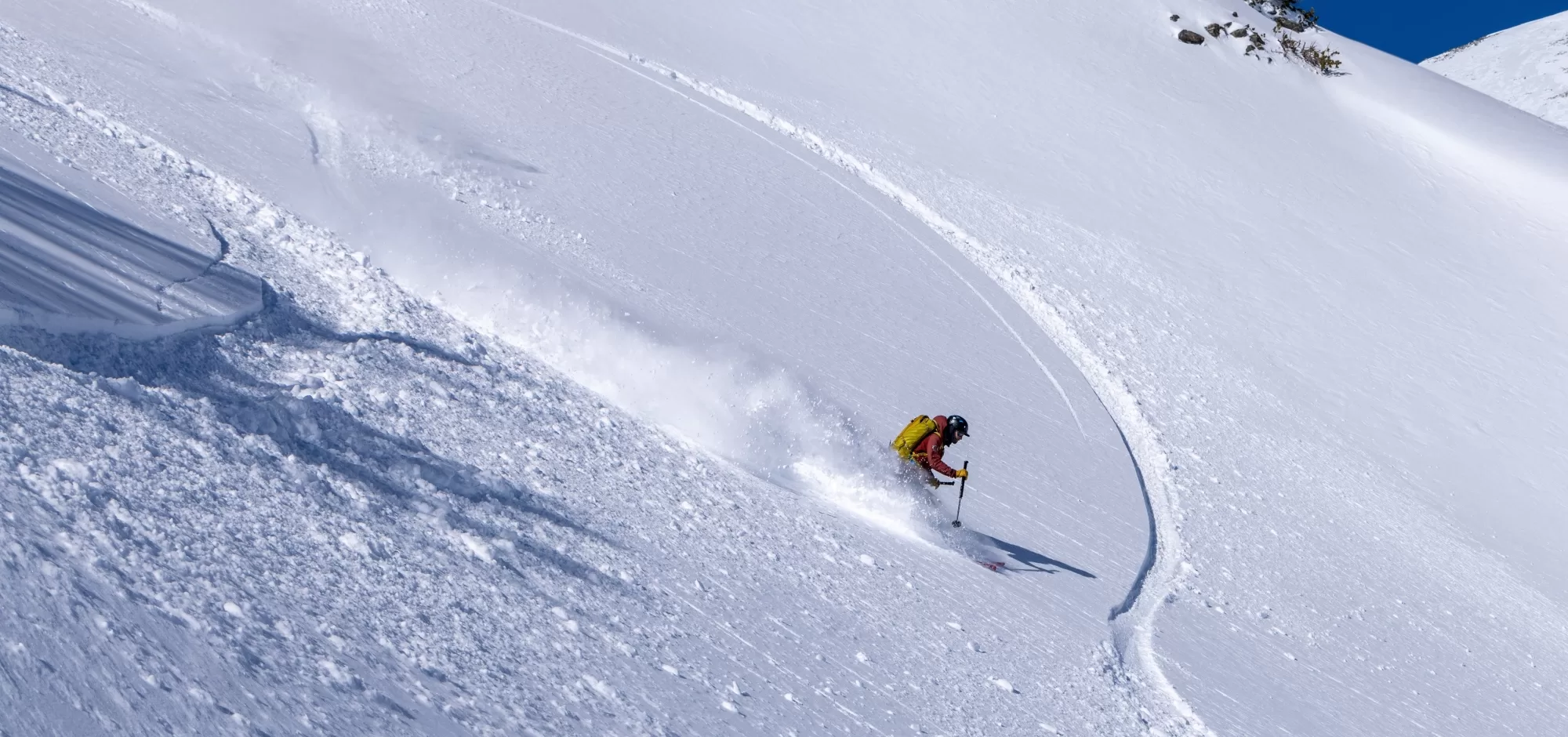
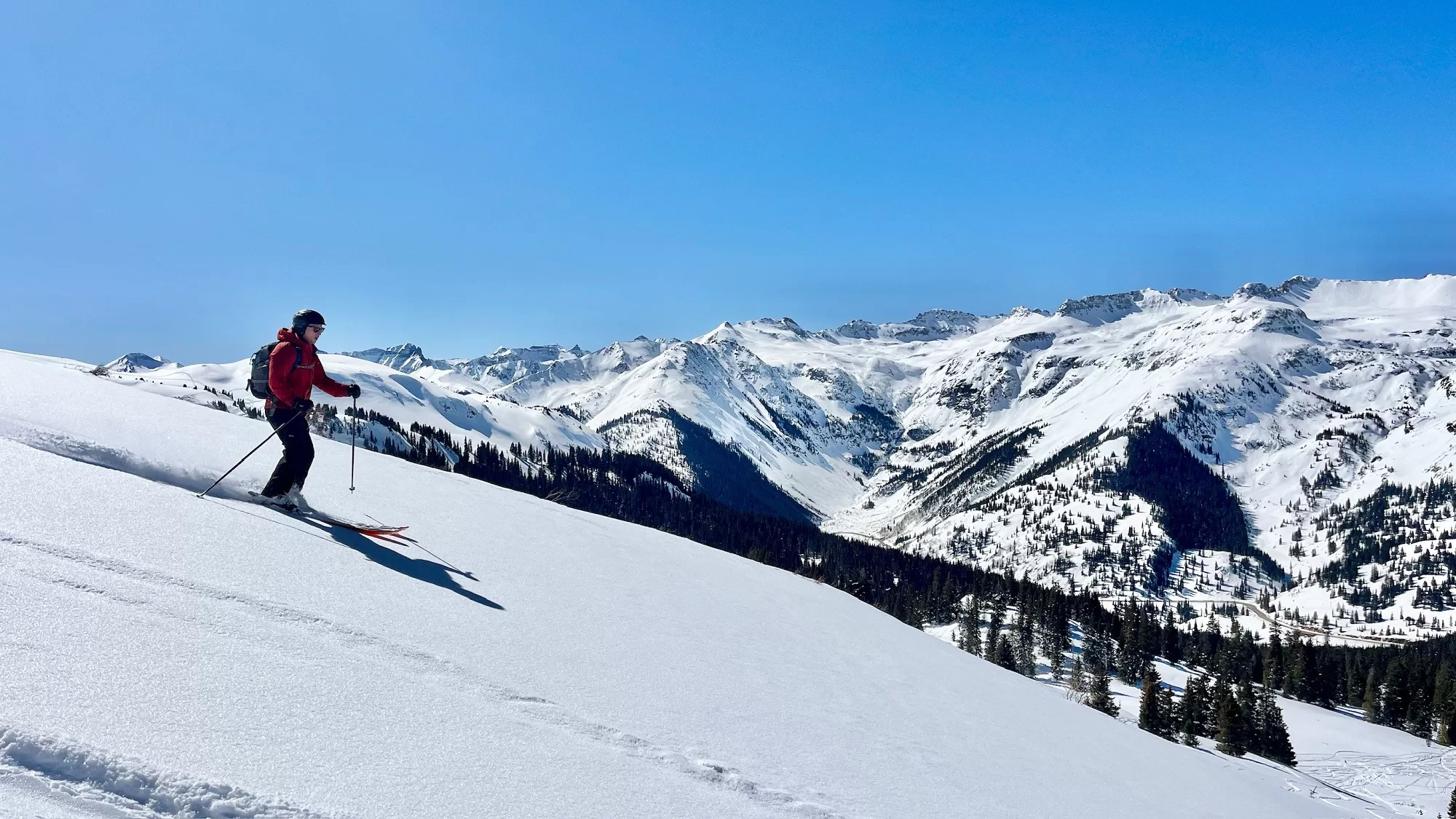
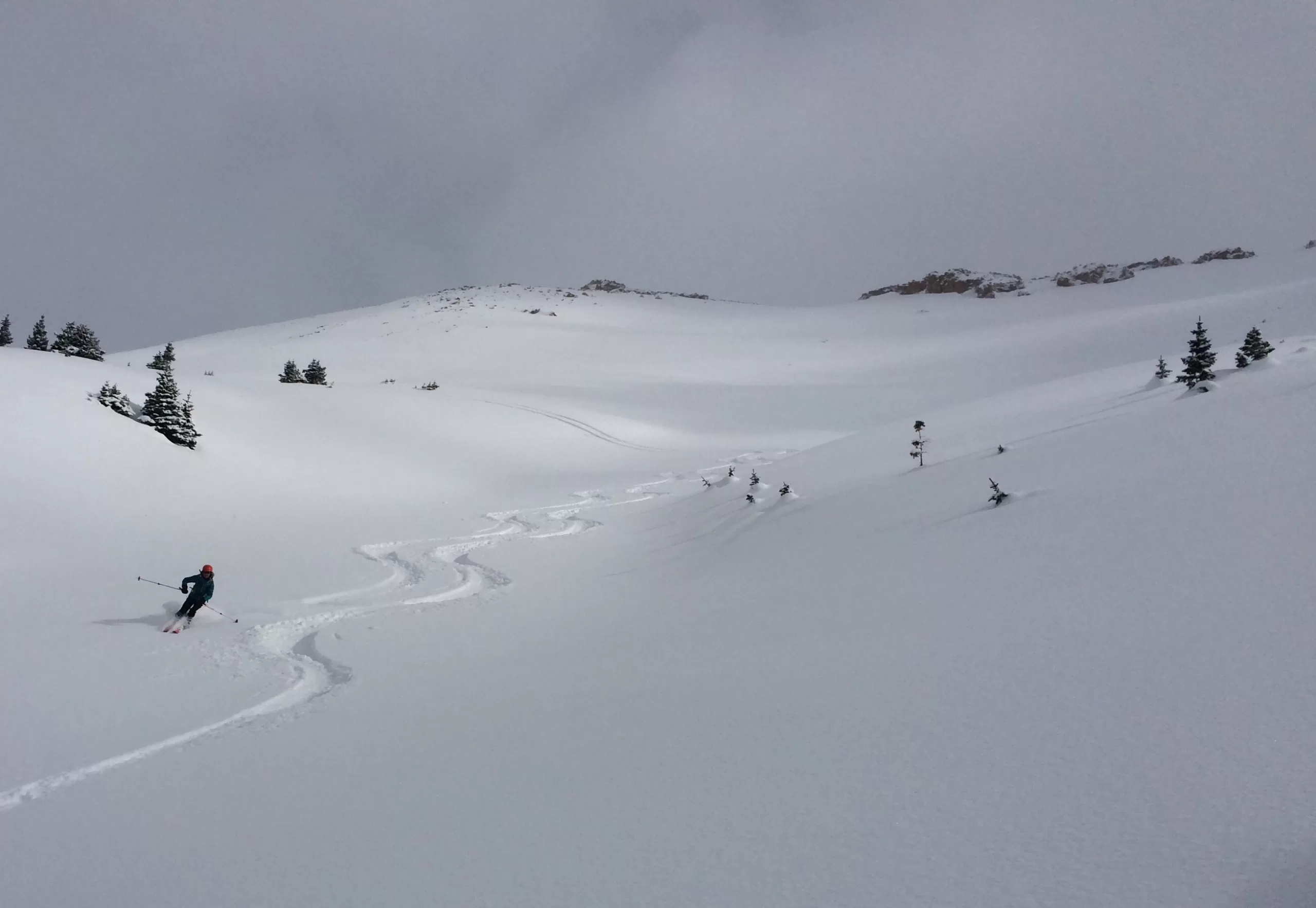
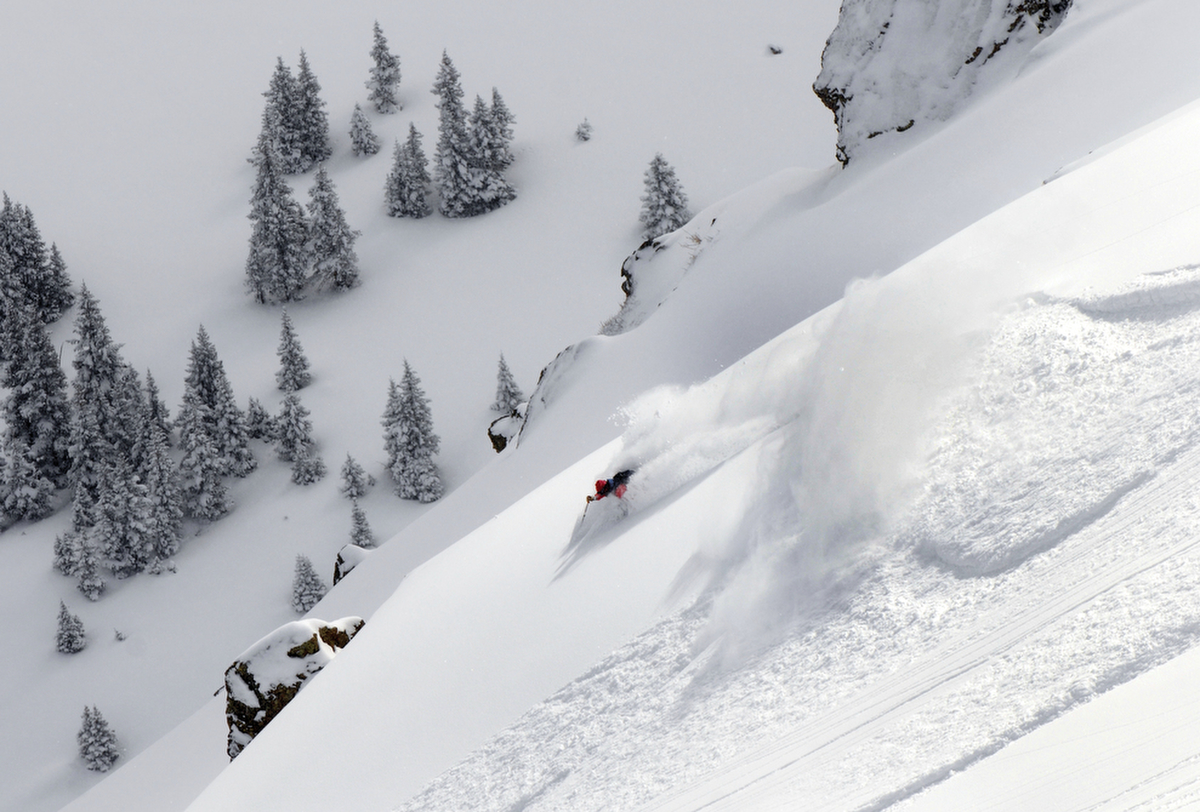
Do you want to experience the best backcountry skiing in Telluride, Ouray or Silverton? This trip includes three days of guided backcountry skiing in Colorado’s best ski destinations. Our 100% customizable program allows you to experience one day of ski touring in Telluride, a second day on Red Mountain Pass, and a third day of lift-accessed sidecountry skiing from Telluride Ski Resort. It truly is the best of the best!
Who Should Do the Best 3 Days?
This trip is designed for backcountry skiers visiting Telluride or Ouray in the San Juan Mountains, and who want to explore the best backcountry skiing in the area. Our guides know the powder stashes from Telluride to Ouray and Silverton, which means you’re guaranteed to have the best chances of skiing powder every day. Our program is flexible, meaning it’s built out over the course of four days with an optional built-in rest day, and you can schedule all three days in one area or spread out the program across the region. If you’re visitng for a week, you can also break up your ski days a little more to coincide with the best conditions. If you’ve been wishing to explore the best backcountry skiing of the San Juans, this trip is for you.
To make a reservation, please click below.
Best 3 Days Colorado Backcountry Skiing - Register
What Happens on the Best 3 Days?
As your trip approaches, your guide will contact you to make a plan for the three-day itinerary. One day could include backcountry ski touring from trailheads around Telluride and Ophir. Another day could include backcountry skiing from trailheads around Ouray, Red Mountain Pass, or Silverton. The third day could include lift-accessed skiing into Alta Lakes Basin or Bear Creek from the backcountry gates atop Telluride Ski Resort (lift tickets sold separately). You can also base out of a single destination and explore different tours from there. The itinerary is completely up to you and your guide, with the goal of finding the best powder skiing each day.
What are the Destination Options?
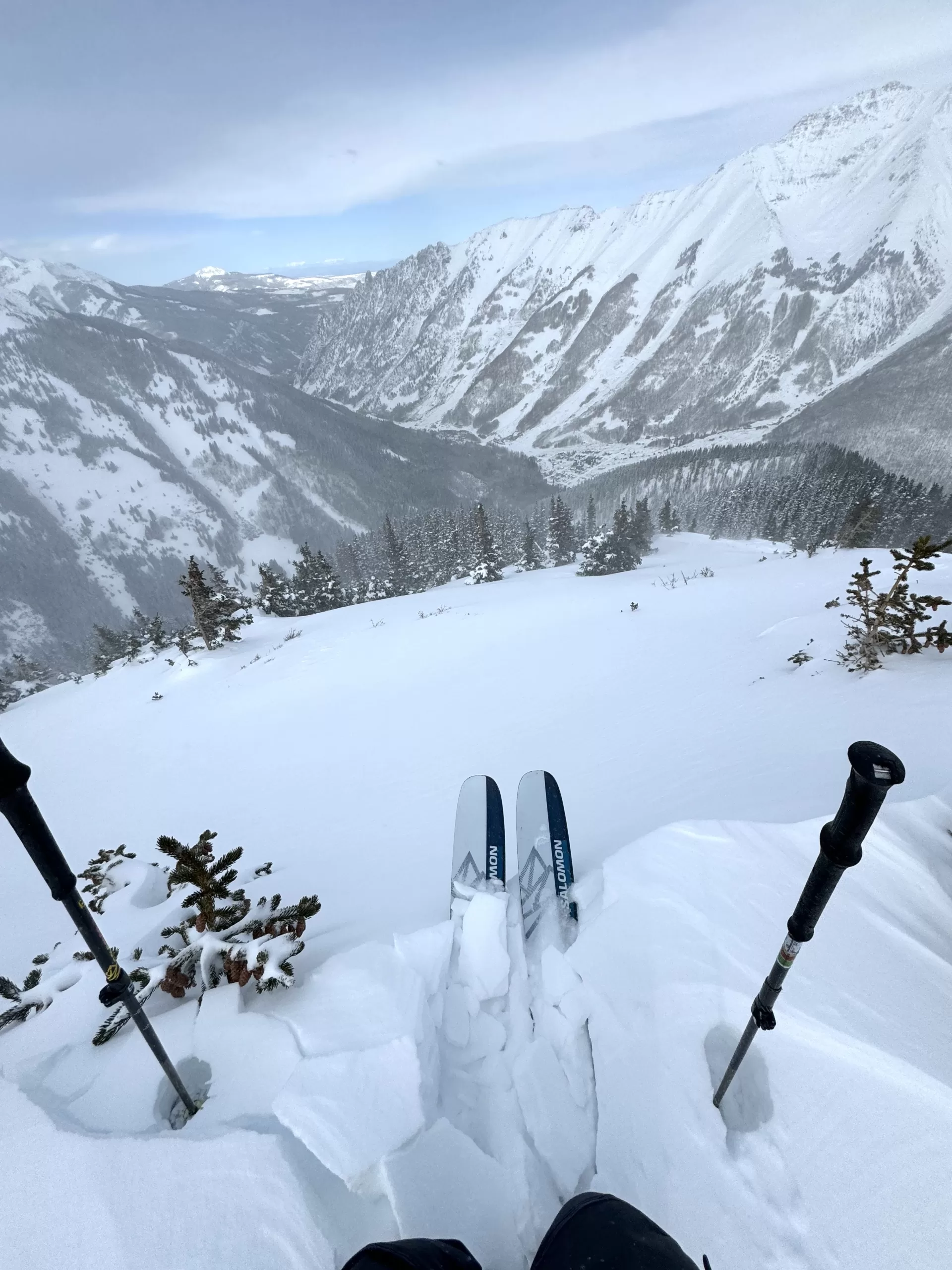
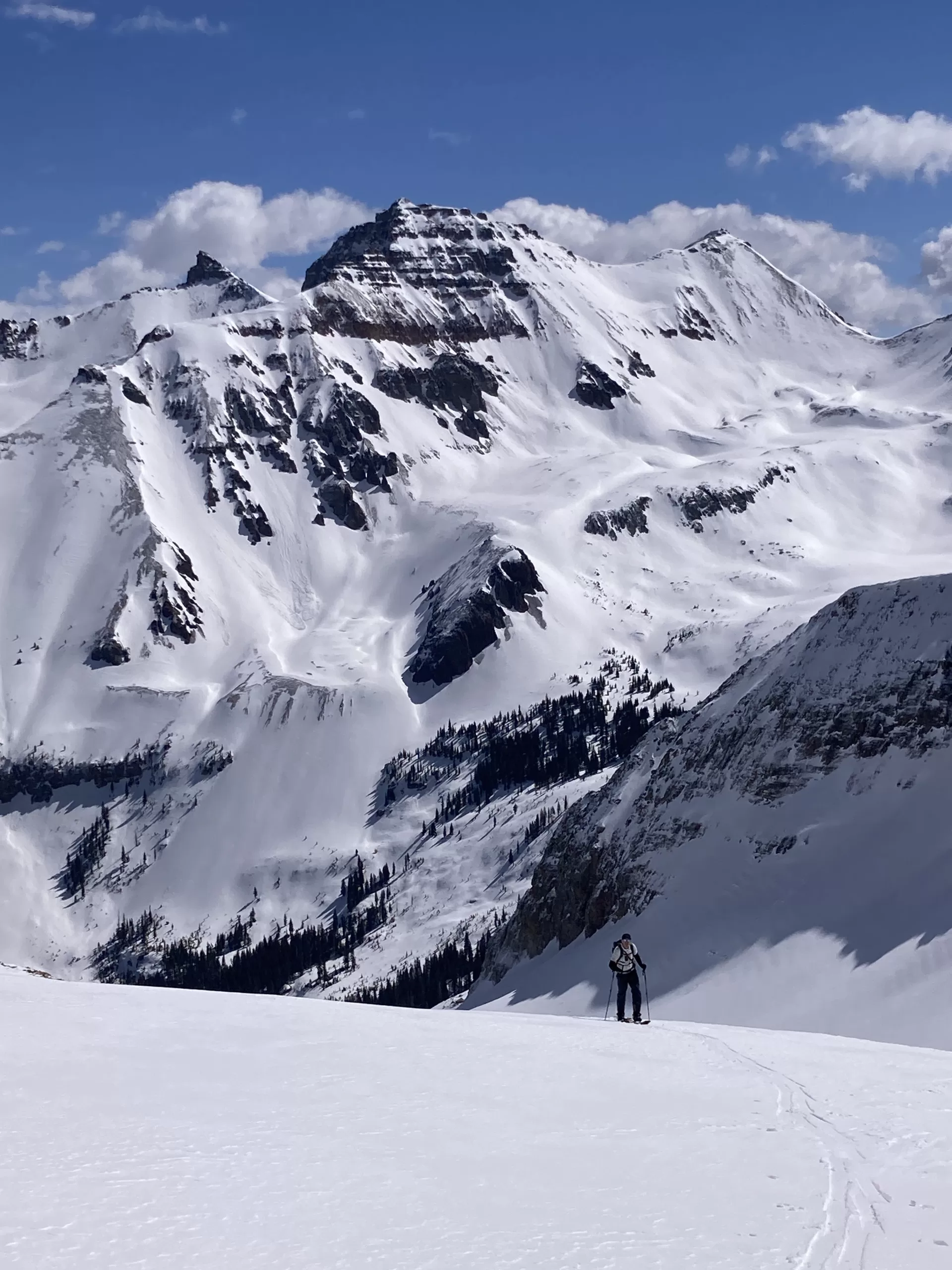
Telluride has big terrain and incredible views. Multiple trailheads above 9,500 feet provide easy access to the alpine, while tree-skiing is another guide favorite if it’s stormy. Telluride Ski Resort provides access to some of the most incredible lift-assisted backcountry ski terrain in North America, including the famous runs of Bear Creek. Ouray and Red Mountain Pass feature trailhead parking over 11,000 feet, with great ski terrain in all directions. Silverton features long runs and classic lines, and is known for having the best backcountry ski terrain in Colorado. We prefer to explore three different destinations during this three-day backcountry ski trip, but if you have a preference, just let us know. Otherwise, our guides will choose the plan for each day based on conditions.
Want to Stay at a Backcountry Hut?
The San Juans have many comfortable, full-service huts inspired by the backcountry huts of the Alps. If you’re interested in spending the night (or two) at one of these backcountry huts with comfortable beds, delicious all-included meals, saunas and incredible skiing, check out our Colorado Backcountry Skiing Hut Trips and Colorado Backcountry Hut Ski Guides opportunities.
Your Guides
Mountain Trip’s ski guides are trained or certified through the American Mountain Guides Association (AMGA). They are among the best in the business, guiding skiers all over the world from Colorado to Canada, Alaska, the Alps, and South America. We emphasize safety, fun, and instruction to help you reach your goals and have a great time on all of our trips. Our guides cultivate a safe, inclusive, and non-competitive learning environment to help you ski stress-free.
Contact Us with Questions or Private Trip Inquiries
For a bigger backcountry skiing experience, also check out our Alaska Range Ski Camps and Best of Chamonix Ski Week! If you have questions or are interested in a private trip, please contact the Mountain Trip office at [email protected] or (970) 369-1153.
Day 1: Telluride Area Backcountry Skiing. On the first day of the program, you’ll meet your guide and go for a ski tour near Telluride. Options include alpine bowls and gladed meadows near Ophir, high mountain terrain near Trout Lake, and chutes near the town of Telluride, just to name a few.
Day 2: Ouray, Red Mountain Pass, or Silverton Backcountry Skiing. On day two, your guide will choose a classic ski tour around Red Mountain Pass or Silverton. With an incredible amount of terrain to choose from, the day is guaranteed to be unforgettable.
Day 3: Lift-Accessed Backcountry Skiing in Telluride. On the third and final day, we’ll start by riding chairlifts to the top of Telluride Ski Resort. From there, we’ll ski endless powder-filled bowls into the adjacent valleys, perhaps skinning up to the far reaches of the basins. Or, we’ll ski lift-accessed backcountry laps to town, then ride the lifts back up and do it all over again.
Inclusions and Exclusions for Best 3 Days Colorado Backcountry Skiing
Included in the Trip Fee:
• Unlimited pre-trip access to our office resources.
• AMGA trained or certified ski guide services.
• Avalanche rescue equipment: beacon, shovel, probe, and ski touring backpack.
• All ground transportation during the itinerary.
• Assistance arranging post-trip activities in the area.
Not Included in the Trip Fee:
• Travel to and from southwest Colorado.
• Personal clothing and equipment, per our equipment list. (Please, just ask us if you need anything!)
• Accommodations in Colorado.
• Ski pass to Telluride Ski Resort.
• Travel and/or rescue insurance. (The CORSAR card is an inexpensive way to reimburse local rescue groups for costs incurred during a rescue in Colorado.)
• Costs incurred due to evacuation or unplanned departure from the area due to illness or other problems.
• Costs incurred as a result of delays beyond the control of Mountain Trip.
• Costs as a result of force majeure.
Refunds and Cancellations
Mountain Trip recognizes how difficult and disappointing it can be for guests who must cancel trips. Guests must also recognize that, due to the nature of planning trips and contracting guides for specific dates, Mountain Trip also accrues significant expenses in organizing our excursions. We must therefore adhere to a strict refund policy for all guests.
We require 100% payment at the time of booking and at least 72 hours’ notice for cancellations and rescheduling of activities. If you would like to purchase travel insurance to protect a trip in case of last-minute cancellations, you can do so via Travel Guard HERE.
We are happy to work with you to reschedule to a new date, or if you need to cancel entirely, we will provide a full refund with a minimum of 72 hours’ notice. If you cancel inside of 72 hours ahead of a trip departure, or do not show up, you will not be refunded and will have to reschedule by paying full price.
All requests for refunds must be made in writing and received in our Colorado office. No refunds will be provided for cancellations occurring within the last three days prior to the scheduled date of a trip.
Mountain Trip reserves the right to cancel a trip prior to the departure date for any reason. In such an event, all monies collected by Mountain Trip from trip participants shall be promptly refunded. This is the extent of our financial liability.
Weather Cancellations
We, Mountain Trip and our guides, reserve the right to make all weather-related decisions in regards to the cancellation of trips.
The following is a list of guide-recommended gear for Backcountry Skiing with Mountain Trip. We will happily provide all avalanche rescue equipment, including beacon, shovel, probe, and ski touring backpack. Skiers are also welcome to use their own avalanche gear upon inspection by one of our guides. Avalanche airbags and backcountry ski touring equipment, including skis with touring bindings, skins, ski touring boots, and poles are available to rent from Mountain Trip.
Whatever gear you choose, please make sure it fits well so you fully enjoy your experience in the mountains.
In addition to what we provide and have available to rent, there is also a good selection of gear available in Telluride and Ouray. If you have any specific questions about what you might need, please don’t hesitate to reach out to the Mountain Trip office.
Rental alpine touring skis, boots, skins and poles are available for $100/day, and airbag packs for $30/day.
Print Equipment Footwear
| Gear | Description | Guide's Pick |
|---|
| Booties | Lightweight down fill booties both work well on expeditions. These are great for camp and tent comfort and allow you extra opportunity to dry out your mountain or ski boots. | |
| Warm Boots for Base Camp | It is nice to have a good pair of comfy, warm insulated boots for hanging out in camp. Classic Winter Sorel Boots, Uggs, etc. all work. | |
| Ski Socks | You will want ski socks that fit your foot well and are warm. For multi-day trips or ski expeditions, we recommend multiple pairs of socks so you can dry a pair overnight. | |
| Custom Insole | A custom insole can help fine tune the fit of your boot, support your feet. A good fitting boot will be warmer and prevent blisters. | |
Torso Layers
| Gear | Description | Guide's Pick |
|---|
| Base Layer Top | (1 or 2 sets) of Wool or Capilene light weight base layers. Long sleeve or short sleeve base layers work well. | |
| Light Fleece Hoody | Light/mid weight fleece (or wool) top with a hood. You will wear this over your light weight base layer. | |
| Soft Shell Wind Jacket | Many high alpine peaks are cold and dry. We are huge fans of very lightweight softshell wind jackets for high, dry, cold peaks. Weighing just a few ounces, these can be carried in your pocket or in the lid of your pack for rapid deployment. This layer is used in addition to your more waterproof hard shell jacket. | |
| “T” or Sun Shirt | Synthetic or synthetic/cotton blend shirts are nice for hiding from the sun. Long sleeve "sun hoodies" are becoming increasingly popular, as they provide a high level of sun protection. Other people favor ventilated, button up shirts- either long or short-sleeved. Whatever you choose, consider it as part of your system, and try it out before your trip. | |
| Vest (optional) | A lightweight down or synthetic filled vest can be a nice addition and add some warmth with little weight. **This is an optional layer** | |
| Sun Hoody | A Sun Hoody is a great lightweight layer to help protect you from the intense UV at high altitude. It's a go-to layer for our guides, as it both keeps the sun off your skin and helps keeps you cool. | |
| Ski Shell | A good gore-tex ski shell that is light weight and water/snow proof. | |
| Puffy Jacket Skiing | A warm puffy jacket to throw on at the top of the skin track, during breaks, in the early am or on cold days. | |
| Down Parka | A warm down parka for hanging out in camp on a cold night. This layer should be able to fit over your lighter puffy jacket so you can layer up for warmth. | |
Leg Layers
| Gear | Description | Guide's Pick |
|---|
| Base Layer Bottoms | (1 or 2 sets) of Wool or Capilene light weight base layers. | |
| Light Fleece Bottoms | As the air thins and the wind picks up, you'll want a bit more insulation on your legs. This should be a slightly warmer layer that can go over your base layer bottoms when it gets cold. | |
| Puffy Insulated Expedition Pants | On summit day or on a cold morning, you will need a warm layer that can go over your baselayers and softshell pants. This layer should be down or synthetic (ie. Primaloft) filled and must have fully separating side zippers. Practice putting these puffy pants on and taking them off while wearing your boots before you leave for your expedition. | |
| Underwear | Consider synthetic or Merino wool for your underwear. Most longer trips, such as Aconcagua or Denali, typically require 3-4 pair, but choose your quantity based on your personal level of comfort. | |
| Ski Pant | A goretex or softshell ski pant with ventilation is recommended. | |
Head and Hands
| Gear | Description | Guide's Pick |
|---|
| Heavyweight Gloves | Warm, insulated gloves are the day-to-day workhorses on cold peaks or for cold days of ice climbing. We prefer gloves with removable liners for ease of drying. | |
| Medium Weight Gloves | A mid-weight glove will generally be a softshell type glove with some light synthetic insulation. | |
| Light Weight Gloves | When the sun comes out on a glacier, the temperature can soar. Light weight, soft shell gloves are great for keeping the sun off your hands, while still giving you a bit of protection from the wind and cold. | |
| Buff Neck Gaiter | Buff is a brand of light weight neck gaiters that have grown to become a staple of every guide's kit. These are amazingly versatile, and can be worn as a hat, a neck gaiter or pulled over your face for protection from the wind or sun. They come in many thicknesses nowadays, but we prefer the original weight for its versatility. | |
| Warm Hat | Bring one warm hat or two hats of different weights. Wool or fleece are fine, but your hat must provide ear protection from the cold. | |
| Sun Hat | Baseball type or wide brimmed sun hats are required for protection against the intense sunshine found on many peaks. You can combine a baseball hat with a BUFF for good sun protection or go for a wide brimmed version to protect your face, ears and neck. | |
| Hand Warmers | Bring 4 -6+ sets of these disposable insurance policies, depending on where you are climbing. Make certain that your hand warmers are relatively new, as they do go bad over time. | |
| Glacier Glasses | Good, dark (Category 4) glacier glasses are a must for high altitude climbs. They must have side protection and filter 100% UVA and UVB rays. | |
| Ski Goggles | Ski Goggles | |
| Technical Winter Climbing Gloves | These are your for when you are actively climbing, they should be warm, water proof, and give you good dexterity for climbing. They should be a snug fit, and used in tandem with your heavy gloves between climbing and belaying. | |
Sleeping Gear
| Gear | Description | Guide's Pick |
|---|
| Inflatable Sleeping Pad | Inflatable pads have improved tremendously in recent years, they are the foundation of a warm and comfortable night! | |
| Foam Sleeping Pad | Bringing two sleeping pads, one closed cell foam and the other an inflatable pad, will provide additional comfort and insulation, as well as a bit of insurance in case you have a catastrophic failure of your inflatable pad. | |
| Sleeping Bag (-20) | You'll want a bag rated -20 Fahrenheit. Down or synthetic will work fine, although down is lighter and more compact for traveling and packing. If you sleep cold, go with a bag rated to a colder temperature. | |
Packs and Duffels
| Gear | Description | Guide's Pick |
|---|
| Large Zippered Duffel | You'll want an Large sized (90 – 100L) duffel for your expedition. Water resistant bags like the Arcteryx Carrier 100L Duffle Bag are nice for their toughness to weight ratio. A quality duffel bag can work for a sled bag on Denali, a mule bag on Aconcagua, a bag for porters on Kilimanjaro or the Himalaya, and a great all around travel bag. | |
Climbing Gear
| Gear | Description | Guide's Pick |
|---|
| Alpine Climbing Harness | Your harness should be adjustable enough to accommodate several layers of clothing. As with most items on this list, choose a light weight harness. | |
| Locking Carabiners | Bring three locking carabiners. | |
| Accessory/Prussik Cord | 25-30 feet of 6mm-7mm accessory cord will be used to create a prussik, rig your ascender, and extra for setting up your sled for glacier travel. We will go over this in our pre-trip training. | |
| Primary Attachment Locking Carabiner | For your primary attachment to the rope, we will use a "triple action" locking carabiner. Triple Action carabiners will not come unlocked while you are traveling on the glacier. | |
| Lightweight Piolet (Ice Axe) | A light weight Piolet for self arrest and to aid on steep terrain. 50 cm length is great for a ski-mountaineering axe. | |
| Lightweight Crampons for Ski Boots | A lightweight aluminum crampon that fits on your ski boot for steep terrain. | |
Ski Gear
| Gear | Description | Guide's Pick |
|---|
| Backcountry Ski Poles | We love the long grip Folkrm Poles allowing you to adjust your grip as you move through the terrain. Any poles with powder baskets will work.
| |
| Touring Boots | If you have your own boots some helpful features include; walk mode and pin binding compatibility. Whatever boot you decide to use, make sure it is compatible with your touring bindings.
**Mountain Trip has a fleet of Dynafit, Scarpa, and Atomic touring boots available to rent | |
| Climbing Skins | Climbing skins pre-cut for your touring skis.
**Skins are included with the touring gear rental package | |
| Backcountry Skis | A lightweight ski setup with touring specific bindings is a great way to maximize the fun in the backcountry. For a great all around touring ski, look for something around a 100mm waist.
**Mountain Trip has a fleet of touring skis with pin bindings for you to rent for Colorado backcountry ski trips. | |
| Ski Helmet | We recommend skiing with a ski helmet. Pick something comfortable that you'll wear, there are some helmets that are designed for touring that are a bit lighter and have better ventilation like the Smith Summit helmet. | |
| Ski Crampons | Ski crampons that work with your touring bindings. Make sure these work with your bindings! | |
| Ski Pack | A 30-40 liter ski pack with a spot for your ice axe. Airbag backpacks are recommended but not required. | |
| Ascent Plates *optional* | Ascent plates are like snowshoes for booting up steep couloirs. They are used with a crampon, they can be a useful tool, or we may not pull them out. | |
Avalanche Safety Equipment
| Gear | Description | Guide's Pick |
|---|
| Avalanche Transceiver/Beacon | When traveling in avalanche terrain, whether it is backcountry skiing in the Alaska Range, or Colorado, we will wear avalanche transceivers (beacons). We will have an opportunity to practice at the start of the trip. Beacons are included for Colorado backcountry ski trips and available for rent on other climbs and expeditions. Bring an extra set of batteries for extended trips! | |
| Avalanche Probe | An avalanche probe specifically for backcountry skiing. These are provided for all ski programs, but you are welcome to bring your own. | |
| Avalanche Shovel | You want a shovel that has a removable handle so that you can stow it in your backpack while touring. Metal bladed shovels only. | |
Other
| Gear | Description | Guide's Pick |
|---|
| Stuff Sacks | We are fans of the very light stiff sacks made from Sil Nylon fabric. Bring enough for your clothes and personal items. Light, zippered stuff bags are really nice for toiletries. | |
| Insulated Bottle Cover(s) | Water bottles freeze when it gets cold. Crazy, but true! Extra clothing can help insulate bottles, but dedicated water bottle insulators do a much better job. Bring at least one. | |
| Large Bowl | Bring a 2-4 cup camping bowl for your mountain dining. | |
| Insulated Cup or Mug | A 12 - 16 ounce (350-500 Ml) mug with an attached lid will help keep you hydrated. The Kleen Kanteen Insulated Bottle works as a mug and a thermos all in one! | |
| Lexan Spoon | A soup spoon made from Lexan will survive most trips and is more useful and versatile than a fork or even a "spork." Mark your spoon with your initials to keep spoon rustlers at bay. | |
| P-Bottle | Wide-mouth, collapsible Nalgene Cantenes work great- they make a 96 ounce version, which will come in handy during long storms or if you take Diamox. Ladies- look for an appropriate adapter available at your local outdoors store. These items can both be tough to find in Anchorage so plan ahead! | |
| Toiletry Kit | Tooth brush & paste, dental floss, Handi-wipes (1 per day on average), a small bottle of hand sanitizer, perhaps some foot powder… keep it small!!! | |
| Toilet Paper | Depending on your technique, you'll want 1-2 rolls, each packed in a quality zip-lock bag. | |
| Personal Medical Kit | Mountain Trip's guides will have fairly comprehensive medical kits developed by our Medical Director, but we encourage each climber to bring a small, personal kit. Items to consider bringing include: blister treatment and prevention, pain relievers, and antacids. Presctiption medications should be based on consultation with your personal physician. Suggested drugs for altitude expeditions include: Diamox (acetazolomide) 125 mg, Decadron (dexamthazone) 4 mg, Nifedipine XR 30 mg, and a couple of antibiotics for respiratory and gastrointestinal issues. | |
| Journal (and pencil) | Expeditions can be a great time for reflection and a journal can be a nice way to wax poetic or just keep track of what you did each day. Keep it small and leave the leather bound version at home. | |
| Book(s) or E-Reader | There is a lot of "down time" on an expedition, even when you have good weather. An expedition can be a good time to catch up on reading! | |
| Camera | Most climbers these days use their phone as a camera, but if you plan to bring a dedicated camera, consider a small, light weight point and shoot camera. If you are a photography buff and really want to bring a DSLR, plan for that extra weight with your training! | |
| Altimeter Watch | An altimeter watch can be fun to have on an expedition to keep track of your ascent and to watch for changes in barometric pressure. | |
| Lighter | Your guides will have plenty of lighters, but it is nice to have one lighter per tent, as cord always needs to be cut and melted. | |
| Small Knife | A small knife or small multi-tool is also handy to have. One per tent is sufficient. There is emphasis on the word small when it comes to multi-tools! | |
| Satellite Tracking/Texting Device **optional** | Satellite linked devices such as the Garmin inReach have been increasingly popular, as you can send and receive text messages with it. Again- consider how you will keep it powered over the course of your expedition. These new devices will allow you to send and receive text messages nearly anywhere in the world! It is a fun way to keep in touch with the family and let them follow along on your journey. They are not required, and Mountain Trip guides carry several forms of communication devices including satellite based communications that we can use in case of an emergency situation. **this is optional** | |
| Several Good Jokes! | "A Moose walks into a bar..." | |
| Lip Balm | Bring a tube of quality lip balm with sun protection (SPF). | |
| Sunscreen | The sun can be intense at altitude. Bring one small tube for use while climbing and one larger tube for use while not on route. | |
| Headlamp | Bring an extra set of batteries, as well. Lithium batteries work the best in cold weather!! For some trips (Carstensz, Everest, Cho Oyu) where we will be frequently climbing at night a second headlamp is a good idea, and always bring extra batteries! | |
| Solar Panel/Battery *optional | If you are planning to charge your iPhone, inReach, or other electronics on the expedition you will need a good, small solar panel. We recommend using the panel to charge a battery and then charging your devices from the battery. This is definitely some extra weight, so keep it light and maybe share a panel and battery with your tentmate! | |
| Pee Funnel | This is a women's specific tool for expeditions and winter trips that gives women the ability to pee standing up like men. This also creates a little more privacy and protection from the elements when on a rope team. We prefer this hard-sided version. | |
| Water Bottle | Bring a bottle with water in it! 1 liter is a minimum for day trips. | |
Array
(
[0] => Array
(
[post] => Array
(
[0] => WP_Post Object
(
[ID] => 7537
[post_author] => 4
[post_date] => 2014-02-14 14:32:49
[post_date_gmt] => 2014-02-14 21:32:49
[post_content] =>
[post_title] => Booties
[post_excerpt] => Lightweight down fill booties both work well on expeditions. These are great for camp and tent comfort and allow you extra opportunity to dry out your mountain or ski boots.
[post_status] => publish
[comment_status] => closed
[ping_status] => closed
[post_password] =>
[post_name] => booties
[to_ping] =>
[pinged] =>
[post_modified] => 2022-11-04 14:58:58
[post_modified_gmt] => 2022-11-04 20:58:58
[post_content_filtered] =>
[post_parent] => 0
[guid] => http://mountaintrip.com/?post_type=equipment&p=7537
[menu_order] => 0
[post_type] => equipment
[post_mime_type] =>
[comment_count] => 0
[filter] => raw
)
[1] => WP_Post Object
(
[ID] => 9866
[post_author] => 4
[post_date] => 2015-06-04 15:11:28
[post_date_gmt] => 2015-06-04 21:11:28
[post_content] =>
[post_title] => Warm Boots for Base Camp
[post_excerpt] => It is nice to have a good pair of comfy, warm insulated boots for hanging out in camp. Classic Winter Sorel Boots, Uggs, etc. all work.
[post_status] => publish
[comment_status] => closed
[ping_status] => closed
[post_password] =>
[post_name] => warm-boots-for-base-camp
[to_ping] =>
[pinged] =>
[post_modified] => 2022-07-25 15:11:38
[post_modified_gmt] => 2022-07-25 21:11:38
[post_content_filtered] =>
[post_parent] => 0
[guid] => http://mountaintrip.com/?post_type=equipment&p=9866
[menu_order] => 0
[post_type] => equipment
[post_mime_type] =>
[comment_count] => 0
[filter] => raw
)
[2] => WP_Post Object
(
[ID] => 24866
[post_author] => 4
[post_date] => 2019-02-26 15:51:00
[post_date_gmt] => 2019-02-26 22:51:00
[post_content] =>
[post_title] => Ski Socks
[post_excerpt] =>
[post_status] => publish
[comment_status] => closed
[ping_status] => closed
[post_password] =>
[post_name] => ski-socks
[to_ping] =>
[pinged] =>
[post_modified] => 2022-10-13 13:26:56
[post_modified_gmt] => 2022-10-13 19:26:56
[post_content_filtered] =>
[post_parent] => 0
[guid] => https://mountaintrip.com/?post_type=equipment&p=24866
[menu_order] => 0
[post_type] => equipment
[post_mime_type] =>
[comment_count] => 0
[filter] => raw
)
[3] => WP_Post Object
(
[ID] => 27321
[post_author] => 10
[post_date] => 2020-02-03 10:49:13
[post_date_gmt] => 2020-02-03 17:49:13
[post_content] =>
[post_title] => Custom Insole
[post_excerpt] => A custom insole can help fine tune the fit of your boot, support your feet. A good fitting boot will be warmer and prevent blisters.
[post_status] => publish
[comment_status] => closed
[ping_status] => closed
[post_password] =>
[post_name] => custom-insole
[to_ping] =>
[pinged] =>
[post_modified] => 2025-04-25 12:11:24
[post_modified_gmt] => 2025-04-25 18:11:24
[post_content_filtered] =>
[post_parent] => 0
[guid] => https://mountaintrip.com/?post_type=equipment&p=27321
[menu_order] => 0
[post_type] => equipment
[post_mime_type] =>
[comment_count] => 0
[filter] => raw
)
)
[tax] => footwear
[trip] => ak-ski-mountaineering
)
[1] => Array
(
[post] => Array
(
[0] => WP_Post Object
(
[ID] => 7541
[post_author] => 4
[post_date] => 2014-02-14 15:03:50
[post_date_gmt] => 2014-02-14 22:03:50
[post_content] =>
[post_title] => Base Layer Top
[post_excerpt] => (1 or 2 sets) of Wool or Capilene light weight base layers. Long sleeve or short sleeve base layers work well.
[post_status] => publish
[comment_status] => closed
[ping_status] => closed
[post_password] =>
[post_name] => base-layer-top
[to_ping] =>
[pinged] =>
[post_modified] => 2024-10-24 17:35:02
[post_modified_gmt] => 2024-10-24 23:35:02
[post_content_filtered] =>
[post_parent] => 0
[guid] => http://mountaintrip.com/?post_type=equipment&p=7541
[menu_order] => 0
[post_type] => equipment
[post_mime_type] =>
[comment_count] => 0
[filter] => raw
)
[1] => WP_Post Object
(
[ID] => 7542
[post_author] => 4
[post_date] => 2014-02-14 15:07:36
[post_date_gmt] => 2014-02-14 22:07:36
[post_content] =>
[post_title] => Light Fleece Hoody
[post_excerpt] => Light/mid weight fleece (or wool) top with a hood. You will wear this over your light weight base layer.
[post_status] => publish
[comment_status] => closed
[ping_status] => closed
[post_password] =>
[post_name] => light-fleece-top
[to_ping] =>
[pinged] =>
[post_modified] => 2025-11-12 14:03:39
[post_modified_gmt] => 2025-11-12 21:03:39
[post_content_filtered] =>
[post_parent] => 0
[guid] => http://mountaintrip.com/?post_type=equipment&p=7542
[menu_order] => 0
[post_type] => equipment
[post_mime_type] =>
[comment_count] => 0
[filter] => raw
)
[2] => WP_Post Object
(
[ID] => 7546
[post_author] => 4
[post_date] => 2014-02-14 15:20:19
[post_date_gmt] => 2014-02-14 22:20:19
[post_content] =>
[post_title] => Soft Shell Wind Jacket
[post_excerpt] => Many high alpine peaks are cold and dry. We are huge fans of very lightweight softshell wind jackets for high, dry, cold peaks. Weighing just a few ounces, these can be carried in your pocket or in the lid of your pack for rapid deployment. This layer is used in addition to your more waterproof hard shell jacket.
[post_status] => publish
[comment_status] => closed
[ping_status] => closed
[post_password] =>
[post_name] => soft-shell-jacket
[to_ping] =>
[pinged] =>
[post_modified] => 2024-10-24 13:47:34
[post_modified_gmt] => 2024-10-24 19:47:34
[post_content_filtered] =>
[post_parent] => 0
[guid] => http://mountaintrip.com/?post_type=equipment&p=7546
[menu_order] => 0
[post_type] => equipment
[post_mime_type] =>
[comment_count] => 0
[filter] => raw
)
[3] => WP_Post Object
(
[ID] => 7548
[post_author] => 4
[post_date] => 2014-02-14 15:34:40
[post_date_gmt] => 2014-02-14 22:34:40
[post_content] =>
[post_title] => "T" or Sun Shirt
[post_excerpt] => Synthetic or synthetic/cotton blend shirts are nice for hiding from the sun. Long sleeve "sun hoodies" are becoming increasingly popular, as they provide a high level of sun protection. Other people favor ventilated, button up shirts- either long or short-sleeved. Whatever you choose, consider it as part of your system, and try it out before your trip.
[post_status] => publish
[comment_status] => closed
[ping_status] => closed
[post_password] =>
[post_name] => t-or-sun-shirt
[to_ping] =>
[pinged] =>
[post_modified] => 2019-11-14 11:35:21
[post_modified_gmt] => 2019-11-14 18:35:21
[post_content_filtered] =>
[post_parent] => 0
[guid] => http://mountaintrip.com/?post_type=equipment&p=7548
[menu_order] => 0
[post_type] => equipment
[post_mime_type] =>
[comment_count] => 0
[filter] => raw
)
[4] => WP_Post Object
(
[ID] => 7556
[post_author] => 4
[post_date] => 2014-02-19 11:23:57
[post_date_gmt] => 2014-02-19 18:23:57
[post_content] =>
[post_title] => Vest (optional)
[post_excerpt] => A lightweight down or synthetic filled vest can be a nice addition and add some warmth with little weight. **This is an optional layer**
[post_status] => publish
[comment_status] => closed
[ping_status] => closed
[post_password] =>
[post_name] => vest
[to_ping] =>
[pinged] =>
[post_modified] => 2024-10-25 14:37:32
[post_modified_gmt] => 2024-10-25 20:37:32
[post_content_filtered] =>
[post_parent] => 0
[guid] => http://mountaintrip.com/?post_type=equipment&p=7556
[menu_order] => 0
[post_type] => equipment
[post_mime_type] =>
[comment_count] => 0
[filter] => raw
)
[5] => WP_Post Object
(
[ID] => 16960
[post_author] => 4
[post_date] => 2015-10-05 16:12:32
[post_date_gmt] => 2015-10-05 22:12:32
[post_content] =>
[post_title] => Sun Hoody
[post_excerpt] => A Sun Hoody is a great lightweight layer to help protect you from the intense UV at high altitude. It's a go-to layer for our guides, as it both keeps the sun off your skin and helps keeps you cool.
[post_status] => publish
[comment_status] => closed
[ping_status] => closed
[post_password] =>
[post_name] => sun-hoody
[to_ping] =>
[pinged] =>
[post_modified] => 2026-02-17 12:07:17
[post_modified_gmt] => 2026-02-17 19:07:17
[post_content_filtered] =>
[post_parent] => 0
[guid] => http://mountaintrip.com/?post_type=equipment&p=16960
[menu_order] => 0
[post_type] => equipment
[post_mime_type] =>
[comment_count] => 0
[filter] => raw
)
[6] => WP_Post Object
(
[ID] => 24868
[post_author] => 4
[post_date] => 2019-02-26 16:27:31
[post_date_gmt] => 2019-02-26 23:27:31
[post_content] =>
[post_title] => Ski Shell
[post_excerpt] =>
[post_status] => publish
[comment_status] => closed
[ping_status] => closed
[post_password] =>
[post_name] => ski-shell
[to_ping] =>
[pinged] =>
[post_modified] => 2025-11-12 14:12:48
[post_modified_gmt] => 2025-11-12 21:12:48
[post_content_filtered] =>
[post_parent] => 0
[guid] => https://mountaintrip.com/?post_type=equipment&p=24868
[menu_order] => 0
[post_type] => equipment
[post_mime_type] =>
[comment_count] => 0
[filter] => raw
)
[7] => WP_Post Object
(
[ID] => 24871
[post_author] => 4
[post_date] => 2019-02-26 16:43:50
[post_date_gmt] => 2019-02-26 23:43:50
[post_content] =>
[post_title] => Puffy Jacket Skiing
[post_excerpt] => A warm puffy jacket to throw on at the top of the skin track, during breaks, in the early am or on cold days.
[post_status] => publish
[comment_status] => closed
[ping_status] => closed
[post_password] =>
[post_name] => puffy-jacket-skiing
[to_ping] =>
[pinged] =>
[post_modified] => 2025-11-12 14:21:00
[post_modified_gmt] => 2025-11-12 21:21:00
[post_content_filtered] =>
[post_parent] => 0
[guid] => https://mountaintrip.com/?post_type=equipment&p=24871
[menu_order] => 0
[post_type] => equipment
[post_mime_type] =>
[comment_count] => 0
[filter] => raw
)
[8] => WP_Post Object
(
[ID] => 33480
[post_author] => 10
[post_date] => 2022-07-25 15:27:30
[post_date_gmt] => 2022-07-25 21:27:30
[post_content] =>
[post_title] => Down Parka
[post_excerpt] => A warm down parka for hanging out in camp on a cold night. This layer should be able to fit over your lighter puffy jacket so you can layer up for warmth.
[post_status] => publish
[comment_status] => closed
[ping_status] => closed
[post_password] =>
[post_name] => down-parka
[to_ping] =>
[pinged] =>
[post_modified] => 2022-07-25 15:27:45
[post_modified_gmt] => 2022-07-25 21:27:45
[post_content_filtered] =>
[post_parent] => 0
[guid] => https://mountaintrip.com/?post_type=equipment&p=33480
[menu_order] => 0
[post_type] => equipment
[post_mime_type] =>
[comment_count] => 0
[filter] => raw
)
)
[tax] => torso-layers
[trip] => ak-ski-mountaineering
)
[2] => Array
(
[post] => Array
(
[0] => WP_Post Object
(
[ID] => 7549
[post_author] => 4
[post_date] => 2014-02-19 10:03:26
[post_date_gmt] => 2014-02-19 17:03:26
[post_content] =>
[post_title] => Base Layer Bottoms
[post_excerpt] => (1 or 2 sets) of Wool or Capilene light weight base layers.
[post_status] => publish
[comment_status] => closed
[ping_status] => closed
[post_password] =>
[post_name] => base-layer-bottoms
[to_ping] =>
[pinged] =>
[post_modified] => 2024-10-25 14:48:37
[post_modified_gmt] => 2024-10-25 20:48:37
[post_content_filtered] =>
[post_parent] => 0
[guid] => http://mountaintrip.com/?post_type=equipment&p=7549
[menu_order] => 0
[post_type] => equipment
[post_mime_type] =>
[comment_count] => 0
[filter] => raw
)
[1] => WP_Post Object
(
[ID] => 7551
[post_author] => 4
[post_date] => 2014-02-19 10:46:17
[post_date_gmt] => 2014-02-19 17:46:17
[post_content] =>
[post_title] => Light Fleece Bottoms
[post_excerpt] => As the air thins and the wind picks up, you'll want a bit more insulation on your legs. This should be a slightly warmer layer that can go over your base layer bottoms when it gets cold.
[post_status] => publish
[comment_status] => closed
[ping_status] => closed
[post_password] =>
[post_name] => light-fleece-bottoms
[to_ping] =>
[pinged] =>
[post_modified] => 2024-10-25 14:52:14
[post_modified_gmt] => 2024-10-25 20:52:14
[post_content_filtered] =>
[post_parent] => 0
[guid] => http://mountaintrip.com/?post_type=equipment&p=7551
[menu_order] => 0
[post_type] => equipment
[post_mime_type] =>
[comment_count] => 0
[filter] => raw
)
[2] => WP_Post Object
(
[ID] => 7554
[post_author] => 4
[post_date] => 2014-02-19 11:15:15
[post_date_gmt] => 2014-02-19 18:15:15
[post_content] =>
[post_title] => Puffy Insulated Expedition Pants
[post_excerpt] => On summit day or on a cold morning, you will need a warm layer that can go over your baselayers and softshell pants. This layer should be down or synthetic (ie. Primaloft) filled and must have fully separating side zippers. Practice putting these puffy pants on and taking them off while wearing your boots before you leave for your expedition.
[post_status] => publish
[comment_status] => closed
[ping_status] => closed
[post_password] =>
[post_name] => down-or-puffy-expedition-pants
[to_ping] =>
[pinged] =>
[post_modified] => 2025-01-31 14:25:39
[post_modified_gmt] => 2025-01-31 21:25:39
[post_content_filtered] =>
[post_parent] => 0
[guid] => http://mountaintrip.com/?post_type=equipment&p=7554
[menu_order] => 0
[post_type] => equipment
[post_mime_type] =>
[comment_count] => 0
[filter] => raw
)
[3] => WP_Post Object
(
[ID] => 7555
[post_author] => 4
[post_date] => 2014-02-19 11:18:22
[post_date_gmt] => 2014-02-19 18:18:22
[post_content] =>
[post_title] => Underwear
[post_excerpt] => Consider synthetic or Merino wool for your underwear. Most longer trips, such as Aconcagua or Denali, typically require 3-4 pair, but choose your quantity based on your personal level of comfort.
[post_status] => publish
[comment_status] => closed
[ping_status] => closed
[post_password] =>
[post_name] => underwear
[to_ping] =>
[pinged] =>
[post_modified] => 2022-10-14 12:50:15
[post_modified_gmt] => 2022-10-14 18:50:15
[post_content_filtered] =>
[post_parent] => 0
[guid] => http://mountaintrip.com/?post_type=equipment&p=7555
[menu_order] => 0
[post_type] => equipment
[post_mime_type] =>
[comment_count] => 0
[filter] => raw
)
[4] => WP_Post Object
(
[ID] => 24869
[post_author] => 4
[post_date] => 2019-02-26 16:30:32
[post_date_gmt] => 2019-02-26 23:30:32
[post_content] =>
[post_title] => Ski Pant
[post_excerpt] =>
[post_status] => publish
[comment_status] => closed
[ping_status] => closed
[post_password] =>
[post_name] => ski-pant
[to_ping] =>
[pinged] =>
[post_modified] => 2025-11-11 10:01:57
[post_modified_gmt] => 2025-11-11 17:01:57
[post_content_filtered] =>
[post_parent] => 0
[guid] => https://mountaintrip.com/?post_type=equipment&p=24869
[menu_order] => 0
[post_type] => equipment
[post_mime_type] =>
[comment_count] => 0
[filter] => raw
)
)
[tax] => leg-layers
[trip] => ak-ski-mountaineering
)
[3] => Array
(
[post] => Array
(
[0] => WP_Post Object
(
[ID] => 7560
[post_author] => 4
[post_date] => 2014-02-19 11:47:41
[post_date_gmt] => 2014-02-19 18:47:41
[post_content] =>
[post_title] => Heavyweight Gloves
[post_excerpt] => Warm, insulated gloves are the day-to-day workhorses on cold peaks or for cold days of ice climbing. We prefer gloves with removable liners for ease of drying.
[post_status] => publish
[comment_status] => closed
[ping_status] => closed
[post_password] =>
[post_name] => heavyweight-gloves
[to_ping] =>
[pinged] =>
[post_modified] => 2025-11-10 16:31:07
[post_modified_gmt] => 2025-11-10 23:31:07
[post_content_filtered] =>
[post_parent] => 0
[guid] => http://mountaintrip.com/?post_type=equipment&p=7560
[menu_order] => 0
[post_type] => equipment
[post_mime_type] =>
[comment_count] => 0
[filter] => raw
)
[1] => WP_Post Object
(
[ID] => 7562
[post_author] => 4
[post_date] => 2014-02-19 11:54:29
[post_date_gmt] => 2014-02-19 18:54:29
[post_content] =>
[post_title] => Medium Weight Gloves
[post_excerpt] => A mid-weight glove will generally be a softshell type glove with some light synthetic insulation.
[post_status] => publish
[comment_status] => closed
[ping_status] => closed
[post_password] =>
[post_name] => medium-weight-gloves
[to_ping] =>
[pinged] =>
[post_modified] => 2025-11-10 16:35:42
[post_modified_gmt] => 2025-11-10 23:35:42
[post_content_filtered] =>
[post_parent] => 0
[guid] => http://mountaintrip.com/?post_type=equipment&p=7562
[menu_order] => 0
[post_type] => equipment
[post_mime_type] =>
[comment_count] => 0
[filter] => raw
)
[2] => WP_Post Object
(
[ID] => 7563
[post_author] => 4
[post_date] => 2014-02-19 11:57:48
[post_date_gmt] => 2014-02-19 18:57:48
[post_content] =>
[post_title] => Light Weight Gloves
[post_excerpt] => When the sun comes out on a glacier, the temperature can soar. Light weight, soft shell gloves are great for keeping the sun off your hands, while still giving you a bit of protection from the wind and cold.
[post_status] => publish
[comment_status] => closed
[ping_status] => closed
[post_password] =>
[post_name] => light-weight-gloves
[to_ping] =>
[pinged] =>
[post_modified] => 2025-11-10 16:38:48
[post_modified_gmt] => 2025-11-10 23:38:48
[post_content_filtered] =>
[post_parent] => 0
[guid] => http://mountaintrip.com/?post_type=equipment&p=7563
[menu_order] => 0
[post_type] => equipment
[post_mime_type] =>
[comment_count] => 0
[filter] => raw
)
[3] => WP_Post Object
(
[ID] => 7565
[post_author] => 4
[post_date] => 2014-02-19 12:13:57
[post_date_gmt] => 2014-02-19 19:13:57
[post_content] =>
[post_title] => Buff Neck Gaiter
[post_excerpt] => Buff is a brand of light weight neck gaiters that have grown to become a staple of every guide's kit. These are amazingly versatile, and can be worn as a hat, a neck gaiter or pulled over your face for protection from the wind or sun. They come in many thicknesses nowadays, but we prefer the original weight for its versatility.
[post_status] => publish
[comment_status] => closed
[ping_status] => closed
[post_password] =>
[post_name] => buff-neck-gaiter
[to_ping] =>
[pinged] =>
[post_modified] => 2022-11-03 15:34:33
[post_modified_gmt] => 2022-11-03 21:34:33
[post_content_filtered] =>
[post_parent] => 0
[guid] => http://mountaintrip.com/?post_type=equipment&p=7565
[menu_order] => 0
[post_type] => equipment
[post_mime_type] =>
[comment_count] => 0
[filter] => raw
)
[4] => WP_Post Object
(
[ID] => 7567
[post_author] => 4
[post_date] => 2014-02-19 12:16:10
[post_date_gmt] => 2014-02-19 19:16:10
[post_content] =>
[post_title] => Warm Hat
[post_excerpt] => Bring one warm hat or two hats of different weights. Wool or fleece are fine, but your hat must provide ear protection from the cold.
[post_status] => publish
[comment_status] => closed
[ping_status] => closed
[post_password] =>
[post_name] => warm-hat
[to_ping] =>
[pinged] =>
[post_modified] => 2023-09-17 14:38:06
[post_modified_gmt] => 2023-09-17 20:38:06
[post_content_filtered] =>
[post_parent] => 0
[guid] => http://mountaintrip.com/?post_type=equipment&p=7567
[menu_order] => 0
[post_type] => equipment
[post_mime_type] =>
[comment_count] => 0
[filter] => raw
)
[5] => WP_Post Object
(
[ID] => 7570
[post_author] => 4
[post_date] => 2014-02-19 12:24:24
[post_date_gmt] => 2014-02-19 19:24:24
[post_content] =>
[post_title] => Sun Hat
[post_excerpt] => Baseball type or wide brimmed sun hats are required for protection against the intense sunshine found on many peaks. You can combine a baseball hat with a BUFF for good sun protection or go for a wide brimmed version to protect your face, ears and neck.
[post_status] => publish
[comment_status] => closed
[ping_status] => closed
[post_password] =>
[post_name] => sun-hat
[to_ping] =>
[pinged] =>
[post_modified] => 2022-10-13 14:18:14
[post_modified_gmt] => 2022-10-13 20:18:14
[post_content_filtered] =>
[post_parent] => 0
[guid] => http://mountaintrip.com/?post_type=equipment&p=7570
[menu_order] => 0
[post_type] => equipment
[post_mime_type] =>
[comment_count] => 0
[filter] => raw
)
[6] => WP_Post Object
(
[ID] => 7571
[post_author] => 4
[post_date] => 2014-02-19 12:34:43
[post_date_gmt] => 2014-02-19 19:34:43
[post_content] =>
[post_title] => Hand Warmers
[post_excerpt] => Bring 4 -6+ sets of these disposable insurance policies, depending on where you are climbing. Make certain that your hand warmers are relatively new, as they do go bad over time.
[post_status] => publish
[comment_status] => closed
[ping_status] => closed
[post_password] =>
[post_name] => hand-warmers
[to_ping] =>
[pinged] =>
[post_modified] => 2019-11-14 11:31:57
[post_modified_gmt] => 2019-11-14 18:31:57
[post_content_filtered] =>
[post_parent] => 0
[guid] => http://mountaintrip.com/?post_type=equipment&p=7571
[menu_order] => 0
[post_type] => equipment
[post_mime_type] =>
[comment_count] => 0
[filter] => raw
)
[7] => WP_Post Object
(
[ID] => 7572
[post_author] => 4
[post_date] => 2014-02-19 12:33:38
[post_date_gmt] => 2014-02-19 19:33:38
[post_content] =>
[post_title] => Glacier Glasses
[post_excerpt] => Good, dark (Category 4) glacier glasses are a must for high altitude climbs. They must have side protection and filter 100% UVA and UVB rays.
[post_status] => publish
[comment_status] => closed
[ping_status] => closed
[post_password] =>
[post_name] => sun-glasses
[to_ping] =>
[pinged] =>
[post_modified] => 2022-11-03 15:45:53
[post_modified_gmt] => 2022-11-03 21:45:53
[post_content_filtered] =>
[post_parent] => 0
[guid] => http://mountaintrip.com/?post_type=equipment&p=7572
[menu_order] => 0
[post_type] => equipment
[post_mime_type] =>
[comment_count] => 0
[filter] => raw
)
[8] => WP_Post Object
(
[ID] => 34784
[post_author] => 10
[post_date] => 2023-02-09 09:28:19
[post_date_gmt] => 2023-02-09 16:28:19
[post_content] =>
[post_title] => Ski Goggles
[post_excerpt] => Ski Goggles
[post_status] => publish
[comment_status] => closed
[ping_status] => closed
[post_password] =>
[post_name] => ski-goggles-2
[to_ping] =>
[pinged] =>
[post_modified] => 2023-02-09 09:28:19
[post_modified_gmt] => 2023-02-09 16:28:19
[post_content_filtered] =>
[post_parent] => 0
[guid] => https://mountaintrip.com/?post_type=equipment&p=34784
[menu_order] => 0
[post_type] => equipment
[post_mime_type] =>
[comment_count] => 0
[filter] => raw
)
[9] => WP_Post Object
(
[ID] => 36853
[post_author] => 28
[post_date] => 2023-09-17 14:33:52
[post_date_gmt] => 2023-09-17 20:33:52
[post_content] =>
[post_title] => Technical Winter Climbing Gloves
[post_excerpt] => These are your for when you are actively climbing, they should be warm, water proof, and give you good dexterity for climbing. They should be a snug fit, and used in tandem with your heavy gloves between climbing and belaying.
[post_status] => publish
[comment_status] => closed
[ping_status] => closed
[post_password] =>
[post_name] => technical-winter-climbing-gloves
[to_ping] =>
[pinged] =>
[post_modified] => 2024-11-07 15:27:41
[post_modified_gmt] => 2024-11-07 22:27:41
[post_content_filtered] =>
[post_parent] => 0
[guid] => https://mountaintrip.com/?post_type=equipment&p=36853
[menu_order] => 0
[post_type] => equipment
[post_mime_type] =>
[comment_count] => 0
[filter] => raw
)
)
[tax] => head-and-hands
[trip] => ak-ski-mountaineering
)
[4] => Array
(
[post] => Array
(
[0] => WP_Post Object
(
[ID] => 7582
[post_author] => 4
[post_date] => 2014-02-19 14:13:02
[post_date_gmt] => 2014-02-19 21:13:02
[post_content] =>
[post_title] => Inflatable Sleeping Pad
[post_excerpt] => Inflatable pads have improved tremendously in recent years, they are the foundation of a warm and comfortable night!
[post_status] => publish
[comment_status] => closed
[ping_status] => closed
[post_password] =>
[post_name] => inflatable-sleeping-pad
[to_ping] =>
[pinged] =>
[post_modified] => 2022-11-04 16:48:48
[post_modified_gmt] => 2022-11-04 22:48:48
[post_content_filtered] =>
[post_parent] => 0
[guid] => http://mountaintrip.com/?post_type=equipment&p=7582
[menu_order] => 0
[post_type] => equipment
[post_mime_type] =>
[comment_count] => 0
[filter] => raw
)
[1] => WP_Post Object
(
[ID] => 7583
[post_author] => 4
[post_date] => 2014-02-19 14:15:20
[post_date_gmt] => 2014-02-19 21:15:20
[post_content] =>
[post_title] => Foam Sleeping Pad
[post_excerpt] => Bringing two sleeping pads, one closed cell foam and the other an inflatable pad, will provide additional comfort and insulation, as well as a bit of insurance in case you have a catastrophic failure of your inflatable pad.
[post_status] => publish
[comment_status] => closed
[ping_status] => closed
[post_password] =>
[post_name] => foam-sleeping-pad
[to_ping] =>
[pinged] =>
[post_modified] => 2022-11-04 11:07:55
[post_modified_gmt] => 2022-11-04 17:07:55
[post_content_filtered] =>
[post_parent] => 0
[guid] => http://mountaintrip.com/?post_type=equipment&p=7583
[menu_order] => 0
[post_type] => equipment
[post_mime_type] =>
[comment_count] => 0
[filter] => raw
)
[2] => WP_Post Object
(
[ID] => 26967
[post_author] => 4
[post_date] => 2019-11-14 12:13:45
[post_date_gmt] => 2019-11-14 19:13:45
[post_content] =>
[post_title] => Sleeping Bag (-20)
[post_excerpt] => You'll want a bag rated -20 Fahrenheit. Down or synthetic will work fine, although down is lighter and more compact for traveling and packing. If you sleep cold, go with a bag rated to a colder temperature.
[post_status] => publish
[comment_status] => closed
[ping_status] => closed
[post_password] =>
[post_name] => sleeping-bag-20
[to_ping] =>
[pinged] =>
[post_modified] => 2025-01-02 12:34:47
[post_modified_gmt] => 2025-01-02 19:34:47
[post_content_filtered] =>
[post_parent] => 0
[guid] => https://mountaintrip.com/?post_type=equipment&p=26967
[menu_order] => 0
[post_type] => equipment
[post_mime_type] =>
[comment_count] => 0
[filter] => raw
)
)
[tax] => sleeping-gear
[trip] => ak-ski-mountaineering
)
[5] => Array
(
[post] => Array
(
[0] => WP_Post Object
(
[ID] => 7577
[post_author] => 4
[post_date] => 2014-02-19 13:45:20
[post_date_gmt] => 2014-02-19 20:45:20
[post_content] =>
[post_title] => Large Zippered Duffel
[post_excerpt] => You'll want an Large sized (90 – 100L) duffel for your expedition. Water resistant bags like the Arcteryx Carrier 100L Duffle Bag are nice for their toughness to weight ratio. A quality duffel bag can work for a sled bag on Denali, a mule bag on Aconcagua, a bag for porters on Kilimanjaro or the Himalaya, and a great all around travel bag.
[post_status] => publish
[comment_status] => closed
[ping_status] => closed
[post_password] =>
[post_name] => large-zippered-duffel
[to_ping] =>
[pinged] =>
[post_modified] => 2026-03-31 08:24:26
[post_modified_gmt] => 2026-03-31 14:24:26
[post_content_filtered] =>
[post_parent] => 0
[guid] => http://mountaintrip.com/?post_type=equipment&p=7577
[menu_order] => 0
[post_type] => equipment
[post_mime_type] =>
[comment_count] => 0
[filter] => raw
)
)
[tax] => packs-and-duffels
[trip] => ak-ski-mountaineering
)
[6] => Array
(
[post] => Array
(
[0] => WP_Post Object
(
[ID] => 7585
[post_author] => 4
[post_date] => 2014-02-19 14:20:35
[post_date_gmt] => 2014-02-19 21:20:35
[post_content] =>
[post_title] => Alpine Climbing Harness
[post_excerpt] => Your harness should be adjustable enough to accommodate several layers of clothing. As with most items on this list, choose a light weight harness.
[post_status] => publish
[comment_status] => closed
[ping_status] => closed
[post_password] =>
[post_name] => climbing-harness
[to_ping] =>
[pinged] =>
[post_modified] => 2025-11-19 14:42:42
[post_modified_gmt] => 2025-11-19 21:42:42
[post_content_filtered] =>
[post_parent] => 0
[guid] => http://mountaintrip.com/?post_type=equipment&p=7585
[menu_order] => 0
[post_type] => equipment
[post_mime_type] =>
[comment_count] => 0
[filter] => raw
)
[1] => WP_Post Object
(
[ID] => 7587
[post_author] => 4
[post_date] => 2014-02-19 14:29:25
[post_date_gmt] => 2014-02-19 21:29:25
[post_content] =>
[post_title] => Locking Carabiners
[post_excerpt] => Bring three locking carabiners.
[post_status] => publish
[comment_status] => closed
[ping_status] => closed
[post_password] =>
[post_name] => locking-carabiners
[to_ping] =>
[pinged] =>
[post_modified] => 2025-11-10 15:17:59
[post_modified_gmt] => 2025-11-10 22:17:59
[post_content_filtered] =>
[post_parent] => 0
[guid] => http://mountaintrip.com/?post_type=equipment&p=7587
[menu_order] => 0
[post_type] => equipment
[post_mime_type] =>
[comment_count] => 0
[filter] => raw
)
[2] => WP_Post Object
(
[ID] => 7588
[post_author] => 4
[post_date] => 2014-02-19 14:45:05
[post_date_gmt] => 2014-02-19 21:45:05
[post_content] =>
[post_title] => Accessory/Prussik Cord
[post_excerpt] => 25-30 feet of 6mm-7mm accessory cord will be used to create a prussik, rig your ascender, and extra for setting up your sled for glacier travel. We will go over this in our pre-trip training.
[post_status] => publish
[comment_status] => closed
[ping_status] => closed
[post_password] =>
[post_name] => accessory-prussik-cord
[to_ping] =>
[pinged] =>
[post_modified] => 2025-11-10 15:08:39
[post_modified_gmt] => 2025-11-10 22:08:39
[post_content_filtered] =>
[post_parent] => 0
[guid] => http://mountaintrip.com/?post_type=equipment&p=7588
[menu_order] => 0
[post_type] => equipment
[post_mime_type] =>
[comment_count] => 0
[filter] => raw
)
[3] => WP_Post Object
(
[ID] => 16962
[post_author] => 4
[post_date] => 2015-10-05 16:34:58
[post_date_gmt] => 2015-10-05 22:34:58
[post_content] =>
[post_title] => Primary Attachment Locking Carabiner
[post_excerpt] =>
[post_status] => publish
[comment_status] => closed
[ping_status] => closed
[post_password] =>
[post_name] => primary-attachment-locking-carabiner
[to_ping] =>
[pinged] =>
[post_modified] => 2026-03-24 09:47:31
[post_modified_gmt] => 2026-03-24 15:47:31
[post_content_filtered] =>
[post_parent] => 0
[guid] => http://mountaintrip.com/?post_type=equipment&p=16962
[menu_order] => 0
[post_type] => equipment
[post_mime_type] =>
[comment_count] => 0
[filter] => raw
)
[4] => WP_Post Object
(
[ID] => 27193
[post_author] => 10
[post_date] => 2020-01-17 12:41:22
[post_date_gmt] => 2020-01-17 19:41:22
[post_content] =>
[post_title] => Lightweight Piolet (Ice Axe)
[post_excerpt] => A light weight Piolet for self arrest and to aid on steep terrain. 50 cm length is great for a ski-mountaineering axe.
[post_status] => publish
[comment_status] => closed
[ping_status] => closed
[post_password] =>
[post_name] => lightweight-piolet-ice-axe
[to_ping] =>
[pinged] =>
[post_modified] => 2025-11-19 13:59:07
[post_modified_gmt] => 2025-11-19 20:59:07
[post_content_filtered] =>
[post_parent] => 0
[guid] => https://mountaintrip.com/?post_type=equipment&p=27193
[menu_order] => 0
[post_type] => equipment
[post_mime_type] =>
[comment_count] => 0
[filter] => raw
)
[5] => WP_Post Object
(
[ID] => 27196
[post_author] => 10
[post_date] => 2020-01-17 12:52:39
[post_date_gmt] => 2020-01-17 19:52:39
[post_content] =>
[post_title] => Lightweight Crampons for Ski Boots
[post_excerpt] => A lightweight aluminum crampon that fits on your ski boot for steep terrain.
[post_status] => publish
[comment_status] => closed
[ping_status] => closed
[post_password] =>
[post_name] => lightweight-crampons-for-ski-boots
[to_ping] =>
[pinged] =>
[post_modified] => 2020-01-17 12:52:39
[post_modified_gmt] => 2020-01-17 19:52:39
[post_content_filtered] =>
[post_parent] => 0
[guid] => https://mountaintrip.com/?post_type=equipment&p=27196
[menu_order] => 0
[post_type] => equipment
[post_mime_type] =>
[comment_count] => 0
[filter] => raw
)
)
[tax] => climbing-gear
[trip] => ak-ski-mountaineering
)
[7] => Array
(
[post] => Array
(
[0] => WP_Post Object
(
[ID] => 24859
[post_author] => 4
[post_date] => 2019-02-26 15:10:14
[post_date_gmt] => 2019-02-26 22:10:14
[post_content] =>
[post_title] => Backcountry Ski Poles
[post_excerpt] =>
[post_status] => publish
[comment_status] => closed
[ping_status] => closed
[post_password] =>
[post_name] => backcountry-ski-poles
[to_ping] =>
[pinged] =>
[post_modified] => 2025-11-12 13:34:47
[post_modified_gmt] => 2025-11-12 20:34:47
[post_content_filtered] =>
[post_parent] => 0
[guid] => https://mountaintrip.com/?post_type=equipment&p=24859
[menu_order] => 0
[post_type] => equipment
[post_mime_type] =>
[comment_count] => 0
[filter] => raw
)
[1] => WP_Post Object
(
[ID] => 24862
[post_author] => 4
[post_date] => 2019-02-26 15:38:04
[post_date_gmt] => 2019-02-26 22:38:04
[post_content] =>
[post_title] => Touring Boots
[post_excerpt] =>
[post_status] => publish
[comment_status] => closed
[ping_status] => closed
[post_password] =>
[post_name] => touring-boots
[to_ping] =>
[pinged] =>
[post_modified] => 2025-11-11 09:30:27
[post_modified_gmt] => 2025-11-11 16:30:27
[post_content_filtered] =>
[post_parent] => 0
[guid] => https://mountaintrip.com/?post_type=equipment&p=24862
[menu_order] => 0
[post_type] => equipment
[post_mime_type] =>
[comment_count] => 0
[filter] => raw
)
[2] => WP_Post Object
(
[ID] => 24863
[post_author] => 4
[post_date] => 2019-02-26 15:39:55
[post_date_gmt] => 2019-02-26 22:39:55
[post_content] =>
[post_title] => Climbing Skins
[post_excerpt] =>
[post_status] => publish
[comment_status] => closed
[ping_status] => closed
[post_password] =>
[post_name] => climbing-skins
[to_ping] =>
[pinged] =>
[post_modified] => 2023-02-09 10:43:12
[post_modified_gmt] => 2023-02-09 17:43:12
[post_content_filtered] =>
[post_parent] => 0
[guid] => https://mountaintrip.com/?post_type=equipment&p=24863
[menu_order] => 0
[post_type] => equipment
[post_mime_type] =>
[comment_count] => 0
[filter] => raw
)
[3] => WP_Post Object
(
[ID] => 24864
[post_author] => 4
[post_date] => 2019-02-26 15:43:54
[post_date_gmt] => 2019-02-26 22:43:54
[post_content] =>
[post_title] => Backcountry Skis
[post_excerpt] =>
[post_status] => publish
[comment_status] => closed
[ping_status] => closed
[post_password] =>
[post_name] => backcountry-skis
[to_ping] =>
[pinged] =>
[post_modified] => 2025-11-12 14:22:29
[post_modified_gmt] => 2025-11-12 21:22:29
[post_content_filtered] =>
[post_parent] => 0
[guid] => https://mountaintrip.com/?post_type=equipment&p=24864
[menu_order] => 0
[post_type] => equipment
[post_mime_type] =>
[comment_count] => 0
[filter] => raw
)
[4] => WP_Post Object
(
[ID] => 24865
[post_author] => 4
[post_date] => 2019-02-26 15:46:58
[post_date_gmt] => 2019-02-26 22:46:58
[post_content] =>
[post_title] => Ski Helmet
[post_excerpt] =>
[post_status] => publish
[comment_status] => closed
[ping_status] => closed
[post_password] =>
[post_name] => ski-helmet
[to_ping] =>
[pinged] =>
[post_modified] => 2025-11-12 13:48:20
[post_modified_gmt] => 2025-11-12 20:48:20
[post_content_filtered] =>
[post_parent] => 0
[guid] => https://mountaintrip.com/?post_type=equipment&p=24865
[menu_order] => 0
[post_type] => equipment
[post_mime_type] =>
[comment_count] => 0
[filter] => raw
)
[5] => WP_Post Object
(
[ID] => 27197
[post_author] => 10
[post_date] => 2020-01-17 13:01:33
[post_date_gmt] => 2020-01-17 20:01:33
[post_content] =>
[post_title] => Ski Crampons
[post_excerpt] => Ski crampons that work with your touring bindings. Make sure these work with your bindings!
[post_status] => publish
[comment_status] => closed
[ping_status] => closed
[post_password] =>
[post_name] => ski-crampons
[to_ping] =>
[pinged] =>
[post_modified] => 2022-11-09 13:21:09
[post_modified_gmt] => 2022-11-09 20:21:09
[post_content_filtered] =>
[post_parent] => 0
[guid] => https://mountaintrip.com/?post_type=equipment&p=27197
[menu_order] => 0
[post_type] => equipment
[post_mime_type] =>
[comment_count] => 0
[filter] => raw
)
[6] => WP_Post Object
(
[ID] => 27198
[post_author] => 10
[post_date] => 2020-01-17 13:06:56
[post_date_gmt] => 2020-01-17 20:06:56
[post_content] =>
[post_title] => Ski Pack
[post_excerpt] => A 30-40 liter ski pack with a spot for your ice axe. Airbag backpacks are recommended but not required.
[post_status] => publish
[comment_status] => closed
[ping_status] => closed
[post_password] =>
[post_name] => ski-pack
[to_ping] =>
[pinged] =>
[post_modified] => 2022-10-13 13:17:22
[post_modified_gmt] => 2022-10-13 19:17:22
[post_content_filtered] =>
[post_parent] => 0
[guid] => https://mountaintrip.com/?post_type=equipment&p=27198
[menu_order] => 0
[post_type] => equipment
[post_mime_type] =>
[comment_count] => 0
[filter] => raw
)
[7] => WP_Post Object
(
[ID] => 27319
[post_author] => 10
[post_date] => 2020-01-31 16:51:04
[post_date_gmt] => 2020-01-31 23:51:04
[post_content] =>
[post_title] => Ascent Plates *optional*
[post_excerpt] => Ascent plates are like snowshoes for booting up steep couloirs. They are used with a crampon, they can be a useful tool, or we may not pull them out.
[post_status] => publish
[comment_status] => closed
[ping_status] => closed
[post_password] =>
[post_name] => ascent-plates-optional
[to_ping] =>
[pinged] =>
[post_modified] => 2020-01-31 16:51:04
[post_modified_gmt] => 2020-01-31 23:51:04
[post_content_filtered] =>
[post_parent] => 0
[guid] => https://mountaintrip.com/?post_type=equipment&p=27319
[menu_order] => 0
[post_type] => equipment
[post_mime_type] =>
[comment_count] => 0
[filter] => raw
)
)
[tax] => ski-gear
[trip] => ak-ski-mountaineering
)
[8] => Array
(
[post] => Array
(
[0] => WP_Post Object
(
[ID] => 24270
[post_author] => 10
[post_date] => 2018-11-08 13:26:15
[post_date_gmt] => 2018-11-08 20:26:15
[post_content] =>
[post_title] => Avalanche Transceiver/Beacon
[post_excerpt] => When traveling in avalanche terrain, whether it is backcountry skiing in the Alaska Range, or Colorado, we will wear avalanche transceivers (beacons). We will have an opportunity to practice at the start of the trip. Beacons are included for Colorado backcountry ski trips and available for rent on other climbs and expeditions. Bring an extra set of batteries for extended trips!
[post_status] => publish
[comment_status] => closed
[ping_status] => closed
[post_password] =>
[post_name] => avalanche-transceiver-beacon
[to_ping] =>
[pinged] =>
[post_modified] => 2025-11-12 14:24:47
[post_modified_gmt] => 2025-11-12 21:24:47
[post_content_filtered] =>
[post_parent] => 0
[guid] => https://mountaintrip.com/?post_type=equipment&p=24270
[menu_order] => 0
[post_type] => equipment
[post_mime_type] =>
[comment_count] => 0
[filter] => raw
)
[1] => WP_Post Object
(
[ID] => 24860
[post_author] => 4
[post_date] => 2019-02-26 15:13:44
[post_date_gmt] => 2019-02-26 22:13:44
[post_content] =>
[post_title] => Avalanche Probe
[post_excerpt] =>
[post_status] => publish
[comment_status] => closed
[ping_status] => closed
[post_password] =>
[post_name] => avalanche-probe
[to_ping] =>
[pinged] =>
[post_modified] => 2023-04-28 13:08:05
[post_modified_gmt] => 2023-04-28 19:08:05
[post_content_filtered] =>
[post_parent] => 0
[guid] => https://mountaintrip.com/?post_type=equipment&p=24860
[menu_order] => 0
[post_type] => equipment
[post_mime_type] =>
[comment_count] => 0
[filter] => raw
)
[2] => WP_Post Object
(
[ID] => 24861
[post_author] => 4
[post_date] => 2019-02-26 15:16:04
[post_date_gmt] => 2019-02-26 22:16:04
[post_content] =>
[post_title] => Avalanche Shovel
[post_excerpt] =>
[post_status] => publish
[comment_status] => closed
[ping_status] => closed
[post_password] =>
[post_name] => avalanche-shovel
[to_ping] =>
[pinged] =>
[post_modified] => 2025-11-12 14:41:22
[post_modified_gmt] => 2025-11-12 21:41:22
[post_content_filtered] =>
[post_parent] => 0
[guid] => https://mountaintrip.com/?post_type=equipment&p=24861
[menu_order] => 0
[post_type] => equipment
[post_mime_type] =>
[comment_count] => 0
[filter] => raw
)
)
[tax] => avalanche-safety-equipment
[trip] => ak-ski-mountaineering
)
[9] => Array
(
[post] => Array
(
[0] => WP_Post Object
(
[ID] => 7593
[post_author] => 4
[post_date] => 2014-02-19 14:53:21
[post_date_gmt] => 2014-02-19 21:53:21
[post_content] =>
[post_title] => Stuff Sacks
[post_excerpt] => We are fans of the very light stiff sacks made from Sil Nylon fabric. Bring enough for your clothes and personal items. Light, zippered stuff bags are really nice for toiletries.
[post_status] => publish
[comment_status] => closed
[ping_status] => closed
[post_password] =>
[post_name] => stuff-sacks
[to_ping] =>
[pinged] =>
[post_modified] => 2022-11-04 11:47:56
[post_modified_gmt] => 2022-11-04 17:47:56
[post_content_filtered] =>
[post_parent] => 0
[guid] => http://mountaintrip.com/?post_type=equipment&p=7593
[menu_order] => 0
[post_type] => equipment
[post_mime_type] =>
[comment_count] => 0
[filter] => raw
)
[1] => WP_Post Object
(
[ID] => 7596
[post_author] => 4
[post_date] => 2014-02-19 15:02:19
[post_date_gmt] => 2014-02-19 22:02:19
[post_content] =>
[post_title] => Insulated Bottle Cover(s)
[post_excerpt] => Water bottles freeze when it gets cold. Crazy, but true! Extra clothing can help insulate bottles, but dedicated water bottle insulators do a much better job. Bring at least one.
[post_status] => publish
[comment_status] => closed
[ping_status] => closed
[post_password] =>
[post_name] => insulated-bottle-covers
[to_ping] =>
[pinged] =>
[post_modified] => 2022-11-04 12:17:13
[post_modified_gmt] => 2022-11-04 18:17:13
[post_content_filtered] =>
[post_parent] => 0
[guid] => http://mountaintrip.com/?post_type=equipment&p=7596
[menu_order] => 0
[post_type] => equipment
[post_mime_type] =>
[comment_count] => 0
[filter] => raw
)
[2] => WP_Post Object
(
[ID] => 7597
[post_author] => 4
[post_date] => 2014-02-19 15:04:27
[post_date_gmt] => 2014-02-19 22:04:27
[post_content] =>
[post_title] => Large Bowl
[post_excerpt] => Bring a 2-4 cup camping bowl for your mountain dining.
[post_status] => publish
[comment_status] => closed
[ping_status] => closed
[post_password] =>
[post_name] => large-bowl
[to_ping] =>
[pinged] =>
[post_modified] => 2026-03-24 09:37:05
[post_modified_gmt] => 2026-03-24 15:37:05
[post_content_filtered] =>
[post_parent] => 0
[guid] => http://mountaintrip.com/?post_type=equipment&p=7597
[menu_order] => 0
[post_type] => equipment
[post_mime_type] =>
[comment_count] => 0
[filter] => raw
)
[3] => WP_Post Object
(
[ID] => 7598
[post_author] => 4
[post_date] => 2014-02-19 15:50:45
[post_date_gmt] => 2014-02-19 22:50:45
[post_content] =>
[post_title] => Insulated Cup or Mug
[post_excerpt] => A 12 - 16 ounce (350-500 Ml) mug with an attached lid will help keep you hydrated. The Kleen Kanteen Insulated Bottle works as a mug and a thermos all in one!
[post_status] => publish
[comment_status] => closed
[ping_status] => closed
[post_password] =>
[post_name] => insulated-cup-or-mug
[to_ping] =>
[pinged] =>
[post_modified] => 2025-11-10 15:31:03
[post_modified_gmt] => 2025-11-10 22:31:03
[post_content_filtered] =>
[post_parent] => 0
[guid] => http://mountaintrip.com/?post_type=equipment&p=7598
[menu_order] => 0
[post_type] => equipment
[post_mime_type] =>
[comment_count] => 0
[filter] => raw
)
[4] => WP_Post Object
(
[ID] => 7599
[post_author] => 4
[post_date] => 2014-02-19 15:52:44
[post_date_gmt] => 2014-02-19 22:52:44
[post_content] =>
[post_title] => Lexan Spoon
[post_excerpt] => A soup spoon made from Lexan will survive most trips and is more useful and versatile than a fork or even a "spork." Mark your spoon with your initials to keep spoon rustlers at bay.
[post_status] => publish
[comment_status] => closed
[ping_status] => closed
[post_password] =>
[post_name] => lexan-spoon
[to_ping] =>
[pinged] =>
[post_modified] => 2022-11-04 14:00:30
[post_modified_gmt] => 2022-11-04 20:00:30
[post_content_filtered] =>
[post_parent] => 0
[guid] => http://mountaintrip.com/?post_type=equipment&p=7599
[menu_order] => 0
[post_type] => equipment
[post_mime_type] =>
[comment_count] => 0
[filter] => raw
)
[5] => WP_Post Object
(
[ID] => 7603
[post_author] => 4
[post_date] => 2014-02-19 16:14:53
[post_date_gmt] => 2014-02-19 23:14:53
[post_content] =>
[post_title] => P-Bottle
[post_excerpt] => Wide-mouth, collapsible Nalgene Cantenes work great- they make a 96 ounce version, which will come in handy during long storms or if you take Diamox. Ladies- look for an appropriate adapter available at your local outdoors store. These items can both be tough to find in Anchorage so plan ahead!
[post_status] => publish
[comment_status] => closed
[ping_status] => closed
[post_password] =>
[post_name] => p-bottle
[to_ping] =>
[pinged] =>
[post_modified] => 2022-11-04 14:03:35
[post_modified_gmt] => 2022-11-04 20:03:35
[post_content_filtered] =>
[post_parent] => 0
[guid] => http://mountaintrip.com/?post_type=equipment&p=7603
[menu_order] => 0
[post_type] => equipment
[post_mime_type] =>
[comment_count] => 0
[filter] => raw
)
[6] => WP_Post Object
(
[ID] => 7604
[post_author] => 4
[post_date] => 2014-02-19 16:02:52
[post_date_gmt] => 2014-02-19 23:02:52
[post_content] =>
[post_title] => Toiletry Kit
[post_excerpt] => Tooth brush & paste, dental floss, Handi-wipes (1 per day on average), a small bottle of hand sanitizer, perhaps some foot powder… keep it small!!!
[post_status] => publish
[comment_status] => closed
[ping_status] => closed
[post_password] =>
[post_name] => toiletry-kit
[to_ping] =>
[pinged] =>
[post_modified] => 2022-10-13 14:07:10
[post_modified_gmt] => 2022-10-13 20:07:10
[post_content_filtered] =>
[post_parent] => 0
[guid] => http://mountaintrip.com/?post_type=equipment&p=7604
[menu_order] => 0
[post_type] => equipment
[post_mime_type] =>
[comment_count] => 0
[filter] => raw
)
[7] => WP_Post Object
(
[ID] => 7605
[post_author] => 4
[post_date] => 2014-02-19 16:01:19
[post_date_gmt] => 2014-02-19 23:01:19
[post_content] =>
[post_title] => Toilet Paper
[post_excerpt] => Depending on your technique, you'll want 1-2 rolls, each packed in a quality zip-lock bag.
[post_status] => publish
[comment_status] => closed
[ping_status] => closed
[post_password] =>
[post_name] => toilet-paper
[to_ping] =>
[pinged] =>
[post_modified] => 2019-11-14 11:28:29
[post_modified_gmt] => 2019-11-14 18:28:29
[post_content_filtered] =>
[post_parent] => 0
[guid] => http://mountaintrip.com/?post_type=equipment&p=7605
[menu_order] => 0
[post_type] => equipment
[post_mime_type] =>
[comment_count] => 0
[filter] => raw
)
[8] => WP_Post Object
(
[ID] => 7606
[post_author] => 4
[post_date] => 2014-02-20 11:27:57
[post_date_gmt] => 2014-02-20 18:27:57
[post_content] =>
[post_title] => Personal Medical Kit
[post_excerpt] => Mountain Trip's guides will have fairly comprehensive medical kits developed by our Medical Director, but we encourage each climber to bring a small, personal kit. Items to consider bringing include: blister treatment and prevention, pain relievers, and antacids. Presctiption medications should be based on consultation with your personal physician. Suggested drugs for altitude expeditions include: Diamox (acetazolomide) 125 mg, Decadron (dexamthazone) 4 mg, Nifedipine XR 30 mg, and a couple of antibiotics for respiratory and gastrointestinal issues.
[post_status] => publish
[comment_status] => closed
[ping_status] => closed
[post_password] =>
[post_name] => personal-medical-kit
[to_ping] =>
[pinged] =>
[post_modified] => 2019-11-14 11:11:41
[post_modified_gmt] => 2019-11-14 18:11:41
[post_content_filtered] =>
[post_parent] => 0
[guid] => http://mountaintrip.com/?post_type=equipment&p=7606
[menu_order] => 0
[post_type] => equipment
[post_mime_type] =>
[comment_count] => 0
[filter] => raw
)
[9] => WP_Post Object
(
[ID] => 7609
[post_author] => 4
[post_date] => 2014-02-20 11:33:23
[post_date_gmt] => 2014-02-20 18:33:23
[post_content] =>
[post_title] => Journal (and pencil)
[post_excerpt] => Expeditions can be a great time for reflection and a journal can be a nice way to wax poetic or just keep track of what you did each day. Keep it small and leave the leather bound version at home.
[post_status] => publish
[comment_status] => closed
[ping_status] => closed
[post_password] =>
[post_name] => journal-and-pencil
[to_ping] =>
[pinged] =>
[post_modified] => 2019-11-14 11:10:26
[post_modified_gmt] => 2019-11-14 18:10:26
[post_content_filtered] =>
[post_parent] => 0
[guid] => http://mountaintrip.com/?post_type=equipment&p=7609
[menu_order] => 0
[post_type] => equipment
[post_mime_type] =>
[comment_count] => 0
[filter] => raw
)
[10] => WP_Post Object
(
[ID] => 7610
[post_author] => 4
[post_date] => 2014-02-20 11:31:50
[post_date_gmt] => 2014-02-20 18:31:50
[post_content] =>
[post_title] => Book(s) or E-Reader
[post_excerpt] => There is a lot of "down time" on an expedition, even when you have good weather. An expedition can be a good time to catch up on reading!
[post_status] => publish
[comment_status] => closed
[ping_status] => closed
[post_password] =>
[post_name] => books-or-e-reader
[to_ping] =>
[pinged] =>
[post_modified] => 2019-11-14 11:10:40
[post_modified_gmt] => 2019-11-14 18:10:40
[post_content_filtered] =>
[post_parent] => 0
[guid] => http://mountaintrip.com/?post_type=equipment&p=7610
[menu_order] => 0
[post_type] => equipment
[post_mime_type] =>
[comment_count] => 0
[filter] => raw
)
[11] => WP_Post Object
(
[ID] => 7611
[post_author] => 4
[post_date] => 2014-02-20 11:29:38
[post_date_gmt] => 2014-02-20 18:29:38
[post_content] =>
[post_title] => Camera
[post_excerpt] => Most climbers these days use their phone as a camera, but if you plan to bring a dedicated camera, consider a small, light weight point and shoot camera. If you are a photography buff and really want to bring a DSLR, plan for that extra weight with your training!
[post_status] => publish
[comment_status] => closed
[ping_status] => closed
[post_password] =>
[post_name] => camera
[to_ping] =>
[pinged] =>
[post_modified] => 2022-06-08 08:26:28
[post_modified_gmt] => 2022-06-08 14:26:28
[post_content_filtered] =>
[post_parent] => 0
[guid] => http://mountaintrip.com/?post_type=equipment&p=7611
[menu_order] => 0
[post_type] => equipment
[post_mime_type] =>
[comment_count] => 0
[filter] => raw
)
[12] => WP_Post Object
(
[ID] => 7612
[post_author] => 4
[post_date] => 2014-02-20 11:35:18
[post_date_gmt] => 2014-02-20 18:35:18
[post_content] =>
[post_title] => Altimeter Watch
[post_excerpt] => An altimeter watch can be fun to have on an expedition to keep track of your ascent and to watch for changes in barometric pressure.
[post_status] => publish
[comment_status] => closed
[ping_status] => closed
[post_password] =>
[post_name] => altimeter-watch
[to_ping] =>
[pinged] =>
[post_modified] => 2022-11-04 14:05:54
[post_modified_gmt] => 2022-11-04 20:05:54
[post_content_filtered] =>
[post_parent] => 0
[guid] => http://mountaintrip.com/?post_type=equipment&p=7612
[menu_order] => 0
[post_type] => equipment
[post_mime_type] =>
[comment_count] => 0
[filter] => raw
)
[13] => WP_Post Object
(
[ID] => 7614
[post_author] => 4
[post_date] => 2014-02-20 11:37:21
[post_date_gmt] => 2014-02-20 18:37:21
[post_content] =>
[post_title] => Lighter
[post_excerpt] => Your guides will have plenty of lighters, but it is nice to have one lighter per tent, as cord always needs to be cut and melted.
[post_status] => publish
[comment_status] => closed
[ping_status] => closed
[post_password] =>
[post_name] => lighter
[to_ping] =>
[pinged] =>
[post_modified] => 2019-11-14 11:09:20
[post_modified_gmt] => 2019-11-14 18:09:20
[post_content_filtered] =>
[post_parent] => 0
[guid] => http://mountaintrip.com/?post_type=equipment&p=7614
[menu_order] => 0
[post_type] => equipment
[post_mime_type] =>
[comment_count] => 0
[filter] => raw
)
[14] => WP_Post Object
(
[ID] => 7615
[post_author] => 4
[post_date] => 2014-02-20 11:38:53
[post_date_gmt] => 2014-02-20 18:38:53
[post_content] =>
[post_title] => Small Knife
[post_excerpt] => A small knife or small multi-tool is also handy to have. One per tent is sufficient. There is emphasis on the word small when it comes to multi-tools!
[post_status] => publish
[comment_status] => closed
[ping_status] => closed
[post_password] =>
[post_name] => small-knife
[to_ping] =>
[pinged] =>
[post_modified] => 2019-11-14 11:09:42
[post_modified_gmt] => 2019-11-14 18:09:42
[post_content_filtered] =>
[post_parent] => 0
[guid] => http://mountaintrip.com/?post_type=equipment&p=7615
[menu_order] => 0
[post_type] => equipment
[post_mime_type] =>
[comment_count] => 0
[filter] => raw
)
[15] => WP_Post Object
(
[ID] => 7617
[post_author] => 4
[post_date] => 2014-02-20 11:43:12
[post_date_gmt] => 2014-02-20 18:43:12
[post_content] =>
[post_title] => Satellite Tracking/Texting Device **optional**
[post_excerpt] => Satellite linked devices such as the Garmin inReach have been increasingly popular, as you can send and receive text messages with it. Again- consider how you will keep it powered over the course of your expedition. These new devices will allow you to send and receive text messages nearly anywhere in the world! It is a fun way to keep in touch with the family and let them follow along on your journey. They are not required, and Mountain Trip guides carry several forms of communication devices including satellite based communications that we can use in case of an emergency situation. **this is optional**
[post_status] => publish
[comment_status] => closed
[ping_status] => closed
[post_password] =>
[post_name] => gps-tracking-device
[to_ping] =>
[pinged] =>
[post_modified] => 2026-03-24 09:50:04
[post_modified_gmt] => 2026-03-24 15:50:04
[post_content_filtered] =>
[post_parent] => 0
[guid] => http://mountaintrip.com/?post_type=equipment&p=7617
[menu_order] => 0
[post_type] => equipment
[post_mime_type] =>
[comment_count] => 0
[filter] => raw
)
[16] => WP_Post Object
(
[ID] => 7618
[post_author] => 4
[post_date] => 2014-02-20 11:44:32
[post_date_gmt] => 2014-02-20 18:44:32
[post_content] =>
[post_title] => Several Good Jokes!
[post_excerpt] => "A Moose walks into a bar..."
[post_status] => publish
[comment_status] => closed
[ping_status] => closed
[post_password] =>
[post_name] => several-good-jokes
[to_ping] =>
[pinged] =>
[post_modified] => 2019-11-14 11:08:30
[post_modified_gmt] => 2019-11-14 18:08:30
[post_content_filtered] =>
[post_parent] => 0
[guid] => http://mountaintrip.com/?post_type=equipment&p=7618
[menu_order] => 0
[post_type] => equipment
[post_mime_type] =>
[comment_count] => 0
[filter] => raw
)
[17] => WP_Post Object
(
[ID] => 7631
[post_author] => 4
[post_date] => 2014-02-24 11:15:26
[post_date_gmt] => 2014-02-24 18:15:26
[post_content] =>
[post_title] => Lip Balm
[post_excerpt] => Bring a tube of quality lip balm with sun protection (SPF).
[post_status] => publish
[comment_status] => closed
[ping_status] => closed
[post_password] =>
[post_name] => lip-balm
[to_ping] =>
[pinged] =>
[post_modified] => 2022-10-13 14:05:43
[post_modified_gmt] => 2022-10-13 20:05:43
[post_content_filtered] =>
[post_parent] => 0
[guid] => http://mountaintrip.com/?post_type=equipment&p=7631
[menu_order] => 0
[post_type] => equipment
[post_mime_type] =>
[comment_count] => 0
[filter] => raw
)
[18] => WP_Post Object
(
[ID] => 16754
[post_author] => 4
[post_date] => 2015-07-17 17:31:25
[post_date_gmt] => 2015-07-17 23:31:25
[post_content] =>
[post_title] => Sunscreen
[post_excerpt] => The sun can be intense at altitude. Bring one small tube for use while climbing and one larger tube for use while not on route.
[post_status] => publish
[comment_status] => closed
[ping_status] => closed
[post_password] =>
[post_name] => sunscreen-2
[to_ping] =>
[pinged] =>
[post_modified] => 2019-11-14 11:07:02
[post_modified_gmt] => 2019-11-14 18:07:02
[post_content_filtered] =>
[post_parent] => 0
[guid] => http://mountaintrip.com/?post_type=equipment&p=16754
[menu_order] => 0
[post_type] => equipment
[post_mime_type] =>
[comment_count] => 0
[filter] => raw
)
[19] => WP_Post Object
(
[ID] => 16938
[post_author] => 4
[post_date] => 2015-09-18 16:11:36
[post_date_gmt] => 2015-09-18 22:11:36
[post_content] =>
[post_title] => Headlamp
[post_excerpt] => Bring an extra set of batteries, as well. Lithium batteries work the best in cold weather!! For some trips (Carstensz, Everest, Cho Oyu) where we will be frequently climbing at night a second headlamp is a good idea, and always bring extra batteries!
[post_status] => publish
[comment_status] => closed
[ping_status] => closed
[post_password] =>
[post_name] => headlamp-with-new-batteries
[to_ping] =>
[pinged] =>
[post_modified] => 2022-11-04 14:09:43
[post_modified_gmt] => 2022-11-04 20:09:43
[post_content_filtered] =>
[post_parent] => 0
[guid] => http://mountaintrip.com/?post_type=equipment&p=16938
[menu_order] => 0
[post_type] => equipment
[post_mime_type] =>
[comment_count] => 0
[filter] => raw
)
[20] => WP_Post Object
(
[ID] => 21950
[post_author] => 4
[post_date] => 2017-12-13 11:04:50
[post_date_gmt] => 2017-12-13 18:04:50
[post_content] =>
[post_title] => Solar Panel/Battery *optional
[post_excerpt] => If you are planning to charge your iPhone, inReach, or other electronics on the expedition you will need a good, small solar panel. We recommend using the panel to charge a battery and then charging your devices from the battery. This is definitely some extra weight, so keep it light and maybe share a panel and battery with your tentmate!
[post_status] => publish
[comment_status] => closed
[ping_status] => closed
[post_password] =>
[post_name] => solar-panel-battery-optional
[to_ping] =>
[pinged] =>
[post_modified] => 2023-02-09 09:09:36
[post_modified_gmt] => 2023-02-09 16:09:36
[post_content_filtered] =>
[post_parent] => 0
[guid] => http://mountaintrip.com/?post_type=equipment&p=21950
[menu_order] => 0
[post_type] => equipment
[post_mime_type] =>
[comment_count] => 0
[filter] => raw
)
[21] => WP_Post Object
(
[ID] => 30434
[post_author] => 18
[post_date] => 2021-07-23 11:30:27
[post_date_gmt] => 2021-07-23 17:30:27
[post_content] =>
[post_title] => Pee Funnel
[post_excerpt] => This is a women's specific tool for expeditions and winter trips that gives women the ability to pee standing up like men. This also creates a little more privacy and protection from the elements when on a rope team. We prefer this hard-sided version.
[post_status] => publish
[comment_status] => closed
[ping_status] => closed
[post_password] =>
[post_name] => pee-funnel
[to_ping] =>
[pinged] =>
[post_modified] => 2023-02-09 09:35:49
[post_modified_gmt] => 2023-02-09 16:35:49
[post_content_filtered] =>
[post_parent] => 0
[guid] => https://mountaintrip.com/?post_type=equipment&p=30434
[menu_order] => 0
[post_type] => equipment
[post_mime_type] =>
[comment_count] => 0
[filter] => raw
)
[22] => WP_Post Object
(
[ID] => 41759
[post_author] => 10
[post_date] => 2025-11-12 14:37:50
[post_date_gmt] => 2025-11-12 21:37:50
[post_content] =>
[post_title] => Water Bottle
[post_excerpt] => Bring a bottle with water in it! 1 liter is a minimum for day trips.
[post_status] => publish
[comment_status] => closed
[ping_status] => closed
[post_password] =>
[post_name] => water-bottle
[to_ping] =>
[pinged] =>
[post_modified] => 2025-11-12 14:37:50
[post_modified_gmt] => 2025-11-12 21:37:50
[post_content_filtered] =>
[post_parent] => 0
[guid] => https://mountaintrip.com/?post_type=equipment&p=41759
[menu_order] => 0
[post_type] => equipment
[post_mime_type] =>
[comment_count] => 0
[filter] => raw
)
)
[tax] => other
[trip] => ak-ski-mountaineering
)
)